
In this deeply inspiring episode of Epic Begins With 1 Step Forward, Zander Sprague sits down with performance expert, author, and leadership pioneer Dr. Jack Groppel, who talks about the beauty of conquering yourself through resilience, reinvention, and purpose. From a painful childhood and relentless drive for achievement to becoming a nationally recognized tennis coach, sports scientist, entrepreneur, and speaker, Jack shares the powerful story behind his memoir Mountains Within. Together, they discuss failure, perseverance, identity, and the danger of tying self-worth solely to achievement. Jack also reflects on summiting Mount Kilimanjaro with his adopted son after multiple knee replacements—and the realization that the real mountain wasn’t external, but internal. This conversation is a moving reminder that epic journeys are less about conquering the world and more about becoming who you were meant to be.
Free E-book – https://dl.bookfunnel.com/afk096okro
Apply to be a Guest on My TV show – https://www.epicchoicemedia.com
#EPICBeginswith1StepForward, #ZanderSprague, #MountKilimanjaro, #SportsScience, #SelfWorth
—
Watch the episode here
Listen to the podcast here
Why Conquering Yourself Matters More Than Conquering The Mountain With Dr. Jack Groppel
Looking Back To Dr. Groppel’s Career Journey
I am so honored to be joined by Jack Groppel. Jack, welcome. Tell us who you are and what you do.
It’s great to be with you. Thank you for inviting me to your show. I’ve lived a full life. Let’s put it that way. I grew up in Southern Illinois, and almost all my family were farmers. I buffed the tram and I was always a maverick. and I didn’t go that route. My father and I had a very strange relationship and that’s where the epic part of my life begins. It was very strange. My father definitely believes, “Spare the rod, spoil the child.”
After one particular beating when I was like, six years old and I mean a true beating. Instead of cowering, I said, “I’ll show,” for whatever reason. I don’t even know why. I’ve tried to reflect on that. The problem was that in showing him, I thought I could earn his love by achieving. Do everything and just achieve everything. I became an Eagle Scout at thirteen. That was stupid.
That’s unheard of.
I would never counsel a young person to do that. My whole life was like that, though. I taught myself to play tennis and then I walked on and played in the big ten. I played for the University of Illinois but as a walk on. I wasn’t recruited. Since my dad had to pay for my education, he made me study agriculture. That’s why I told you about the farming background. Here I am getting a degree that I never wanted but to play tennis. I made the team. I played tennis at Illinois. I got my degree in Wildlife Biology. I couldn’t get a job. I go to grad school. I know this is a long-winded answer, but it’s going to help your readers.
It’s all important. Our epic journeys are not short and concise here, Jack.
It’s a very complex story, but it’s a beautiful story at the end. That’s why my memoir is called Mountains Within. We’ve all got mountains we’re facing in our lives. I started grad school in Population Genetics. I’m thinking I’m going to study migratory habits of wildlife. This is just my calling in life. To do that, you have to study species of animals that breed very quickly so you can study generations. My job as a 22-year-old graduate student was to go to a lab several days a week and change the flowers in test tubes so these little beetles called flour beetles could procreate more. I jokingly like to say, at 22, I was creating a romantic environment for beetles to make love.
You’re a beetle gigolo.
Kind of. I’m crying myself to sleep at night at 22. Absolutely lost. For those younger readers, hang in there with me because this is the whole idea that you can become anything you want if you apply yourself. My sister, bless her heart to this day, and that’s also the role of mentors now. My sister was probably the first real mentor in my life. She was ten years older than I. She said, “Why don’t you go talk to the people in physical education?” I said, “Sis, dad will just kill me because he doesn’t think that’s a viable field.” She goes, “You’re 22. Go talk. You don’t know what you don’t know.”
I made an appointment. They graciously received me, the head of the department. His name was Dr. Rollin Wright. I told him I was very unhappy and he looked at my transcripts. My grades were good. He said, “Here’s what I want to do. I want to admit you to the Masters of Science Program. How does that sound to you?” I want, “That’s unbelievable. I don’t know how I’m going to pay for it, though, because I know as soon as I call my father I’m going to be cut off.”
He said, “You play tennis here in Illinois?” I said, “Yes, I did.” He says, “Obviously, you’re a good tennis player. Here’s what I’ll do. I’m going to waive your tuition and fees. I need somebody to teach my tennis activity classes. I’ll give you a small stipend to do that. Will that help?” I went, “You got to be kidding me.” I’m going, “Thank you, Lord,” walking out of the room. He did say that, “This is a gut check because you’re going to have to take the three hardest courses.”
I had to take the Human Cadaver Anatomy, which was a little bit off-putting seeing a human cadaver for the first time. Kinesiology and Exercise Physiology. With the field, Xander, I got straight As. Again, the role of mentors. My Kinesiology instructor at the end of that semester, I could see this conversation happening, too. I got an A in his class and he knew I was a tennis player. He literally said seventeen words. I received the distinguished alumni award from the University of Illinois and they quoted these seventeen words. He said, “If you apply yourself, you could become a pioneering leader in the Science of Tennis Performance.” There was no career. There was no field. Sports Science was embryonic in the United States. I took the ball. I just did it. I said, “I’m going to do it.”
I got to switch through. I got straight As. I went to Florida State for my PhD. I finished my coursework. Chuck Dillman, my professor called me and said, “The tennis coaching job here at Illinois opened up. We’d like you to apply.” At 25 years of age, I became the youngest NCAA coach in the country and a joint appointment as a professor. By then, I’m writing articles and I’m speaking. I’m starting to build my reputation and players on the tour heard about me. Now, I’m starting to work with players on the professional tour. I only coach the men’s team for four years and then I’m traveling all over the world. In 1983, Nike had me fly to San Francisco where you were to work with John McEnroe at the Cal Palace.
This is a high speed film. Video didn’t exist yet. This is high speed cinematography. I’m taking high speed films of John’s footwork and designing help. He went on to design the first three quarter top shoe for Nike. I was in Washington and giving a talk and showing high-speed films of world class players that I had shot at Madison Square Garden. This tall gentleman stops me in the hallway. Again, for your readers, you never know the words out of your mouth and how they’re going to affect someone.
He says, “Can you do this in baseball?” I said, “What do you want to study?” He said, “I’m concerned.” I had no idea who this man was. I’m concerned about the head first versus the feet first slide. I said, “It could be done. You just have to set the camera up here and then you turn it on. As a player runs, you pan and then you block it at 90 degrees so I can digitize the films.” I said, “Who are you?” He goes, “My name is Richard. I’m the team physician for the Chicago White Sox.”
Now I’m going to Old Comiskey Park and I’m taking high-speed films at all the baseball games. By the way, that study was published in the American Journal of Sports Medicine, the Kinesiology of the head first versus the feet first slide. I became the founding chairman of the Sports Science Committee for the United States Tennis Association. I started a business with a colleague of mine. His doctor was in psychology. We created a mind and body training system that we went on.
I became part of the largest seminar circuit in the United States. I spoke at the Cow Palace, by the way. Raven preceded Mary Tyler Moore at the Cow Palace, where you are. It was sold out. I think 13,000, is what it holds. I traveled all over the country for six years doing that with Margaret Thatcher and Mikhail Gorbachev. It was just crazy, the business that we started. Fifteen years after we started, it was sold to Johnson and Johnson as a training business to help people become healthier.
I developed a term called the corporate athlete. I hit rock bottom because the problem is that I have been married and divorced three times. I got sick one day. I had a staph infection from a surgery and got hospitalized for fifteen days. Only one person outside my family came to visit me. I said, “This has got to change because I’m not investing energy in other people.” All the stories are in my book. My memoir that was just released, which is fun. It’s good to share because I share the vulnerable bonus, too.
Luck is the result of combining opportunity and preparation.
I recommitted to my faith. Ten years later, I will go to China and adopt. By myself, I adopted a son. We can go into that in greater detail. There’s a whole chapter in the book that voted for that adoption. When he was twelve years old, I had artificial knees. We summoned Mount Kilimanjaro. It was on the mountain. People had been telling me because I had such a wildly successful life that I should write my memoir and it just never felt right. It was on Kilimanjaro that I had a lot of time to reflect because you can hardly breathe.
I said to myself, “If I write my story, it’s got to be exactly what I’m feeling now. The exhilaration you got from terror. The excitement yet the anxiety. It’s got to be the whole story.” The book’s whole introduction is on Mount Kilimanjaro reflecting on my life. It starts at chapter one and it’s basically the entire story. The end of the book is at the summit, this picture of him and I at the summit. Tennis has been my life. I took a racket and hit the highest valley on planet Earth. That’s who Jack Groppel is. He’s been all over the place.
The Power Of Taking Your First Step
Jack, what an epic journey. As most journeys are. They are epic but they are not short. There are the things that we do. “I want to climb Kilimanjaro.” Maybe it’s six months between when you decide you want to go, training, going and climbing. I can totally relate. I majored in history and psychology. I’ve spent 22 years in the corporate world. I was on the technical side. I had jobs that I had no right doing other than the fact that I believed in myself. Seriously.
Some of my readers would say, “Here he goes again.” I got hired to work on the Unix help desk of fixed income trading for Fidelity Investments in Boston. In the interview, I did not know what Unix was, but I somehow got hired, Jack. Here’s the thing. Unix is an operating system. It’s very powerful but it leads back to the mid-90s. It was all command line driven, which meant I had to write out the whole entire instruction of what I wanted it to do. Working on a help desk implies that I know what I’m doing enough to help other people.
You talk about fake it until you make it. That’s an important thing. Only because you don’t totally know how to do something, doesn’t mean you shouldn’t try. We’re all going to fail at things. That is just part of the human experience. We try and something doesn’t quite work out. As entrepreneurs, I don’t know about you. I’ve been a generous person where I’ll try a software. I’ll try some tools to help me be more efficient. It’s not that it’s a bad tool. It’s just not the right tool for me.
I get it. I’m a big believer. I share this in the book that I’m a big believer in the equation, luck equals opportunity plus preparation. People could hear my story and they say, “That guy was lucky.” Let’s step back a second. For example, if you want to be a speaker. I have a lot of people that want to know how in the world I got into the speaking business. You’ve got to start speaking. Speak at churches or at your local Rotary Club. Start speaking.
You have to control the controllables. You are the only one in control of how you think, act, and process things.
If you want to be a professional speaker, you’ve got to start speaking and start small. Again, the metaphor of the mountain is a good metaphor. We were on the mountain for eight days and you summit on the sixth night. We get to the second night and we’re about 12,000 feet. We’re still 7,000 vertical feet but the clouds cleared. We saw the summit for the first time. I will tell you. You just go, “Not a chance I can do this. I’ve got artificial knees. My son’s twelve years old.” I start thinking. The brain isn’t our best friend.
We start circling the wagons. We were talking about all the reasons we cannot do something. I said to my son and he’s Chinese, so we use the famous Confucius saying, “The voyage of a 1,000 miles begins with the first step.” I said, “We look at that summit, I don’t know if we can make it but I know we can take the next step. I know we can put a step after that one.”
Again, my book EPIC Begins With 1 Step Forward. Why? It’s because every epic journey does begin with that one step. Oftentimes, the things that we dream of doing. For me, the whole idea of epic is, there are big things that we talk about doing. “Someday, I’ll go climb Mount Kilimanjaro. Someday, I’ll travel here. Someday, I’ll write my book.” It seems big, daunting, and scary. Some of these things are and they’re hard mentally and physically.
Once we take that first step, we go, “That wasn’t as hard as I anticipated it being. Let me just take the next one.” I talk about it in the book. I talk about it on the show all the time. I’ve run some marathons. I have to concentrate on what’s right in front of me. I can’t worry about mile 20 at mile 2. I’ve climbed some mountains in my day. All of that is, I have to deal with what’s in front of me. It’s fine to keep in mind, “There’s the summit. I have another thousand vertical feet to go or whatever.” You deal with what’s right in front of you because you can’t deal with that 1,000 feet up or 7,000 feet up. You have to deal with the trail right in front of you.
What I like to say to people, “You have to control the controllables.” What you’re in control of as a human being, you’re only in control of how you think, how you act and how you process things. That’s it. You’re not in control of a whole lot other than that. You are in control of taking that next step, though.
Reaching The Summit Of Mount Kilimanjaro
Absolutely. I talk about that all the time. You’re talking about the doubt and all of that, “I’ll never make that.” I am convinced. As a mental health professional, I’m fascinated by psychology and the how and the why. I look at stuff and go, “Why is that happening? Let me figure that out.” Sadly, the meanest person in our life is ourselves. The things that we say to ourselves on a daily basis that our best friend said to us. One of those things, we’d be devastated but I call it the committee.
It’s all those voices in your head that say, “Jack, you’ve got two artificial knees. You got 7,000 feet. You’re already having a problem breathing. What are you going to do when you get 2,000 feet more up?” All of those things. I know how to run the marathon. There were some hard miles in training and whatever. You’re like, I need to get through this then that feeling of when you get to the summit. I’ve got a specific question for you when you get to the summit. What happened for you, mentally fifteen minutes after you made it to that summit?
That’s a great question because I’ve processed this a lot. I was a little bit surprised at my response. When we got there, I wasn’t celebrating. I wasn’t jumping up and down. I had a conversation. Remember, my son’s only twelve years old but he’s very smart. I said, “Buddy, this mountain is going to be here long after we’re gone. Everybody talks about conquering the mountain. I want you to understand what we conquered. We conquered ourselves.” They were all kinds of times. He had a bad headache. There’s all kinds of reasons that we wouldn’t have made it but we did make it.
It wasn’t this outward jubilation. It was more of a piece. The overcoming was internal. It was more peaceful than anything else and a little bit of a surprise. If you would have told me beforehand, I’ll probably celebrate. We’ll fist bump. In the picture, the people that are watching. I grabbed his arms and we held our arms up and like victory but we’re not jumping up and down. He’s not real happy about it, in fact. It was an incredible experience to have that feeling at the top, at the roof of Africa. The highest point in Africa and one of the continental big seven and to be at peace.
In my experience of having to climb a couple of mountains like the Grossglockner in Austria, which is the highest mountain in Austria. In finishing my first marathon, it’s something I dreamed about hours of running in the dark and cold. Sometimes it rains to cross that finish line. I was ecstatic but about fifteen minutes afterwards, I asked myself this question, “Now, what?” That was great. I was so excited but then that’s over.
You made it to the summit and that’s awesome. As you said, you’re not jumping up and down. You’re a static but then it’s like, “That’s done. Now, what?” There’s that. I talk about it all the time. The destination is important because it helps give us a mission to get there. When you were playing tennis, you may have been in a hard match. Once you win, you’re excited but then you’re like, “Now that’s behind me. What’s next?” For some people, they’re like, “That’s it. I’m happy. I don’t have to go do that again.” For a lot of people, they’re like, “Look at what I’m capable of. What else can I do?”
That’s a dangerous place, by the way, sometimes too. You can get an achievement addiction. This is what I had because remember, I was trying to earn the love of my father. In 1987, I received the highest ranking in the tennis coaching organization. I was a part of a master professional. That very same year, I became the national teaching pro of the year. I will tell you. I was literally doing like, “What’s next?” I’m going, “I got to keep climbing the ladder. I got to keep getting better.” Now as I reflect back on that, I wish I would have asked myself, what matters most to, though? What matters most may not be what’s next.
Sometimes, all of us are so much more resilient and capable than we believe that we are. When you do something like climb Mount Kilimanjaro or achieve some professional thing like ranking, promotion or whatever. You’re excited but then you’re like, “Okay.” It’s anti-climactic sometimes.
People that had known me a long time, they literally said to me, “You made it to Kilimanjaro. What’s next?” They knew me. They knew the old me and they knew the old me wouldn’t probably be happy with Kilimanjaro. “Let’s set this kid something higher.” Rocking out down in Argentina or South America. Let’s even try Everest. I was at a point in my life, though, I’m going, “I’m good.” This is one and done.
There’s nothing wrong with that going, “That’s great. I don’t need to do that again.” Lots of people I trained to run the marathon with said, “I’m good. I achieved something I wanted to. I trained hard. I’m proud of myself, but I don’t feel that I need to continue doing that.”
To me, it wasn’t the summit of Kilimanjaro as much as it was having the experience with my son. That was what was key. Now, if you asked me what’s next there. That’s going to continue his journey because I’ll always be his dad. We’ll always have that. That bond that you create under the stress that we experienced climbing Kilimanjaro made us closer than you can imagine.
I have two daughters. I’ve been fortunate to travel with them to great places, have great memories and create a great love for Africa. We’ve been able to travel to Africa going Safari. That’s something that we talk about all the time. I was in Syracuse, New York for my older daughter’s graduation from Syracuse in Exercise Science.
She had a degree in my field.
She did. She’d like to go on and be a physical therapist. I’m very excited for her and so proud of her. It’s ongoing. The thing is, you will always be a parent.
You absolutely will. My son’s a junior at the University of Iowa. He’s a double major in Sports Management and also in Finance. I’m so proud of it.
Going Beyond The Sidelines And Into The Game
Good for him. Going back to that resilience. You clearly have a lot of resilience because it started off when you were six and you’re like, “I’m going to show you, dad.” Often, some of my stories have some tragedy there. From it, I’m still here. Many years ago, my older sister was murdered in her apartment in Chicago. However, from that, I’ve written two books.
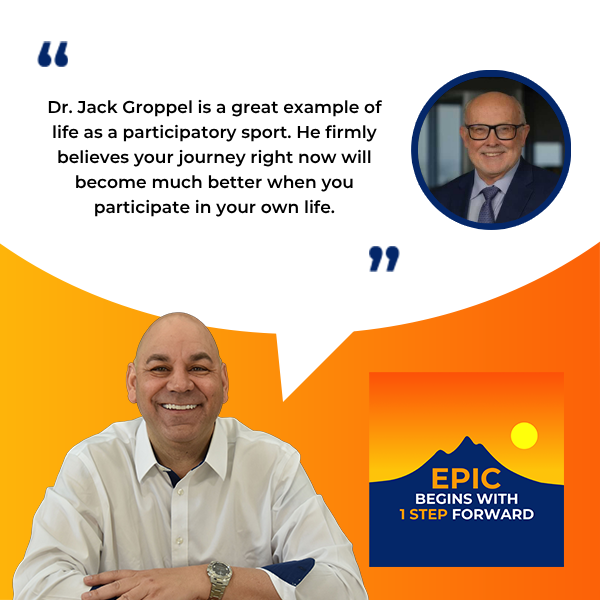
I speak a lot about sibling loss, advocate for siblings and stuff. Part of that was, I’m still here. This chapter ended way before it should have. I’m still alive. You are a great example of life is a participatory sport. Whether you participate today or not, your life will go on so much better when you participate in your own life.
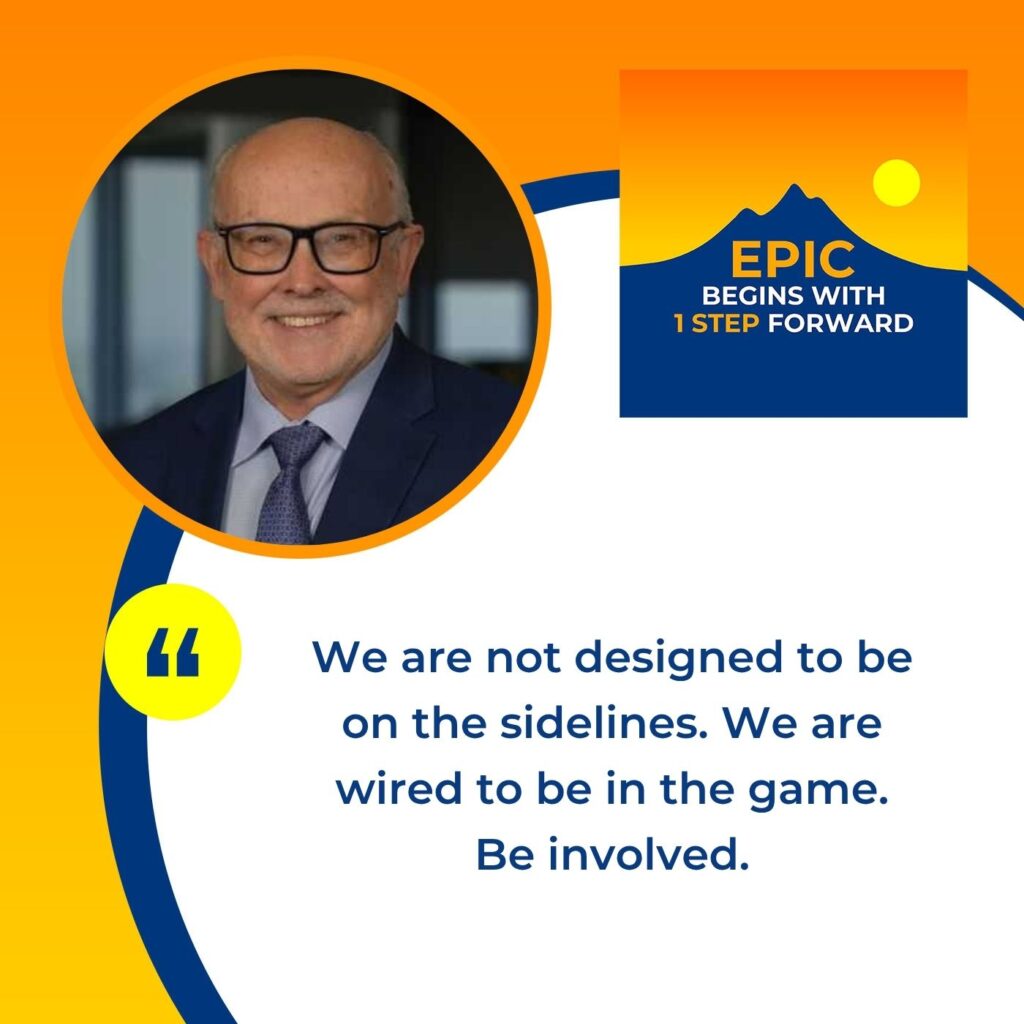
That’s so fun that you said that because this is in the book that, “We are not designed to be on the sidelines.” We’re wired to be in the game. Don’t watch from the sidelines. Be involved.
It’s so much more fun. Here’s the thing. No matter what you’re doing, if you stand on the sidelines for 10 years, 10 years of your life just went by. You can’t get it back. You’re ten years older, and then if you go, “I want to go do this now.”
By the way, this is important to bring out. I wasn’t a success in everything I did. I tried woodworking one time and I realized God didn’t give me those gifts. I’m just going to thank God there are people that are gifted to do that. Everybody has gifts. The idea that you might try something didn’t work out. Maybe that’s just not where you’re gifted.
Failure is part of the journey. We learned from it. I’m also a professional speaker, so I get it. I can get up and I can give an awesome speech and I look great. I’m telling you all the successes I have. I also talk about the failures. At one point in my career, I was a software developer. I worked incredibly hard to be mediocre. I say it because it’s funny. I looked at it and said, “I am working so hard at something.”
Again, the psychologist in me, where I look at stuff and I certainly look at my own life. I said, “I am not like my fellow software engineer’s. I think differently. I have a problem. I want to go over and talk to you and figure it out.” I’m dealing with people who are incredibly smart, but are not nearly as extroverted as I am.
When I would come up, they’d be like, “He wants to talk.” For me, that’s how I talk. I talk a lot and that’s how I process through things. That’s not like other software engineers. They look at the problem differently than I did. That just wasn’t the job for me. I learned a lot. I don’t regret any of that. It gave me an incredible gift. I spent seventeen years as a technical instructor. I taught people how to use software. All of the software engineering and stuff that I attempted to do mediocre gave me a much better understanding of how software was working on the back end to be able to then explain it to people. As you said, we all have those gifts.
I was in a crossroads in 1999 and was coming off of all of this super technical programming and stuff. I was like, “I was clear that wasn’t what I wanted to do,” but I wasn’t sure what the next step was. I reflected on all of the jobs I’ve done and what I liked and what I didn’t like about those jobs. Did I see a common theme in doing these jobs? When did I have the most fun? That’s what led me to technical instruction.
I have a knack for understanding stuff and turning around and explaining it. Frankly, explain it 50 different ways until you understand it. At the time I was living in Boston, I was helping my mom try and learn how to use her computer. I have to say, she’s my worst student because 40 years later, I’m still trying to explain to her how to open an attachment and stuff. That’s neither here nor there. She said to her friend of hers, “Zander’s very good at explaining stuff.”
Everybody has gifts. If something did not work out your way, maybe that is just not where you are gifted.
I ended up tutoring some of her friends in Boston. They’re like, “You’re good.” This one woman got a computer and she wanted to get on the internet. She’s 70 years old. I get her hooked up and I’m like, “What do you want to see?” She’s like, “Show me the internet.” I’m like, “No. What do you want to see?” She goes, “Show me the internet.” At that moment, I realized that for her it was a concrete thing. I couldn’t say, “No, it’s millions of interconnected computers communicating.”
Explain the internet to her in one sentence. Think of the internet like the world’s largest library. You can’t go in and say, “What’s a good book?” You have to be specific. She got that concept easily because she knew about libraries. She knew you can’t go into the Boston Public Library and go, “What’s a good book?” They’re going to be like, “Uhm.” You’re right, you find the gift. We do. We try stuff and you find out woodworking. That’s just not for me. I do not have that skill set.
You could work hard and perhaps have some proficiency but you may decide that’s not what you want. You’re like, “I’d rather spend my time doing something. I don’t have to work quite as hard.” I have no problem with hard work but you work hard to be mediocre. One hopes that you have some mastery if you spend a lot of time on it.
Also, persevere. Maybe woodworking wasn’t for me but I found other avenues. Those were all struggles. Public speaking was still a struggle. I had off days. I never had a business class. I never took a business class yet I started a business with my own money with one of other guy. We sell it to a Fortune 50 company. I’m not bragging. What I’m saying is, even Thomas Edison, one of the greatest inventors in the history of the world said, “I never fail to ever in an experiment. I did learn. There were 10,000 ways I learned and some didn’t work.” That’s a huge takeaway.
Get In Touch With Dr. Groppel
It is. Again, we hopefully learn from the failures. That’s not the way to do that thing. As a speaker, you absolutely have great speeches. I know you and I could probably spend hours commiserating about the one that didn’t go quite as well as we would like. Anyway, Jack, this has been so much fun. I know you and I could talk for hours. How can people find your book? How can they find you?
Thank you. The book is available on Amazon. It’s called Mountains Within: A Life of Achievement, a Quest for Meaning, and the Mountain that Changed Everything. As I say, it begins on Kilimanjaro and ends on Kilimanjaro. The reviews have been tremendous. If people like audiobooks, I narrated the audio. It’s available in all different formats on Amazon. If they want to connect with me, probably the best place is LinkedIn. It’s just my name, Jack Groppel. I’m on Instagram @JackGroppel1 but I’m much more active on LinkedIn. That’s probably how people can connect with me directly.
Jack, I want to thank you so much. What an epic conversation.
Thank you so much. It’s a privilege to be with you.
I want to remind everyone that if you’re ready to begin your epic journey, go to EpicBegins.com. Remember, epic choices lead to the epic life that you want.
Important Links
- Jack Groppel on LinkedIn
- Jack Groppel on Instagram
- Mountains Within: A Life of Achievement, a Quest for Meaning, and the Mountain that Changed Everything
- United States Tennis Association
- EPIC Begins With 1 Step Forward
About Dr. Jack Groppel
 Dr. Jack Groppel is a pioneer in sports science and human performance whose work helped shape how elite athletes train, recover, and manage energy.
A former NCAA tennis coach and co-founder of the Human Performance Institute, he has worked with Olympic athletes, Nike, and the Chicago White Sox.
Today, Jack focuses on helping people move beyond constant achievement toward healthier, more balanced lives shaped by purpose, family, and connection.