
In this fascinating episode of Epic Begins With 1 Step Forward, Zander sits down with voice and communication coach Wolfe Lanier, whose journey from child actor to public speaking expert led him to explore one powerful question: Why are people so afraid to use their voice? Wolfe shares his experiences navigating stage fright, rejection, identity, and vulnerability while pursuing a career in acting and performance. Together, they unpack the psychological connection between communication and self-worth, the “voices” we use in different relationships, and why so many people struggle to separate what they do from who they are. From first dates to public speaking to difficult conversations, this episode dives deep into confidence, authenticity, and emotional awareness—offering powerful insight into how finding your voice can change your life.
Free E-book – https://dl.bookfunnel.com/afk096okro
Apply to be a Guest on My TV show – https://www.epicchoicemedia.com
#EPICBeginswith1StepForward, #ZanderSprague #VoiceCoach #PublicSpeaking #Communication
—
Watch the episode here
Listen to the podcast here
Finding Your Voice: Confidence, Identity, And The Fear Of Being Seen With Wolfe Lanier
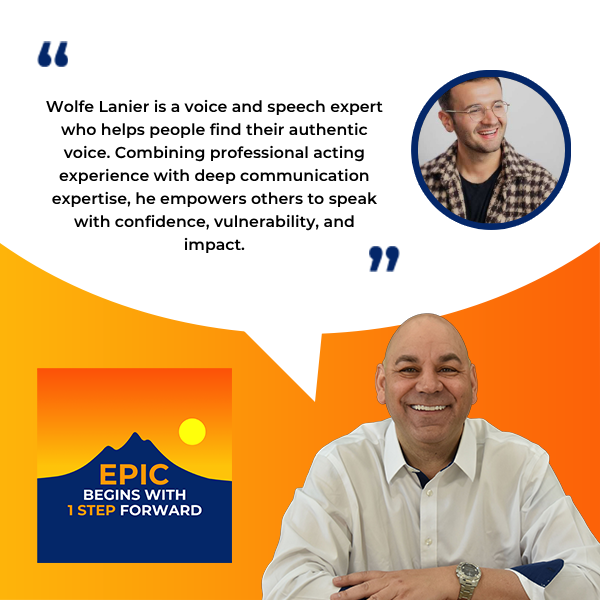
Welcome back to another exciting episode. I am so honored to be joined by Wolfe Lanier. Wolfe, tell us who you are and what you do.
Career Shift From Acting To Voice Coaching
Thank you for having me. I’m thrilled to be here. Who am I and what do I do? My little story goes like this. I am and was an actor. I was a child actor. I was doing the whole child conservatory performing musical theater thing and I ended up going to college getting my Bachelor’s in Fine Arts and Musical Theater. I moved straight to New York City as soon as I graduated and performed. I was doing the whole thing. I had the best time performing and also the pandemic happened. I had no work and none of us had work and then the writer strikes happened for the film industry. When you’re an actor, you’re doing a little bit of this and a little bit more.
I was fully out of work. I had to navigate. I had to figure out how to pay my rent in New York City and keep myself afloat. I had this friend who worked for a public speaking firm in New York City. I reached out to her and she gave me the contact with this company. They said, “We don’t have room for you now at your age but we’ll train you. We’ll do some work and study with you and we’ll get you going.” For about a year and some change, I trained in public speaking models. I became a coach and another rank of a coach.
There’s something that happened with all of this that I noticed and that was people were afraid to just talk. Allow themselves to be vulnerable and open. I became interested in that and that took me to London where I got my Master’s in Voice and Speech, essentially voice studies at the Royal Central School of Speech and Drama. I became a researcher in voice, public speaking, communication, leadership, and all of these pits. That is who I am and that’s what I do.
That’s awesome. I do have to say. I myself do not have any problem hearing my own voice and talking as a public speaker, podcasts and TV hosts. That’s what I do.
Have you ever had a problem or is this a thing that you’ve gotten to?
I don’t think so. I grew up in Massachusetts. When I was growing up, my dad was an estate legislator. From a young age, I was in front of adults. I went campaigning with my dad door-to-door. I was cute and said, “Will you vote for my daddy?” I was around people. If I look back, I was doing public speaking of some sort from a very young age. Plus, both my parents are very outgoing and social, so I was always there. I’m much more comfortable talking than I am writing. I joke all the time that the fact that I’ve written three books blows my mind because I’m a talker. Not a typewriter and somehow, I have books. I’ve been a professional speaker for many years.
Environment Shapes Communication Style
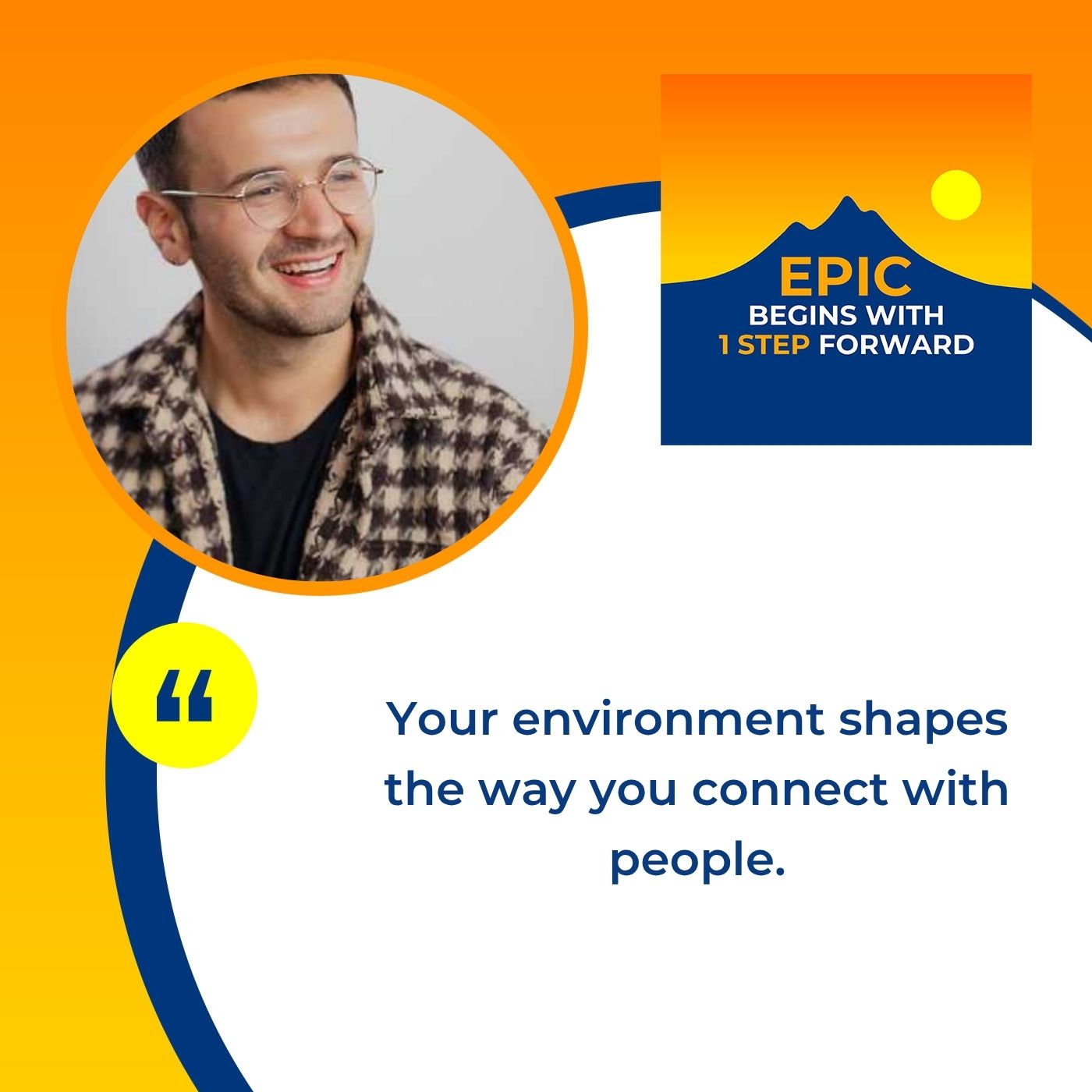
This is a big testament to something that I say to a lot of my clients and that is your environment breeds the way you connect with people. This is just saying all of that.
I say all the time that the days I can be up on a stage are the really good day. That fills my bucket. It makes me so happy to be able to be in front of a crowd. Be it 5 people or 5,000 people.
I love it. We have something in common. I too love to be on a stage and talking in front of as many people as I possibly can be.
Exactly. That’s the acting. If you didn’t like it, you’re not like, “Let me get up and see if I can remember.”
Stage Fright, Performance Anxiety, And Learning Through Experience
This is part of my journey, too. I have to say I did experience and do experience a great deal of stage fright. Even though my job was to be an actor, I was not well to say the least. All of the attributes of being afraid, stage fright happened to me. Blankness in the minds. I would forget my lines. My palms would be sweaty. I would be so tense and freaked out. This is a reason why I was so interested in this performance training stuff. It’s because I went through it.
I got nervous before. I have to get up but once I get up there, then I’m like, “Okay.” it’s more the anticipation. Once I start to do it, I am in my happy place. I am like, “This is so much fun.” Giving a speech and looking out at the audience and seeing what’s working and what isn’t working. When I give a speech, I have an outline that reminds me because I did plays when I was in high school and middle school. I enjoyed it.
There’s so much more pressure like, “I’ve got to say all of these. I got to remember all of my lines.” Versus when I get up to give a speech. I might outline something that reminds me of the key things I want to say but now I’m just going impromptu. I practice. I have a good idea of what I’m going to say and how I’m going to say it. Also, I’m good at the, “That didn’t work. I’ve got this other story. I’ll draw them in. I’ll make this story a little. I’ve got a few extra details.” If it’s not going well, those details don’t come in because like it’s not landing. It’s the same thing on the stage. If the audience is into what you’re saying, you say a funny line and people are laughing like, “Okay. Good.”
You got to feel the room and it takes a great deal of craft to be able to do that and as you said, practice. The people who struggle with this the most are not used to feeling what it’s like to receive that amount of energy at once. Standing up there, all these people are staring at you and they’re like, “I don’t know what to do with all of this.” Once you practice, from what I’ve witnessed and others and within myself, it becomes a little addictive. We start wanting a little more.
You’re chasing that, “Hold on. I want that.” I joke all the time that in college the best class I took, I needed to give a two-hour talk and that was in my senior year. I would have done a lot better if I had been able to take my exams as oral exams because I knew it. I hate writing, so I wanted to get the writing over with. I couldn’t always demonstrate the depth of knowledge that I had about the subjects. Had I been able to do an oral exam, I probably would have had much better grades. I had decent grades, but I might have had As. There were people in college who were like, “How do you not have an A? You know this better than I do.” I’m like, “It’s my writing. I don’t like writing.”
I can relate.
I love talking about my epic journeys. For you, as a child actor and then going to New York and stuff. What did that journey look like for you?
It’s an interesting one. My first question to myself as I reflect back at myself and a question that I asked my actor friends is, why would you become an actor in the first place? What about it drives you? My reason when I was young was not the most grounded reason, let’s just say. I entered into acting with a little bit of a chip on my shoulder and a little bit of an ego search. My journey through my college experience and going into New York was always seeking the validation of being good. Being a good actor or being the best actor of all of these things.
Being vulnerable and being in front of people. This is what contributed to my stage fright. It put me in the light of looking at myself and my ego and saying, “What happens if you’re not the best singer in the room? What happens if you’re not the best actor? What if you don’t get the role? What if you mess up on stage? How do you adapt? All of these things. My epic journey is metaphorically this existence as an actor but it’s just the reflection of myself and how this has turned itself a bit. Now, guiding people through this realization that I’ve had and having still of why am I doing what I’m doing and what for, because why is the journey. It is the journey.
I talked about this in my book that oftentimes the meanest person in our life is ourselves. The things that we say to ourselves are so horrible. It’s one of those bad things we say to ourselves usually on a daily basis. “You’re not good enough. You didn’t get it because you’re not tall enough. You’re bald. You’re not the right look. Whatever,” if your best friend said that, you’d be devastated. Yet, we can continue to be the meanest person in our life. I’m like, “Stop it.” Don’t be the meanest person in your life. Would you say some of that is negative? I call it the committee. There’s a committee in your head that they are vicious.
Identity, Self-Worth, And Separating The Self From The Role
Please. Let’s just talk about college. When you’re a performer, all you have is the grades from your teachers who are teaching you how to sing, dance and act and then you have the judgment of your fellow classmates and then you have yourself. You have these three buckets of things that are telling you who you are and what you are. The thing that’s interesting about the acting journey that I’m still dissecting. I see this in friends and people in my life. We are told that we are actors. I am an actor.
My soul is an actor. When I get a bad grade, when I mess up a line or my voice cracks, I as Wolfe am not doing good. I’m doing a bad job. Me. I punch myself in the head and go, “How could I do this?” I reflected on a friend who might work in tech and they coded something funky and it didn’t go. They say, “Let me go back and fix that code.” I learned what that is and now the script is working. They are able to separate the ability to just change this thing and who they are. It’s their work versus what they are.
The fact that they made a mistake doesn’t take away from who they are as a person.
Correct. The mental bully like I’m not good enough, from what I’m hearing is less. I’m sure there are people who have that dial turned up plenty.
If we pay attention to that and go, “Committee be quiet. I’m not listening to that.” What I understand about being an actor and stuff is that casting can be the hardest part because you walk in and you might not have said one word. The casting director goes, “No. Next.”
It’s because of the way you look or the way you breathe or whatever it is.
You like they’re bullied from first grade and it’s got nothing to do with your ability to do the job. My older sister Lucy majored in theater in college. I remember she was driving across the college in Southern California. She was helping me drive my car back from my senior year. We had numerous hours on this five-day wonder of the US to talk. Eight or ten hours a day just driving and being able to talk. I remember getting into this wonderfully deep conversation where I was like, “I know you love acting so much. Why didn’t you pursue it?”
She gave me an honest answer. She goes, “I don’t know that I have a thick enough hide to go through What actors have to go through where the amount of rejection that you got. It can be hard and can feel incredibly personal even though it isn’t like, ‘I don’t like the look of you. Your voice is wrong. Your hair is wrong. You have blue eyes and I want brown eyes.’ Any number of things.” Most of which might be able to be fixed. We look at movies and we look at actors whose hair is blonde in one movie and brunette in another.
Stakes, Validation, And The Mind’s Relationship To Performance
I find this to be interesting because the mind begins to play tricks when we get the stakes too much credit. What I mean by that is I know some actors in my life who are good at separating the job from who they are, which we just talked about because they recognize that the stakes of who they are, them as a person, is greater than the stakes of them as an actor. Going into these environments, where they’re going to be judged inherently, to them is lower of a cost than a relationship where the stakes are high because that’s love, care, and emotion.
The mind starts to play tricks on us when we give the stakes too much power.
There’s this sifting that happens. To be someone who enters into the field of acting, you have to be able to do that thing where you say, “It’s not end all be all this thing in acting. What to end all be all is my love for myself and the way that I show up for myself and how I care for myself.” That’s what gets convoluted in this industry because we need validation. Which is why I left because I needed that validation.
I’ll only speak for myself. I love the validation of the applause of giving a speech. I do. I love that. I want that. I’m pursuing that, but I also realize that I am not just a podcaster and a speaker. I am so many more things. My identity is not that. Sometimes, the things that we love, we give that part of our identity so much more power. Those friends of yours who go, “I’m an actor. This is the job that I do but it’s not all of who I am.”
If they’re male, “I’m a son. I may be a brother. I may be a husband or a boyfriend or a partner. I’m a friend to people. I’m a tennis player.” All of these different things. All of us, at some point, have things that we’re doing that are a big part of our identity. We have to keep in mind that when that goes away, I’m still here. Look at people who are professional athletes. Many of them, their whole identity is, “I am a picture of sport but I’ll take football. I’ve been a football player since I was five and now I’m a professional and that’s great. I got injured and I can no longer apply.”
You see so many stories of these people who are just lost because they don’t have anything aside from their identities of football players, even though there is so much more. As a mental health provider, I look at that. I look at my clients and go, “You’re not just one thing.” We’re not. If we accept that, “I am multiple parts of my identity.” Different parts come out at different parts of the day. I’m a podcast host now. Later on, I’m going to be a therapist. Not all of who I am.
This leads into a lot of the work that I do when it comes to the voices that we use. What is the voice that I use to my mom versus my partner, my friends, when I answer the phone, versus when I order coffee. They’re all different because there’s so many different needs. There’s so many different parts of me that need that thing. My voice is going to shift to that. What happens if that isn’t aligned? What if we’re using a voice that isn’t the one that we are wanting to choose? That’s a fascinating thing with sifting about our identity and these parts of us.
Think about how sometimes the voice that comes out is not the voice that you want. It’s just whatever the situation. For example, someone who pushes your buttons like if you have a sibling. Do you have any siblings?
I have a sister. I love her dearly.
I had an older sister and I got a younger sister. I love them both but there were days where they were not nice to me and I wasn’t nice to them. There’s just that way that you talk to your sister. The quick annoyance that you have for the little picadillo that she may have or the way that she talks to you. It makes you feel like you’re four or whatever. Now you run into someone else for whatever logical reason. Somehow it reminds you of your sister. Are you older or younger than your sister?
I’m younger. I’m the baby boy.
The voice that comes out is the younger brother. You’re like, “That is not the voice I want to have. Why is that happening?” I sit on the board of an organization called The Compassionate Friends, which is for families that have lost a child and I’m the sibling representative. When I first got on the board, all the other people were parents who had lost a child.
When I went in there, I found myself in the first couple of meetings making reports as if I were the child reporting to the parents. I don’t say bad things but I almost heard the voice. These are my peers. They’re not my parents, but I had that child like talking to parents. Honestly, you say to them like, “I feel that.” When have you found that your voice is not the voice, like, “That is not the voice I want to have?”
It happens all the time. I was with a group of my high school friends. We went on a nice big lake weekend. It was a bit of a reunion. I lost my voice because it was so like, “Oh my God.” I was so full of energy which is nice. I was excited but it hurt me. At the end of the day, it hurt me and that isn’t the voice that I want.
You were with high school friends, so you revert back to that adolescent whatever.
I remember like literally being in the stands at a football game with all the same people, screaming and losing my voice. It was the exact same behavior that I had yet there was no football. There was literally no reason to scream, except the fact that we were all together which was a nice thing.
Habitual Voices, Emotional Triggers, And Authentic Communication
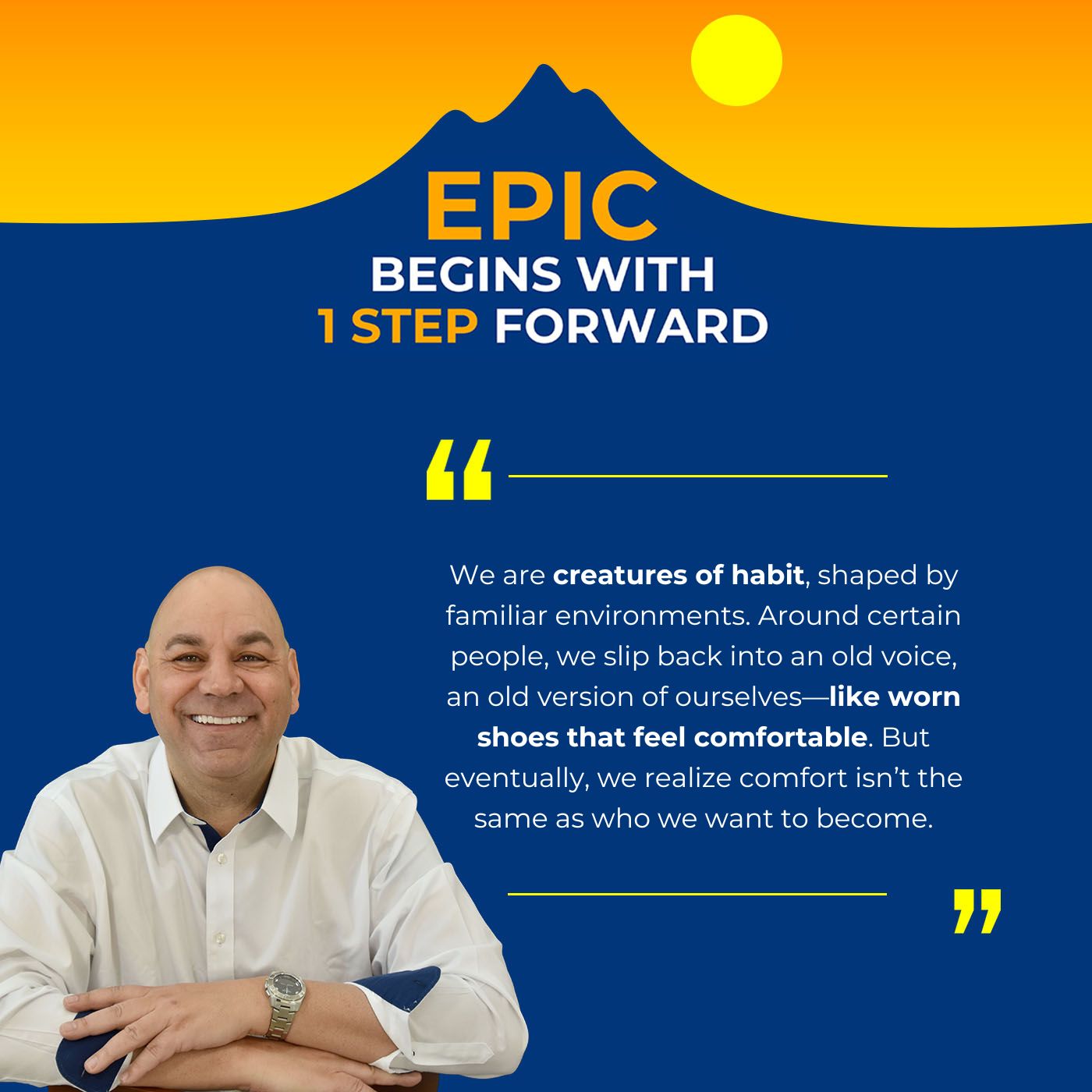
Absolutely. That intersection of what you do talking about the voice and what voice do we use. I approached it from a psychological standpoint. We are inherently creatures of habit. Response to stimulus. You go, “I’m around these high school people. Here’s my voice. This is my reference point. This is how I was.” You slip into it because you know it. It’s a comfortable pair of old shoes. I know what that’s like, but then you go, “Even though they are comfortable, those aren’t the shoes I want to wear.” Definitely interesting about helping people find their voice and realizing that we all have multiple voices.
Going back a bit. What voice do we use when the stakes get high? As we talked about the whole actor and everything. What is the voice when you’re in an argument with your partner or whatever it is? Something that is full of stakes. What do we revert to? What is the sound that comes out of our mouths? How do we speak and connect with the person? How do we stop talking? How do we not use our voice? How do we listen as the communicative tool? These are the things that I, as a human, am working on every day and challenged by.
Where is recognizing the emotion that is triggering the pattern and how do we interrupt that and make a new choice? That’s hard because there’s two seconds of your partner saying something and then you’re like, “I’m reacting this way.” It’s hard. I’ve been working on this myself. It’s my next book, The Epic Reset. What is the emotion that’s causing this loop to run or do I react this way? How can I pause long enough to have it come from the unconscious into the conscious mind to go, “I don’t want to react the same way?”
It’s like practice. It’s the same way that in acting, you start off and it’s stage blocking or whatever. At first, it takes up your whole entire brain pan to try and figure out the blocking. As you do it more, you’re like, “I need to move over to stage left, upper and stuff.” It gets easier the same way that driving a car. Do you remember when you first got your license?
You’d be exhausted because you saw every single sign. Now when you drive you, it’s not that you don’t see all the street signs and catch all the stuff that’s coming in. You’ve got enough practice that it doesn’t take as much of your concentration because you like, “I know what that’s like. I’m anticipating that person’s turning even though they don’t have their blinker on.”
Practice, Adaptability, And Real-World Communication Skills
That’s right. I sometimes coach people who are going on first dates and this is a big thing. How do I even show up and express myself? How do I have this conversation? To your point, a first date gets less exhausting when you go on a bunch of first dates. You understand the practice of a first date. You’re able to show up and tell the stories and hold the space. When I was dating a bunch, I deemed myself the master of a first date. I was like, “No,”
What about the second date, Wolfe?
My standards got so high. I was like, “I don’t want a second one,” because I started to know myself through these first dates. I was like, “These are the questions that I need to ask in the space that I need to hold and all that stuff.”
First dates are really hard. How do you come across as authentic and not let the man behind the curtain too much of a peek behind quite yet until they get to know you and like you and then you’ll like, “By the way.”
Absolutely.
I have a client who has been talking a lot about dating and social anxiety. I’m like, “Everyone gets nervous.” I like to use this analogy with people. I’m like, “You look across at your neighbor’s yard and the grass is all green but you don’t know what’s fertilizing their lawn. All you see is the green lawn.” You see people or actors or whatever and be like, “They’re so supremely confident.” You get to know them and all of a sudden, you find out that they are a bigger disaster than you are. They’re like, “It takes all of my energy to show up and go on stage. I am sweaty and an anxious mess.” You’re like, “Are you kidding?”
I’m a firm believer that to be a successful actor, you have to be an introverted extrovert. You have to have that time where you are recharging. No people around you. You are by yourself and then you’re able to charge up just enough to be able to get out there to hold that space. That balance of energy.
To be a successful actor, you have to be an introverted extrovert—someone who knows when to retreat and recharge in solitude, then step back out with enough energy to hold the room. It’s all about balancing that flow of energy.
I’m so far extroverted. When I did all those tests and college and stuff as I was studying psychology, I’m like, “Introvert? Not really.” I get that. I get the people who are on, but when they’re not on, they’re like, “I’m done and I need some quiet.” Whereas I’m like, “Where is an audience? I need an audience, please.”
I need my days by myself and then I’m ready.
Wolfe, this is a fascinating conversation. Clearly, you and I could talk for hours and hours about this. If people want to work with you, want to learn more about you, how can I find you?
My Instagram is @Wolfe.Lanier. My website is just my name WolfeLanier.com. On LinkedIn, it’s Wolfe Lanier. Honestly, look at my name and you’ll find some way to get to me.
Use the old Google machine and we’ll find you.
You’ll get right there.
I want to thank you so much for coming on.
Thank you. This is great.
If you’re ready to begin your epic journey, go to EpicBegins.com. Remember, epic choices lead to the epic life that you want.
Important Links
About Wolfe Lanier
 Wolfe Lanier is a public speaking and communication coach with a Master’s in Voice Studies from the Royal Central School of Speech and Drama, where he researched and continues to research vocal identity.
He specializes in performance anxiety, stage fright, and helping professionals and creatives communicate with confidence and authenticity.
Listeners will learn practical tools to manage nerves, improve their voice and presence, and speak with clarity and confidence in high-pressure situations—from presentations and meetings to public speaking and performance.