In this fascinating episode of Epic Begins With 1 Step Forward, Zander sits down with entrepreneur, author, and EndoDNA co-founder Len May to explore a remarkable journey of resilience, innovation, and purpose. After immigrating to the United States as a child, being diagnosed with ADD, and finding himself homeless at 18, Len refused to let adversity define his future. His unconventional path led him through multiple industries before ultimately pioneering advances in precision medicine and personalized healthcare. Len shares how genetics, biomarkers, and artificial intelligence are helping doctors move beyond symptom management to identify root causes and create individualized treatment plans. He also discusses why neurodivergence can be a strength rather than a limitation. This episode is a powerful reminder that our greatest challenges can become the foundation for extraordinary impact.
Free E-book – https://dl.bookfunnel.com/afk096okro
Apply to be a Guest on My TV show – https://www.epicchoicemedia.com
#EPICBeginswith1StepForward, #ZanderSprague, #PrecisionMedicine, #Neurodivergence, #Genetics
—
Watch the episode here
Listen to the podcast here
Kicked Out At 18. Built A $40 Million Company.
Len May’s Background and EndoDNA
I have a great guest for you. I have Len May with me. Len has a great story.
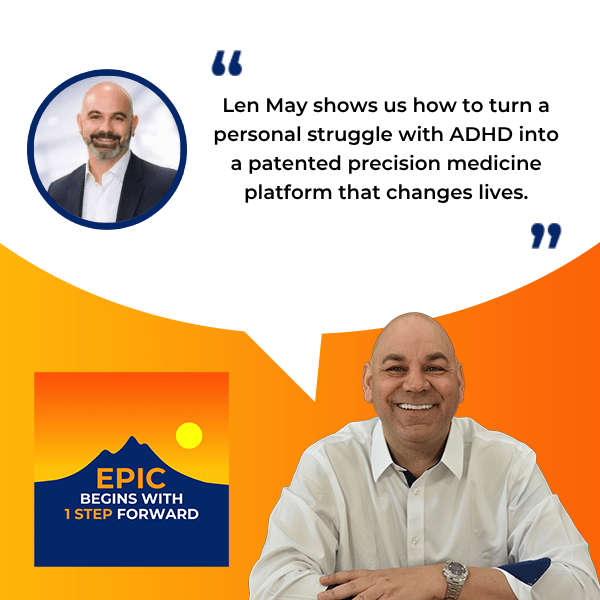
Len, tell us who you are and what you do.
That’s low expectations. That’s underpromised and overdelivered. Thank you for having me on. I’m Len May. I’m the CEO and Cofounder of a company called EndoDNA. We are a patented intelligent decision support platform for doctors, using genetics, biomarkers, etc., to create a personalized experience that we all deserve. It’s precision medicine for doctors. You can collaborate, get your own protocol, and then make sure that you know that it’s working for you. It’s a partnership between you and your healthcare practitioner.
I want to dive into that, but first, I’m all about people’s epic stories. I believe that you’ve got a rather epic story that has brought you to where you are. Would you mind sharing a little about the background that helped you get to where you are?
Childhood Struggles and ADHD Diagnosis
You’ll be the judge whether it’s epic or not. I’m an immigrant. I was born in Lithuania. I immigrated to the US when I was about 6 or 7 years old with my family, and I moved to Philadelphia. In 1979 or 1980, the US boycotted the Olympics in the Soviet Union. I was known as the Russian and all this stuff, even though I’m from Lithuania, so I’m not. Geography is not our strong suit, nor is history.
There was learning a language and all those kinds of struggles. When I would sit in class, the teacher would call me, and my mind would be elsewhere. I would be daydreaming. Was disruptive in class. Parents would be called in, and all this stuff. They kept saying, “There is something wrong with your child,” and all this stuff. My parents started taking me to doctors, and they diagnosed me with attention deficit disorder.
At that point, ADD and ADHD were separate because I wasn’t hyperactive. They put me on medication and all that stuff. I can’t say it didn’t work. It depends on how you define work. It did help me to focus, but it removed my sense of any type of emotion. You weren’t happy. You weren’t sad. You were a zombie going through your day.
Discovering Cannabis and Getting Kicked Out
One day, I’m hanging out with these older kids before school. They say, “Do you want to smoke a cigarette?” I was like, “Yes.” We didn’t realize smoking was as bad as it was back then. I smoke a cigarette. I’d never questioned why they only have one. They had one cigarette, and they passed it around. It took a drag. It didn’t taste like a cigarette. I took another one, and they were laughing. They ended up putting cannabis in the cigarette.
What happened was when I went back to class, the windows that were usually open in my head, which I think of as a browser that has 100 windows, started narrowing. I could focus. I gave up the prescription meds. Cannabis became my medicine. I’m not advocating this for kids. It’s up to the parents. My parents didn’t enjoy that too much, so I would get in trouble.
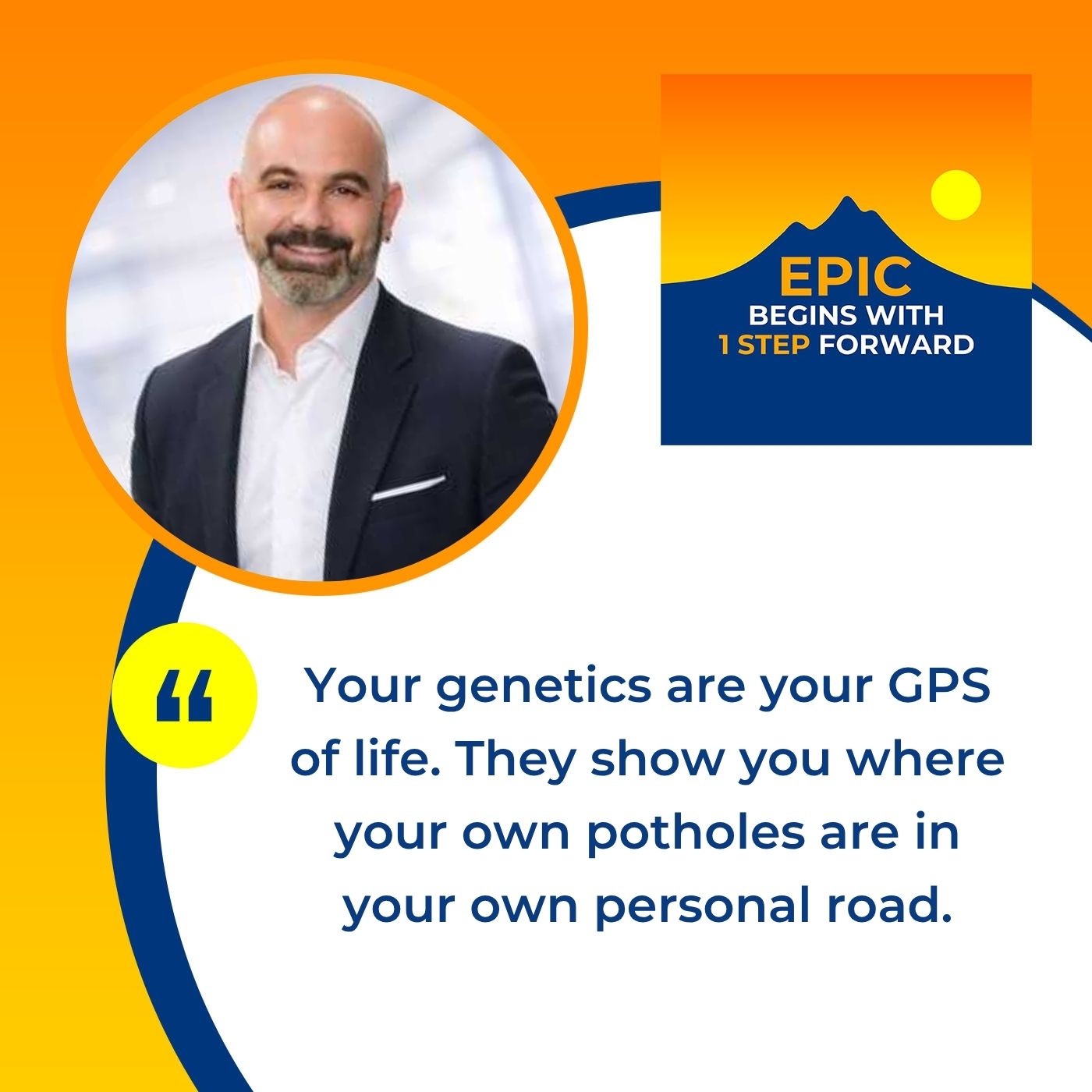
Your genetics are the GPS of your life. They show you where your own potholes are so you don’t fall in.
At some point, right around when I was almost eighteen, my parents decided they were going to call the cops on me. They call the cops and try to have me arrested. Two female officers came, and they said, “There is not much here, but if it were my son, I would kick him to the curb.” My dad said, “You have five minutes. You have to pack a bag,” and kicked me out the door. I was a kid. I have maybe a few hundred dollars in my pocket, I have a bag of clothes, and I don’t have a home.
Building a Path from Homelessness to Startups
The irony of this is that my parents both consume products in my company as patents. I’m very proud of my cannabis background in that. At that time, it was interesting. I stayed in motel rooms. I ended up staying with this girlfriend that I had, and her parents told me I had to go. I would couch surf for a while, and my grandmother at that time let me hang out on her couch. I got a job at a place called Tower Records, which probably most of the younger kids have no idea what it is.
I went to Tower Records and bought cassette tapes and albums.
Best record shop ever. My grandmother gave me a little bit of money for a deposit for an apartment. I got a crappy apartment to the point where it was a basement apartment. Every time it would rain, the carpet would flood from the inside. I called the office, and they would Shop-Vac, but there would still be mold underneath.
There would be roaches everywhere. I was catching some of the roaches I had. I pinned them up so I could show them all the different types of roaches that were hanging there. I had a nightmare one night where I was covered with roaches. There were some on my face. I remember swiping, and there was actually a roach on my face. It hit the wall.
That was my journey. I started with that. I then went to college. I went to physical therapy school. I never worked as a physical therapist in my life. I opened up an internet company in 1993, and I exited out of that in ‘97. I sat around and got recruited by a company called Pricewaterhouse. I started my corporate journey for a while. I left that, and became a commercial real estate broker. I started another startup, and then I exited out of that. I moved to LA with my ex-wife, who was an actress at the time, and then I started pursuing other things.
The journey, I could go on forever. There are so many different peaks and valleys in this. I have a $40 million valuation of the company. We thought we would fail multiple times. These decisions that you make when you pivot can either make or break. You have to carry the burden as a person who runs the company. We can get into any of that stuff.
I’m a firm believer that everyone has epic things in their life. When I talk to people, they’re like, “I’ve done nothing epic,” but when I push a little, we’ve all done things. We all have experiences that have helped shape us. That’s true for me. I graduated with a degree in History and Psychology. I spent 22 years in the corporate world, doing all kinds of high-tech jobs as a software developer. I spent most of my time as a technical instructor. I taught people how to use software, and then I came back to psychology because I always loved it, and I always wanted to do it.
It is always amazing when we look back at our journey. For you, it sounds like the thing that started, the cannabis and stuff, is coming back around as being helpful. Maybe I misheard what you said, but certainly, our understanding and acceptance of cannabis as a helpful product for certain medical conditions has grown. It’s not the taboo that it used to be.
Embracing Neurodivergence as a Superpower
We’re not a cannabis company, but that’s the way we started. It was a company that focuses on the endocannabinoid system. People get confused between exogenous substances, like drugs that you put in your body, and what your own chemistry does. People don’t know that we have this endocannabinoid system. That’s why we had a lot of this stigma associated with the plant, because there’s something that happens in our body that has stimulated our own endogenous endocannabinoids.
Don’t settle for comfortable routines. Lean into your weirdness and quirks. They’re what makes you unique.
People don’t talk about that. They talk about the plant, stoners, getting high, and all this other stuff. There’s medicinal value to the plant as well, but I don’t think people understand why this works with our system. That was one of my missions. California and Pennsylvania are reciprocal states. I was a commercial real estate broker for a company called Keller Williams. I was the Management Director of Keller Williams Commercial for a while. I sat in the office. In 2009, real estate wasn’t the best place to be at that time, if people remember.
Why would you possibly say that? There was nothing wrong with getting mortgages or anything in 2009.
It was completely impossible. I was commercial. If you had cash, you could buy up assets. I was sitting there, and I had this moment where I was trying to figure out what I love to do. If I were to say something to my younger self or my daughter going forward, I would say, “Don’t settle. Lean into your weirdness, your quirks, or whatever makes you unique.” My ADD is not a disorder. It’s my superpower. Leaning into that and understanding how I can utilize it correctly with guardrails allowed my spider sense to tingle, and I would go with it.
I didn’t sit there in a 9:00 to 5:00 job at PWC in a cubicle for years, and then twenty years later, I would look up and be like, “I’m still here.” It’s comfortable, and you’re getting paid well, but you’re doing the same thing over and over. That’s something that I couldn’t do. Being able to make changes when I had that itch, and unrelated things seem unrelated, but that’s where the ADD comes in. It’s recognizing patterns and things that may not look like they’re patterns for somebody else. They’re unrelated, but to me, they are. Being able to recognize that, utilize that, and leverage that, that’s where I pull from.
To answer your question about cannabis, when I was sitting in the real estate office, these guys walked in. They were talking to another realtor. I was consulting because I wasn’t sure what I wanted to do in California. These guys came in, and they want to open up an alternative pharmacy. I don’t know what these guys want. It was like, “Len, you talk to them.”
I was like, “What do you guys want?” They were like, “Alternative pharmacy.” I’m like, “What do you want?” They were like, “I want to open up a cannabis dispensary.” I was like, “Cool.” I was doing research before I was like, “You have to have all this paperwork.” I didn’t know what I was talking about. I ended up helping them put everything together and finding the space. They offered me a partnership.
We ended up opening up five dispensaries under the same brand. The thing that I started noticing is that two people will consume the same varietal and have a completely different experience. My brain kicked in, and my hyper focus kicked in. I was like, “I have to figure this out.” I came across a video. This guy was doing genetic sequencing of the actual plant. I reached out.
Long story short, I met up with this person. He said, “Come on board. Work with us as a consultant.” They taught me how to extract DNA from plants. I was in the lab, going to the different cultivators. We created this library of different varietals. It doesn’t matter what it’s called, but we can see what the components of that are.
The DNA of it, per se, to say it doesn’t matter whether you call it Len or Zander. It’s still male.
The Birth of EndoDNA and Personalized Healthcare
The biggest issue is that the names that we give them don’t have a meaning unless it is land-raised from where they came from. Durban is in South Africa. It’s all hybrids. The issue is that we label these things, and we call them Blue Dream. When I have 5 samples of Blue Dream, maybe 2 of them seem to be somewhat around Blue Dream genetically. Two have some Blue Dream in them, but are not Blue Dream. The fifth one is not even close. You slap the label on it and call it something.
The second part of that is that the main investor was another company, which was doing pharmacogenomics testing. Pharmacogenomics is the study of how drugs affect individual bodies and as contraindications drug-to-drug interactions. It started getting to the human side. I had the plants here, and I had the humans here. I raised my hand and was like, “We can guide people to a personalized experience and help them avoid a possible adverse event.” They had no interest in it. They were like, “We want to focus on the plant. Forget the human side.”
I was lucky enough to grab some smart scientists with me and launch EndoDNA in 2017. That was our first foray. We created an endocannabinoid system test. We have a patent on the use of DNA to make recommendations associated with the endocannabinoid system. That was my foray. We did that for years, with tens of thousands of customers, focusing on the endocannabinoid system so we can personalize the experience.
This is where you have to be aware and listen. COVID was an interesting part of our business for us because we had to make a lot of changes in the way we do business. I got a call from a doctor. She goes, “I’m seeing a lot of young women, late 20s and early 30s, who have perimenopause symptoms. I’m seeing a lot of women who are getting extreme adverse effects of menopause, like high flush severity, frequency, weight gain, and sleep issues. Is there a way that we can get ahead of these things?” I usually say yes, and then I figure it out later. I was like, “We can.”
I went to my bioinformatics team, and we created a female hormone health test. We then created a male hormone health test. The idea was, “Let’s create a platform that allows us to do this globally for healthcare practitioners.” My light bulb moment of this was when I was standing on stage, speaking to a bunch of doctors about genetics. I thought I was doing a good job. At the end of the talk, I said, “Anybody have any questions?” It was crickets. I was like, “Not a good job.”
You ask for questions, and not a hand goes up. You’re like, “Uh-oh.”
Training Doctors and Using AI for Diagnostics
The last slide had my phone number and my email address. Within 30 minutes, I started getting emails and texts from doctors asking questions. I’m like, “You don’t want your colleague to hear that you’re asking a “dumb question” and that you don’t know genetics.” It’s true because they were taught that in school somewhere, but they don’t practice and utilize that.
I was like, “If we create this platform, we have to allow the doctors to be able to intelligently chat with your DNA. Ask the platform questions, instead of asking somebody else, and make it intelligent enough that it becomes their partner in the journey. They can understand it, speak to them in that way, and learn from those experiences.” It personalizes it and also allows you to interrogate the genome.
That’s cool. What you’re saying is so interesting. I have eight gazillion questions, and there isn’t enough time. You’re talking about younger women having perimenopause and stuff, certainly understanding how, unfortunately, women’s health does not get nearly the funding, research, and stuff that it does.
On a personal level, it blows my mind that menopause and all the challenges that women face with it, where over 50% of the population of the world is female, that pharmaceutical companies and genetic companies haven’t dived into it. If your potential audience is over half the population, that seems like that’s a pretty good customer pool if you could figure out stuff to help women understand what’s going on. I’m taking a leap here. We’re all individuals.
You have to take blood pressure medication or something. Each of us as individuals, our own body reacts differently. Two people could take the same medication and have completely different reactions to it. With the perimenopausal, is it able to help women understand, or help the doctors help the women understand, “Here’s what’s going on with you. You’ve got too much cortisol now. You have an estrogen explosion going on, or your testosterone bottomed out.” To help the doctors give medication that will help the women, is that how that’s working?
ADHD isn’t always a disorder. When you learn to guide it, your hyper-focus can become your greatest superpower.
We have two different systems in this country. One is a sick care system. One is a healthcare system. The insurance-based system, unfortunately, is a sick care model. I’ll give you a couple of examples. I’ll tell you about contraindications as well. I’ll answer your question. The first part of that is we’re not only looking at your genetic predisposition. We’re also looking at your current labs, and anything that the platform can learn from that gives the doctor a good picture of the individual.
The idea is you’re not treating the symptom itself. You’re trying to get ahead of that and prevent something from turning on. When you’re talking about genetics, you get 50% from the father and 50% from the mother. When you’re born, think of it as a big circuit breaker box. You’ve got a bunch of on-off switches. Maybe 20% of them or so, and maybe more for some people, are turned on when we’re born. Things like eye color, skin color, hair color, etc.
The other genetic predispositions are your encoding, which are turned on based on lifestyle. What I mean by that is the first thing is nutrition, what we put in our bodies. The food that we eat and the things that we consume can trigger the turning on of those switches. The second thing is our exposure to things like microplastics, heavy metals, pesticides, and all these different things. They can affect it.
The third is what you said. It’s your own neurochemistry. You were mentioning cortisol. If we are expressing cortisol at a time when there is no lion chasing us in the jungle, there is signaling that happens, there are proteins that are getting built, and there are cells that are getting methylated. What you’re doing is you’re turning those switches on that maybe you don’t want to turn on.
Your genetics are your GPS of life. They show you where your own potholes are in your own personal road. If a doctor understands this, we can get ahead of some of these things. If you’re predisposed to hot flash severity, let’s get ahead of that. That’s first. Second of all, your blood work or biomarkers capture a moment in time. That shows you what’s going on right now. It’s not what happened yesterday or what’s going to happen tomorrow, but it’s the current snapshot. You’re utilizing that as well. Once you have all this information, the idea is to address the root cause and prevent some of these things from happening.
In our sick care model, the insurance-based model, I’ll give you an example this way. My elbow hurts. Yes. We as Americans in the United States are very pain-adverse. A lot of the different opioids epidemic and all that stuff. We want a quick fix. We’re like, “My elbow hurts. I want to address the pain. I’m going to go to the doctor.”
The doctor says, “Did you hit your elbow?” You’re like, “No.” They’re like, “Were you playing tennis?” You’re like, “No.” They’re like, “Your elbow still hurts?” You’re like, “Yes.” They’re like, “I have a solution for you. I can give you an injection, or I can give you medication.” You’re like, “Great. Injection. I win because my elbow doesn’t hurt anymore. There’s a solution.” The doctor says, “I did no harm. I solved the issue that the patient walked in with, which is getting rid of the pain. We both win, but what’s the root cause of that? Why is it hurting?”
How is it related with cortisol? If I’m secreting a lot of cortisol at times, and I’m at a homeostasis where I don’t have enough of my other neurochemicals to balance that out and reuptake that, so it stays there longer in my bloodstream, my immune system can overreact to that. If it does that like a cytokine, which we learned over COVID, and it overreacts, I can get inflammation. Usually, it’s in my joints, ankles, knees, hips, back, neck, and elbows. If I have a predisposition to gut health issues, it can trigger my gut health issues. Instead of addressing the root cause, I am putting Band-Aids on, but I feel like I won something. I go back to the doctor, and I rinse and repeat.
We don’t have a healthcare system in this country. We have a sick care system that treats symptoms instead of root causes.
You mentioned the potholes. The GPS shows where your potholes are. It’s the same way if there’s a road, and a pothole is there. They put in the asphalt to fix it, but they don’t address why that pothole is coming back. It’s fine if the pothole shows up once, but on the second time, hopefully, you look and go, “We fixed it, but why is it coming back? It turns out that there’s underwater seepage that’s eating away.” You go fix it, and then it doesn’t happen anymore.
I’m all about like, “Let’s get curious as to why this is happening. Can we do something that can either eliminate it, turn the switch off, or at least lessen it?” At this point, with the knowledge we have, you’re not going to be able to turn some things off. There are people who live incredibly healthy lifestyles, and their cholesterol is still way higher than it should be.
They do everything they should. They’re not eating fatty foods and exercising a lot. Yet, in the same way that someone who eats horribly doesn’t exercise, their cholesterol is super low. That’s some genetics. You may not be able to turn it off, but you may be able to lessen the degree. That’s cool. Are you using AI for doctors to be able to question the model?
I’ll explain the process and how it works. The first step is a genetic test or DNA test. It’s a buccal swab. You swab the inside of your cheek. It’s HIPAA and GDPR compliant. The doctor will register the patient as you would for any other test. It takes about fourteen business days to get your results. The doctor would have on their panel what’s called BIOS. That’s our intelligent engine. They would get their blood work in there as well.
It’s built with a machine learning-based algorithm. We have a patent on that as well. How it works is we initially build it on this healthcare model, and then we ground it and create a guardrail so it minimizes any hallucinations. In addition to that, it also learns what you do in your clinic specifically. You can train it. If you have a certain peptide stack or something you do that’s unique to you, you upload that, do documentation, and the platform will learn. When it creates the treatment plan suggestions, it would include some of those that are unique to your clinic.
All that is great. They can ask you questions and all that stuff. Here’s what makes us truly unique besides the stuff that I mentioned. It’s the feedback loop. There are a lot of genetic tests out there. You have a genetic predisposition. I always say, “Now what? What do I do about it? What is the action?” When the doctor gets all the information, the platform makes suggestions to them to add to the treatment plan. It does it in three parts.
The first is pharmaceutical intervention. It’s RX, anything they want to prescribe. We’re talking about female hormone health, for instance. In female hormone health, we have minimal solutions. Hormone optimization is one of them. They can prescribe that. The second part is supplementation. It’s anything that’s not prescriptive. It can be vitamins, nutrients, peptides, etc. The third is lifestyle modifiers. It could be diet, exercise, sauna, red light therapy, etc.
That they have that, and they can add in whatever they want. They have a treatment protocol. You get into your patient portal. The next step is to see how well that’s working. When you take the next test, your blood work or whatever, you’re looking at the epigenetic markers. When you’re looking at that, besides your current biomarkers, you’re seeing what’s been methylated and what’s been unmethylated. How is it working?
There’s also a biological age for different systems. What is your brain health? What is your liver health? What is your endocrine health? The doctor can see, “Based on this protocol, this is working, and this is not working as well.” The AI, the machine learning algorithm, will make suggestions to tweak that, so it’s launched to care over time, and you can see what is efficacious and what’s not. It’s continually working towards prevention.
That’s cool. It’s not a one-size-fits-all. That feedback of, “This seems to be working. This doesn’t seem to be working as well as we think. Let’s reduce that and increase that or add this. Red light therapy doesn’t seem to be doing what we thought it would do for you. Let’s go to saunas,” is so cool. I know you and I could talk about this, honestly, for days because I have so many questions. How can people find you? How can they find practitioners who might be using your awesome software to help themselves?
We’re at EndoDNA.com. Practitioners can go there. We do have a direct-to-consumer test, which is our endocannabinoid system test. The reason why is that you can’t prescribe cannabis yet in this country. You can look at that. Also, you are talking about epic steps and things that you do that are epic in your life. Everybody has the capability to be epic if they lean in instead of being comfortable and thinking, “It would be great to do something.” Go ahead and do that.
I’ll give you one thing that I did. I was giving a talk. I was introduced. The guy who was introducing me was like, “Len May is an autodidactic polymath.” I was like, “What the heck does that even mean? I had never heard that before. Let me go research it. Autodidactic means I’m simply focused. Polymath means I can do multiple things, and I can become an expert in certain things. What a compliment. Great.”
I started reading a book on polymaths. Leonardo da Vinci was a polymath. We know he’s a painter. He was a veteran and all these other things. There was Benjamin Franklin. It starts meshing these people. I then had a question. I was like, “I wonder if these people had some sort of neurodivergence. Would they have ADHD? There’s a pattern.”
I couldn’t find a book that connects the two, so I started doing research. Eighty percent of billionaires have some sort of neurodivergence. All these people, like Richard Branson, have neurodivergence. Elon Musk came out. I’m like, “I wonder if there’s a connection between ADHD and polymath.” I ended up writing a book on it because I couldn’t find it. It’s called Jack of all Trades, Master of Some. It’s a connection between ADHD and polymath. It’s called Rewiring the Modern Genius.
When I wrote this book, I was writing for months. There are over 400 pages in this book. Somebody with ADD will be like, “That is way overwhelming for me.” I didn’t include page numbers. This book has no page numbers. The reason why is that you can go into a section and read the section that you like. You don’t have to do it in any order. Read section ten, and that’s it. It’s made for an ADD brain.
That’s awesome. That makes sense. If you have the ADD brain, you’re like, “It makes sense to me. I’m not going to put in page numbers.” That’s great. Len, I want to thank you so much for coming in. What you’re doing is truly epic. I’m sure it’s helping thousands or tens of thousands of people and, hopefully, millions of people. It’s an interesting take on all of it.
Why shouldn’t we utilize all the technology and all the knowledge to help the people who are there to help us the most they can, and be open to, “This isn’t working as well, but this is. Let’s lean into that.” Who doesn’t want to figure out why something’s happening? If I could figure out how to potentially not have Alzheimer’s or something, that would be great. Let’s turn that off.
We have sixteen citations from PubMed. We are in the middle of four clinical trials. The first one, which they were in the middle of completing for a pharmaceutical company, is Alzheimer’s. For instance, since you brought that up, there is a genetic predisposition for APOE4 that makes you 50% more likely to develop Alzheimer’s.
If you know this about yourself, it doesn’t mean that you’re going to have it. You can take a lot of action. We see a lot of this caused by beta-amyloid plaque. It’s the same plaque that’s in your arteries and your heart. You mentioned cholesterol. Our brain is cholesterol, so we need to have cholesterol. Once you know this about yourself, you can take steps to prevent it.
Your DNA is a circuit breaker box. Lifestyle, nutrition, and stress are the hands that flip the switches on or off.
There is a drug that they were developing that addresses the symptoms of Alzheimer’s. It doesn’t work for everyone. That’s why we’re doing the genetic testing on people for whom it does work. What I’m saying to you, since you brought up a great example, is if you have a predisposition, it doesn’t mean like, “I have the scarlet letter. That means I’m screwed.” You know this. You can take action to help to prevent it.
Thank you so much for coming in. I appreciate it. What a great conversation.
Thank you.
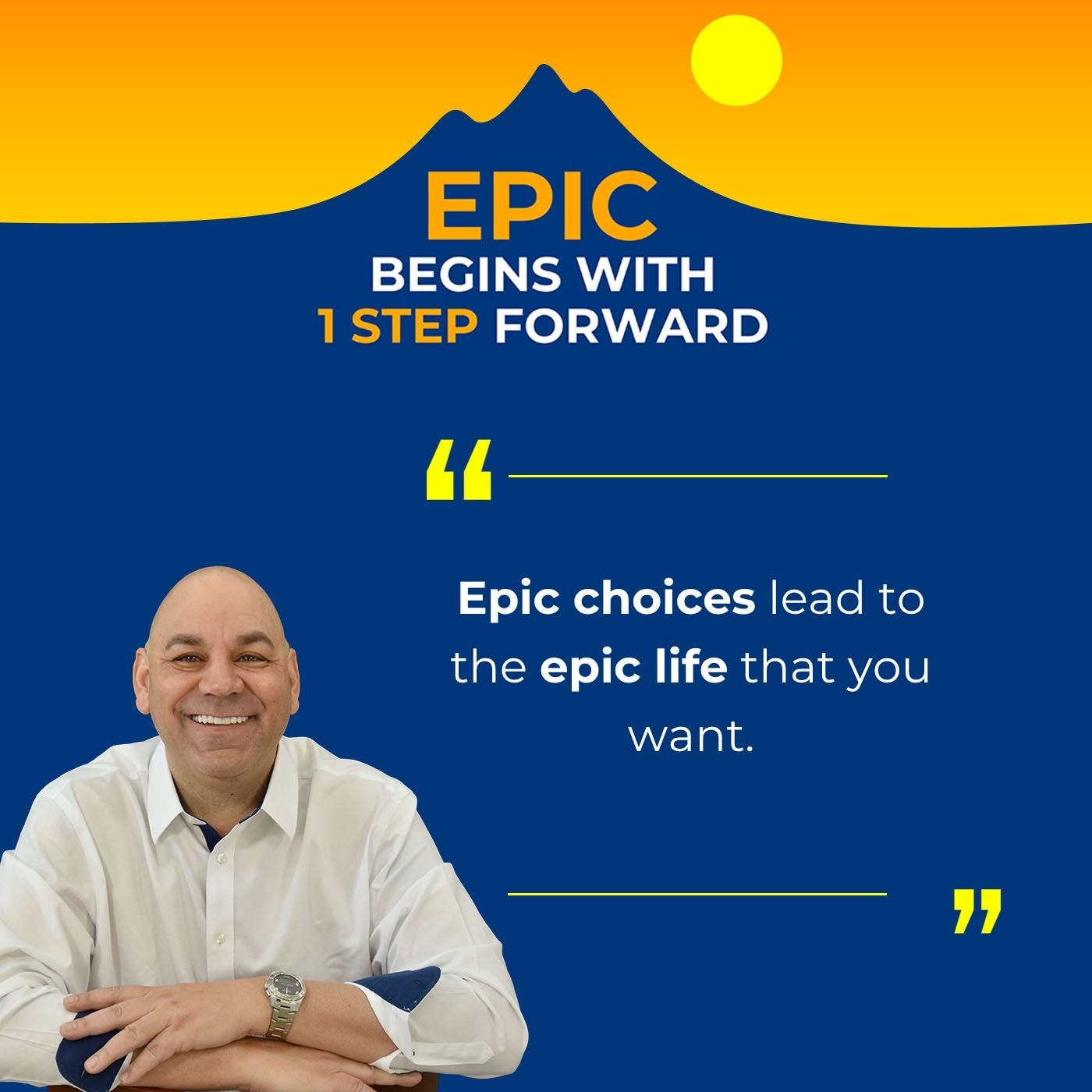
I want to remind everyone that if you’re ready to begin your epic journey, go to EpicBegins.com. Remember, as Len has demonstrated, epic choices lead to the epic life that you want.
Important Links
About Len May
 Len May is a polymath, global speaker, and recognized authority in personalized medicine, genetics, and human optimization. As CEO and Co-Founder of EndoDNA, he’s pioneering a new era of precision health, using genomics and AI to help people understand how their unique biology shapes their wellness, focus, and fulfillment.
Over the last 25 years, Len has built and exited multiple multi-million-dollar ventures while leading EndoDNA’s breakthrough work in genetic wellness and endocannabinoid science. The company’s patented DNA→Protocol platform now powers personalized protocols across hormone health, longevity, cognition, and nutrition, serving thousands of patients and practitioners worldwide.
But behind the science, Len’s story is deeply personal. Diagnosed with ADHD as a kid, he spent years believing his brain was broken. What he later discovered changed everything: his brain wasn’t broken—it was wired differently. That realization inspired him to study genetics, dopamine, and flow states, developing frameworks that work with the brain, not against it.
Now, through Len May Coaching, he helps high-achieving entrepreneurs, investors, and creatives , many of whom lead companies valued in the billions, reframe their wiring, reclaim their curiosity, and design lives that feel aligned.