It started when I put on a Superman costume at four years old and began trying to carry the weight of the world on my shoulders. For nearly 30 years, I’ve worked as a structural engineer, entrepreneur, and business leader, helping build and repair iconic structures while building a company and teams that have performed at a high level year after year. But along the way, I was unable to acknowledge, assess and repair the cracks I was carrying and it cost me everything. After the sudden loss of my business partner, the end of my marriage, and years of carrying pressure, anxiety, and a lack of self-worth I didn’t fully understand, I was forced to examine what I had been hiding beneath everything I had built. That rebuilding process changed how I understood success and eventually became… “The Structure of Excellence,” A practical philosophy for building, supporting, and continually adapting a life capable of performing at a high level, over time, for the right reasons. Drawing from engineering, leadership, and my own failures and rebuilding, I explore how the right support, applied to the right problem at the right time, can change what we’re capable of sustaining. My frameworks provide alignment with what matters and a practical structure for putting those ideas into action. I finally took off the Superman costume. I’m no longer trying to save the world…but I’ll never stop trying to help it.
Free E-book – https://dl.bookfunnel.com/afk096okro
Apply to be a Guest on My TV show – https://www.epicchoicemedia.com
#Structural Engineer #TheStructureOfExcellence #LeadershipVulnerability #EPICBeginswith1StepForward, #ZanderSprague
—
Watch the episode here
Listen to the podcast here
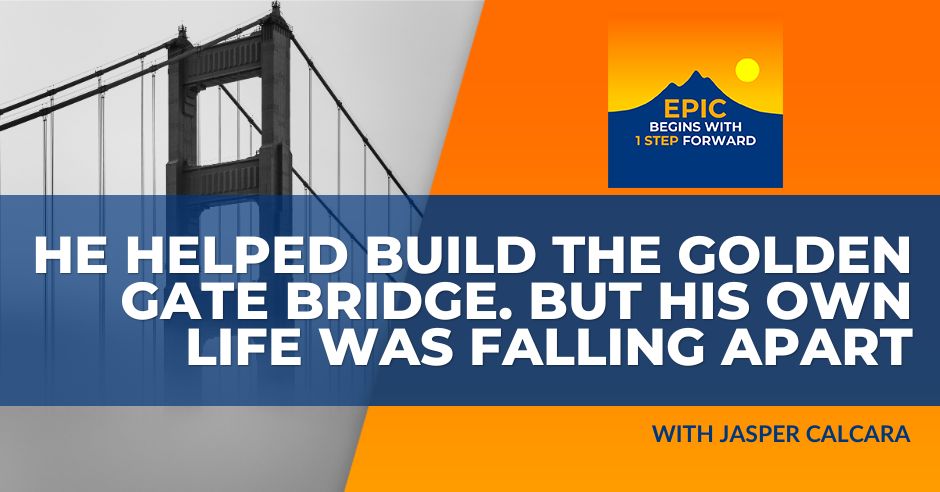
He Helped Build The Golden Gate Bridge. But His Own Life Was Falling Apart. With Jasper Calcara
Building Legendary Support Systems In Structural Engineering
I’m very excited to have Jasper Calcara join me. Jasper, welcome. Tell us who you are and what you do.
I’m happy to be here. Thank you. For the last nearly 30 years, I’ve been a structural engineer. I work on some of the most iconic structures in North America, Golden Gate Bridge and all the way to the other coast. We’re in a special focus of structural engineering, which is we don’t design the buildings or bridges themselves. We provide the support to allow them to be built, to be prepared, to be strengthened.
There’s not a lot of engineers that do what we do, so we’ve been able to grow and stay at the top of our industry for decades. Through a lot of the lessons that I’ve learned there in building my business, supporting structures, and having lost some important things in my personal life, I’ve been using that as lessons to teach a lot of growth in all of those areas.
I’m interested in understanding how you came to structural engineering.
It comes from my childhood. My dad worked construction in San Francisco. I’d cross the Golden Gate Bridge every week that I’d visit him. I literally just started to build a dream of becoming an engineer and working on the bridge. I worked hard through high school, got into one of the best engineering schools in the country, which has a view of the bridge. It kept me motivated as I went to Berkeley.
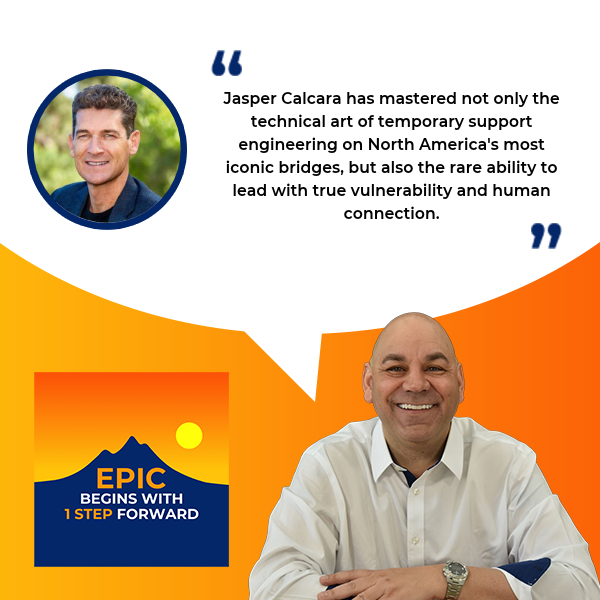
I graduated and got very lucky to link up with the founder of the company that I run now. He also went to the same school. He was just settling down and starting a business in his hometown. He and I had a grand unit. I got to start from ground zero of building a business in a very dynamic area of engineering, but it’s just always been in my blood watching buildings around me through my dad and also loving to build myself.
I would assume just being fascinated about, how is that happening? How are they doing that? How’s that held up? That curiosity is important for all of us. I think all of us in different parts of our life, we do what we do because we’re just curious about it. We’re like, “How does that work?” I know, as a mental health professional, I’m just curious as to why relationships are the way they are. Why are people acting the way they are? That led me to mental health. You mentioned that you don’t like to do the structural design or original design. However, your company is doing the ongoing structural maintenance. Is that a proper way to put it?
Almost. It’s funny, because in college, I thought I would be designing buildings. That’s what all structural engineers think when they go to school. I ended up studying the dome in Florence when I was in college in Architecture class. It happened to be a structure that I was drawn to. I wrote this whole paper and the paper was about how the architect had invented new technologies to build something that had never been built before. That essentially ended up being my career. We are helping contractors build things that have never been built before, speeds that have never been seen before, and maintaining safety that’s never been achieved before.
That’s where we come in. We either help them with all the engineering complexities of building something or maybe supporting and strengthening to repair something like the Golden Gate Bridge. I did end up working on it for decades. All the support systems to allow it to be repaired and strengthened or the new Bay Bridge, right in your backyard. I worked on that bottom to top in helping them support the soils, support the towers and then get the workers where they needed to be. That’s an example of how we support the industry.
Navigating High-Paced Emergencies And Technological Innovation
Years ago, I heard and I’m like, “It made sense, but I never thought of it. For example, when they’re designing a skyscraper. The place that they start is at the very top. What is on the top? You obviously have to build everything else to support the spire or the observation deck or whatever. Although that made sense, I never thought of it. I thought, “You start with the foundation and stuff.” That makes sense. You can’t build a foundation until you know what the foundation has to support. What were some surprises that you found when you began being a structural engineer?
The biggest surprise that I found was just the pace. When you’re designing a building or as you’re saying a skyscraper, there’s typically months of planning. There’s teams working on very specific parts, the foundation team, the tower team, or whatever it may be. For us, it’s almost always an emergency. A lot of the construction industry doesn’t often know what’s coming next when it comes to the engineering challenges they might face.
Some of the biggest projects for sure, when they’re building the new bridge, they are planning ahead. They’re getting in place the teams that need to support different things. Even on a project like that, every day is a fire drill. We’re getting calls with these emergency needs because of what’s happening out there on a real-world construction site, or with a building that’s been damaged or a building that’s 100 years old and they’re opening it up. Everything is happening very quickly. That was something that me and my team have to be very comfortable with, is the very quick problem solving and communicating effectively.
That’s been the most important skill set. Engineers aren’t known for our communication skills. We tend to be seen as more introverted. In this profession you can’t be. You’re having to describe, explain and exchange extremely complicated concepts real time so that we can help design the solution. They can implement it, and we can support them through the process.
In this profession you can’t be introverted. You’re having to describe, explain and exchange extremely complicated concepts real time so that we can help design the solution.
I’ve always been fascinated by technology. We’re obviously surrounded by it. In your line of work, what, for you, have been some of the biggest advances in technology that make your job easier, finding solutions faster?
When I started again, it was just he and I. We have grown the company to be one of the leaders in the industry for decades. The sad part of the story is that I lost Don about twenty years ago to a tragic car accident. When we were building the company from the beginning, I was so appreciative that he allowed me to have a voice and I was constantly looking at everything we did. I found a plan in my drawer of old hand-drawn drawings and 30 pages of handwritten calculations and email was brand new.
Everything that we did that wasn’t quick and efficient or that I hated, I would attack it with technology. That’s never changed. My entire career has been, how can we streamline the things that we don’t enjoy doing or aren’t valuable so that we can do the most valuable things the most often? Early on, it was taking simple things and converting them into an electronic world, like using email and CAD on everything and starting to get our calculations. Not handwritten.
It expanded from there. I pushed the envelope of technology on a budget because we were a startup. As we opened offices in different cities, I wanted us to feel like we were all operating in one room. Which was difficult with technology 25, 30 years ago. I had this incredible support system where I had an IT guy and we would attack every technical challenge and put together the best solution that we could knowing it was temporary. The reason that’s so important is that my entire world is temporary support.
Everything that we did that wasn’t quick and efficient or that I hated, I would attack it with technology. That’s never changed.
I go into a project, I give it the best temporary support it needs, and then I leave and leave the structure in a better place. I approach the same thing with everything related to my business building. Everything was a temporary support to get us to that next level knowing the next support is going to be different because we’re going to be a bigger company. Technology is going to change.
What are some of the new materials that have come out since you started that you’re like, “That is great?” The first thing that comes to my mind is carbon fiber and stuff like that. It’s very strong, and very light.
What’s interesting about our world is that we’re not designing the structure itself. We’re not designing the bridge and all of the state-of-the-art technologies of the bridge itself. We’re coming in and trying to utilize materials that are regularly stocked and available and can be reused. It’s an industry of reuse. Since you can’t design a custom, most expensive support system for a one-time use, you throw it away. That’s why materials have been increasing in capacity and capacity in what I’m working with.
We’re still working with materials that are 20, 30, 40 years old because they can be reused project by project. Where we advance technology and how we use them, that’s where we push things to the limits. It’s how we can build these things so that they can most efficiently be implemented with the products available, get the job done, pull the product out and be able to reuse it somehow on a future project.
Uncovering Emotional Cracks Amid Unexpected Life Earthquakes
Now, I do know that you had all of this success. You were growing this business, then there were some what I like to call the epic unexpected. Those things that you had no way of forecasting, and yet here you are. You mentioned, unfortunately, that your partner in the business died in a car accident. I’m so sorry about your loss, but there were other things, and it caused you to look at your own life. Can you talk a little about that?
The way I talk about it is like, life puts all these pressures on us. All these external pressures, judgments, expectations, or responsibilities. We have all this pressure we’re carrying, different people to different levels. We try to build lives that can handle it, but then there’s the earthquakes that hit us. The ones that we just can’t plan for. We can’t expect it. That was one of them. My first child was born two weeks before I lost Don.
These two huge changes in my life and my response weren’t the healthiest. A lot of people don’t plan well enough so that their responses aren’t the healthiest. Especially driven business owners, we tend to take on everything. It’s hard for us to truly ask for help. It’s hard for us to slow down and say, “Is this healthy?” We tend to sacrifice our personal life saying, “We’ll get to that eventually.” It was that sad and unfortunate response that I used that a lot of people do that are trying to build businesses aggressively.
I know as an entrepreneur for over two decades, there’s those pressures. In a funny way, a lot of your job as a structural engineer is understanding about pressures. What pressure is on this thing? How do I relieve pressure? How do I offset pressure? Yet, like most of us, you could talk about it, see it, except in your own life.
The way I talk about it in a lot of my speaking engagements in the book I’m writing is I’m telling it through the lens of structures. Everybody can visualize something like the Golden Gate Bridge and understand there’s traffic flowing over. It’s getting hit by wind and every once in a while, an earthquake. They can understand those pressures and forces. They can also understand that it’s been over 100 years. It’s corroding. It’s cracking.
It’s breaking down and it needs to be strengthened or repaired. If it wasn’t, it would be in danger. We carry those cracks too. Those are the emotional cracks. I tell the story through that where I was hiding all my emotional cracks under layers of armor, a Superman complex. I couldn’t acknowledge them. In a business, where all I ever did was acknowledge weaknesses in buildings and my business, give it everything it needed at the right time so that it could be healthy, I couldn’t do it personally.
I lost my marriage. I talk to business owners all the time where they’re struggling at home and their business is running well. I’m like, “You would never put up with that behavior in your business. Why are you putting up with it at home? Why are you willing to have such friction, such misery, such dysfunction occur with your marriage when at your business you would address that with whatever you have to give it? I had to laugh at myself for being so naive and doing the same thing.
I had to commit to that hard work. I had to do it for the right reasons. I had three beautiful young children to do it for. That kept me focused.
We all have blind spots, Jasper. We all have those things that we justify, rationalize, and put off. It’s like, “I’ll deal with that next week,” but next week comes, but it’s the carrot on the stick. I find as do a lot of people that my definition of being old seems to be moving out twenty years in front of where I chronologically am. It’s like, “I’m not old.” Old is twenty years down the line. That’s not me.
From a mental health perspective, that is interesting. Why are we putting up with this thing, justifying it, and rationalizing something that we so easily, in another part of our life, identify and solve? I don’t have an answer for it. Eventually, it comes to a point where the crack is big enough. We can no longer ignore it and we have to address it. Oftentimes, addressing it is although a painful process, you come out stronger on the other side.
The way I teach it and tell it is like, it’s about acknowledging the cracks. If I was to go to a building that I needed to support, I quickly looked at it and said, “I’ll put a support system in place.” That’s not safe. I’m having to take the time to uncover the true cracks and damage. I might need to hire a specialist to come in with some scanning device that can see damage deeper than I can see.
It’s the same thing with us. We bury these cracks so deep. I’ve been burying them under armor my entire life. A lot of people struggle with lack of self-worth. Since we’re little kids, we’re finding a way to compensate for that. Be the best in class. Get your A. Be good at sports. Set your next goal. You’ve been doing it your whole life so that by the time you’re 20, 30, or 40, it’s so buried. You truly need the experts, the specialists to help you uncover them and then acknowledge them, support them, heal them, just like I do with any building that I work on.
Ditching The Superman Complex And Asking For Help
If you don’t mind, for you, you had that dual moment of joy and sadness. It sounds like that was a breaking point for you. What was your epic journey to get to where you are now?
The first earthquake of losing Don, I essentially had my same rigid response I had applied my whole life. Take on more pressure. I literally talked about the Superman complex I had. I hid behind a Superman complex since I was a kid. I was like, “I’ll just save the world again. That’s what I was built for.” Inside, I’m just cracking and falling apart. Don was a huge support system for me, and I lost him. I lost an uncle that was a huge support system for me, then I lost my marriage.
It was that time between the loss of my business partner and the loss of the marriage where I needed the support and the repairing that I didn’t give myself or I didn’t get. It was in losing the marriage where I lost everything that I had been building for. I talk a lot about excellence. I’ve always tried to achieve excellence in my life in every way. In business, I have achieved excellence. In my projects, I used to achieve it.
It looked like I did at home, the beautiful family, the beautiful house, the respect, the wealth but it was not a true excellence because it was hiding so much unhealthy structure underneath. When I lost my marriage, as horrific and painful as that is, I could see a future. I could see a future version of me that doesn’t heal and doesn’t change. It’s so sad to see this in so many divorces where one side or the other, but often the man destroys his ex in the divorce. The kids are lost in the middle. He’s an empty shell of a person doing damage in the world.
I just couldn’t let myself go down that track. I finally went out and got the help I needed. The right therapist to help me identify and acknowledge my cracks so I could truly start to repair them. I had to commit to that hard work. I had to do it for the right reasons. I had three beautiful young children to do it for. That kept me focused. That was my compass so that as difficult as it got, it always brought me back to center. I asked for help. I started to spread the load and the pressure so that I could repair myself.
We know how we’re going to respond when things get difficult. We’ve learned the skill set of bringing in the right support system to limit the damage. We don’t need it to cost us everything.
Therapy can be incredibly helpful. I say all the time, I’m here to help people where they’re stuck. When you’re not stuck anymore, you don’t need me anymore. That’s great. That’s my job. You as a structural engineer. We keep talking about the Golden Gate Bridge. If it needs help, some repair, some propping up, but when you’re done, you move on to the next thing. You don’t need to be there all the time.
In therapy, I know from just being on both sides, having my own personal demons and I’m like, “I got to deal with that.” Those slogs through whatever that is are never easy. However, you’re so much happier once you’ve worked your way through it. Sometimes it takes a very long time. We’re still working our way through it. We think that we’re doing well. We’re taking care of ourselves, then we notice, “I’m slipping back to something.”
You’re happy to have done the work. You don’t want to go do it again but you’re like, “I am a better me. I understand myself better. I understand those warning signs.”’ I talk about that in my upcoming book, Epic Reset, where I talk about how we have patterns. We have literally condition responses to condition stimulus. This happens, and I respond this way. Sometimes we recognize that response is not healthy. We have to figure out how to interrupt that and find a way to go, “I need another choice because this choice is not working.”
There’s such a pressure of relief when you heal these things, because so many of us, we hide them and we feel shame over them. That costs us a lot. A lot of pain, misery, and stress. When you finally take off that armor, which I finally did in front of my family and my employees. I showed I’m not invincible. That is difficult.
It’s scary, but it just relieves this huge weight you’ve been carrying. When you start to heal and strengthen, you feel like you can conquer the world because you’re not compensating for all of these things that hold you back. It’s this huge weight and burden that you carry. You nailed it perfectly, which is we’re all going to spiral. We’re all going to backtrack but knowing our cracks and our weaknesses just like in a building.
I know that a building, if it carries a certain vulnerability and it gets hit by something, it’s going to show up in a certain way, so do you and I. We know how we’re going to respond when things get difficult. We’ve learned the skill set of bringing in the right support system. It might be just calling the right person at the right time, or it might be much more intense. We’ve learned how to bring in those support systems when we need them to limit the damage. We don’t need it to cost us everything.
We fill our toolbox with the tools that help us to recognize, “I know what that feeling is.” Maybe I can’t stop it. Part of my job is to talk about grief and stuff. Grief can be overwhelming and literally derail your day. Some little thing. You could have been driving by a building that you guys worked on at the beginning and all of a sudden, you just get all sad because you see the building and it reminds you of Sam and stuff, but you have the tools.
We built this tool set to say, “I recognize this and here’s what I can do to do it.” Did you find that when you were vulnerable in front of your family, and I’ll say, “Surprisingly, they were very supportive?” Not that they wouldn’t be supportive, but I think in our mind, we have conversations without the benefit of the other person being there. They always say the worst possible things, then when we do get brave and we do say, “This is going on. I’m scared. I’m sad. I’m whatever.” The reaction is not to tear you apart, but to just be supportive. All of a sudden, you’re like, “That wasn’t that hard. Why did I wait twenty years to do that?”
It was not freeing. It had all of these compounding benefits. That’s what I like to inspire people and motivate people to take on these difficult things. A lot of times, they think, “I’m going to be constantly doing hard work. There’s no payoff, or it’s going to take away from my ability to be successful in my professional life by focusing on healing in my personal life.” What I found is it accelerates and amplifies your ability to do things professionally.
How Personal Healing Amplifies Vulnerable Business Leadership
For instance, in this case. I had been running this business and we’ve been operating at the top of the level, but I was projecting this invincibility. You had to be perfect. We were operating at near perfection. The problem is you can’t operate at that intensity for too long without cracks starting to develop or things losing key personnel or problems showing themselves that we’ve been hiding. I truly feel that by finally acknowledging to my team that, “We are just people. We are vulnerable. It made it a safer space for us to be human.” That avoided this potential catastrophe in the business because businesses, especially ones with founders and single leaders, can live and die by that leadership.
Without a doubt.
I knew that I wasn’t leading in the healthiest way. I cared about culture. I cared about my team members but you can care but still project something that was unhealthy.
You’re right. When one person is identified as being the thing, what it is, there is a lot of pressure and there isn’t that thing. All too often in our own lives, but in business especially, failure is part of the journey. We are going to fail at things. We don’t want to. We try very hard not to, but there are things.
I know as an entrepreneur, I’ve tried different tools that are supposed to help me in my business. They’re not bad tools. They’re just not the right tool for me. I spent the money. I bought the software. I’m sure in your job, there is stuff that you’ve tried and it wasn’t structural failure, but that didn’t work the way we wanted but there is great learning of like, “Let’s not do it this way. That didn’t work.”
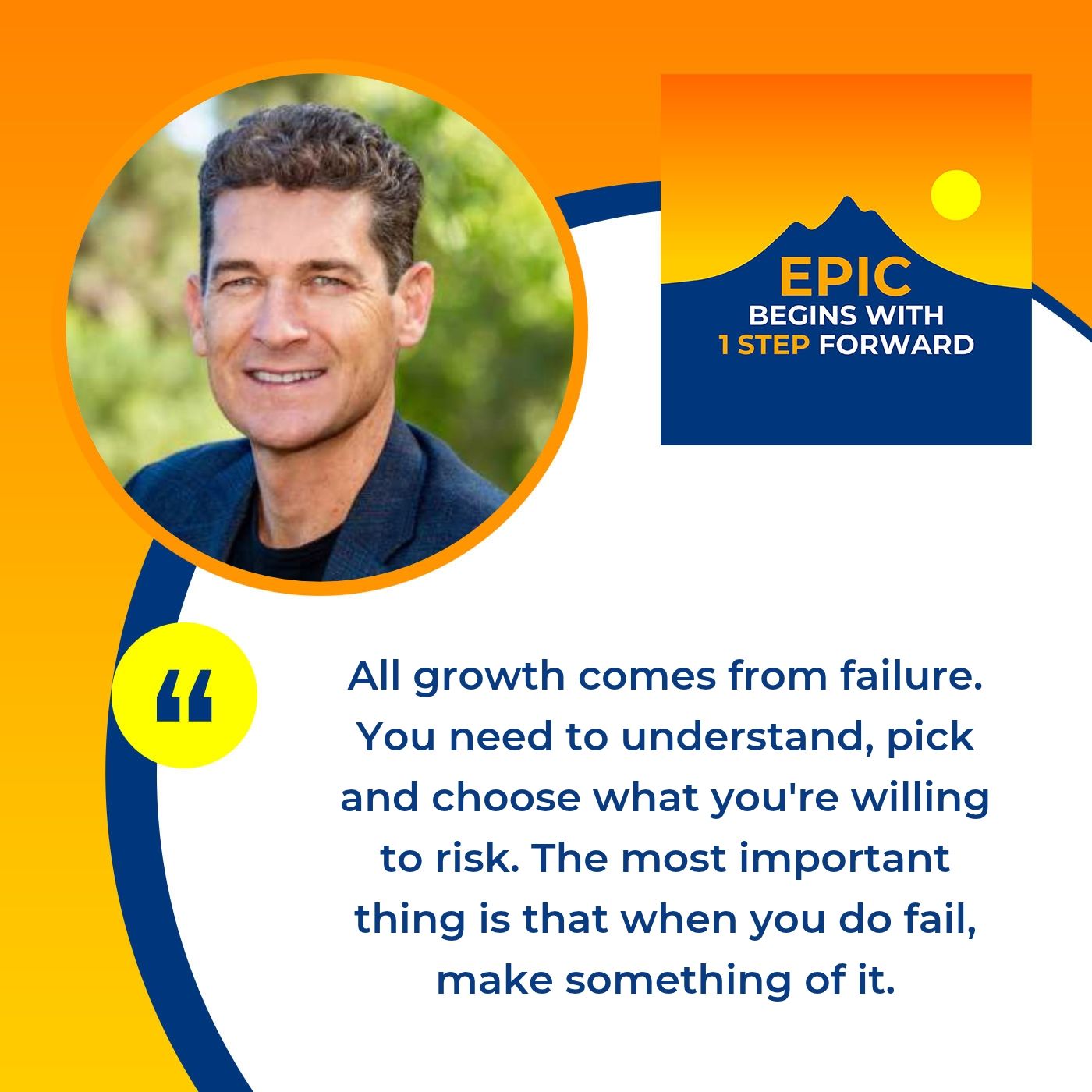
I feel like in society these days, we’re just trying to find comfort and ease in everything. We want everything to be easy. Everything to be a quick fix. Everything works for the long term, but all growth comes from failure. You need to understand, pick and choose what you’re willing to risk. I might risk some efficiency or I might risk some money, but why did I risk my marriage? Why did I risk something so important to me?
Those are the questions people need to understand is that it all comes with risk and there’s all kinds of potential outcomes. The most important thing is that when you do fail, even in the biggest failure of my life, that I’m making something of it. I’m building a life that I’m proud of as a result. I’m hopefully going to help many people not repeat a pattern that I did. That’s the difference between letting some failure weigh you down and restrict you from moving forward in your business or your personal life. I want to inspire people to do hard things and take risks, but know what you’re risking and protect what’s important.
Defining Failure And Connecting With Jasper Calcara
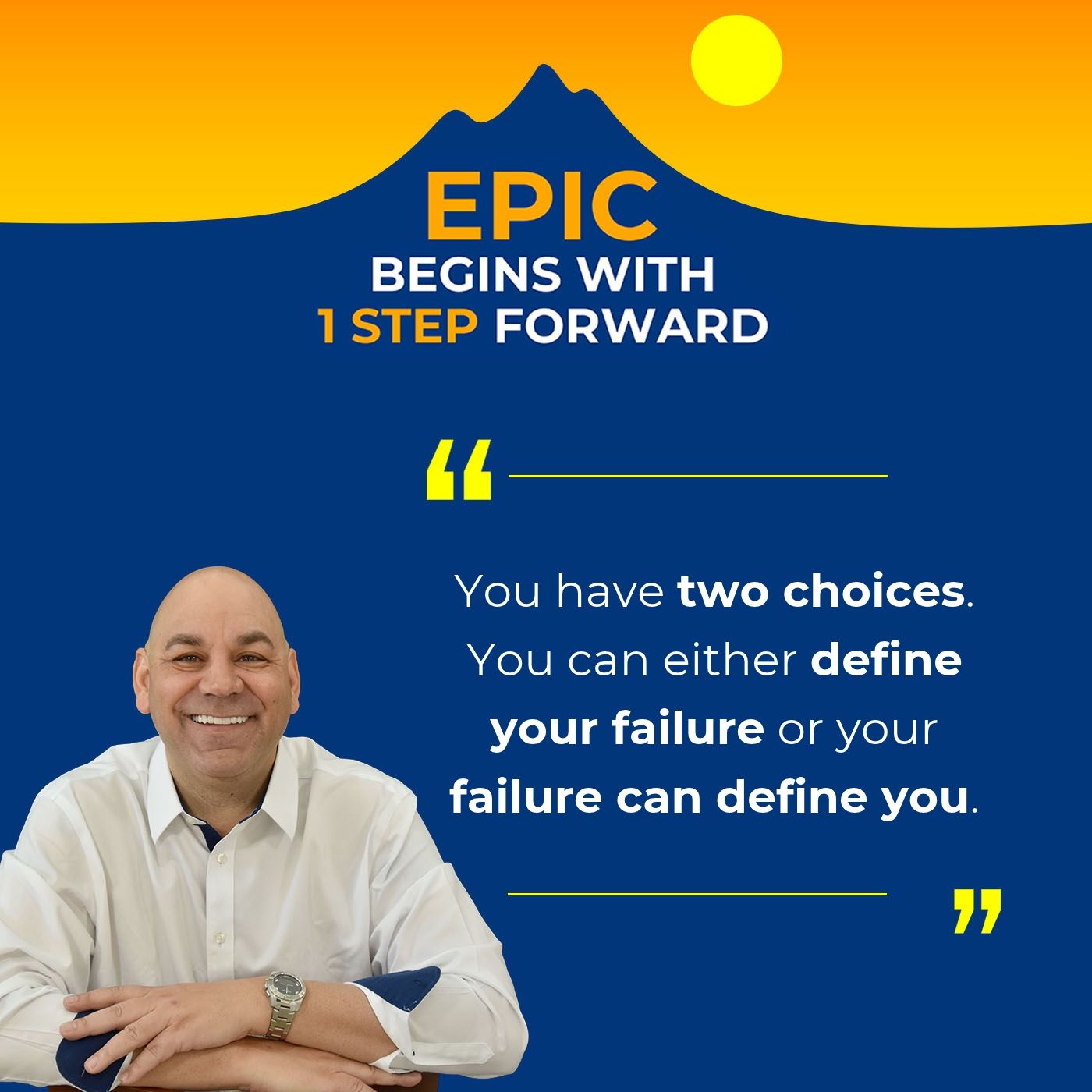
To dovetail just on what you said at the end, how about if we phrase it this way? You have two choices. You can either define your failure or your failure can define you. I don’t know about you, but I prefer and choose to define my failure because it isn’t all of who I am. Jasper, how can people get a hold of you, find you? You said you have a book coming out. Do you know when the book’s coming out?
The easiest way to find me is my Instagram, my website. It’s JasperCalcara.com. YouTube as well. If you just search my first and last name, it will come up. It’s fairly unique. The company is D.H. Charles Engineering. It’s still named after the original founder that I know would be so proud of everything that we’re doing in his name. The book’s hopefully going to come out early 2027. I’m making a lot of progress on it. There’ll be other frameworks and support systems that I’ll be releasing as well. Anything that resonated in this interview, I’d love to hear back from people.
Thank you, Jasper. What an epic conversation spanning so many things. Thank you so much. I want to remind everyone that if you’re ready to begin your epic journey, go to EpicBegins.com. If you want to kick off your 2027 with an epic bang, I have a live event happening in Berkeley on January 23rd. Go to Epic-Reset.com to get all the details and to sign up. I want to remind everyone that epic choices lead to the epic life that you want.
Important Links
- Jasper Calcara
- Jasper Calcara on Instagram
- Jasper Calcara on YouTube
- Jasper Calcara on Facebook
- D.H. Charles Engineering
About Jasper Calcara
 It started when I put on a Superman costume at four years old and began trying to carry the weight of the world on my shoulders. For nearly 30 years, I’ve worked as a structural engineer, entrepreneur, and business leader, helping build and repair iconic structures while building a company and teams that have performed at a high level year after year. But along the way, i was unable to acknowledge, assess and repair the cracks I was carrying and it cost me everything.
After the sudden loss of my business partner, the end of my marriage, and years of carrying pressure, anxiety, and a lack of self-worth I didn’t fully understand, I was forced to examine what I had been hiding beneath everything I had built. That rebuilding process changed how I understood success and eventually became… “The Structure of Excellence” A practical philosophy for building, supporting, and continually adapting a life capable of performing at a high level, over time, for the right reasons.
Drawing from engineering, leadership, and my own failures and rebuilding, I explore how the right support, applied to the right problem at the right time, can change what we’re capable of sustaining. My frameworks provide alignment with what matters and a practical structure for putting those ideas into action. I finally took off the Superman costume. I’m no longer trying to save the world…but I’ll never stop trying to help it.