
Imagine being afraid to speak your entire childhood, and then making public speaking your career.
On this episode of EPIC Begins With 1 Step Forward, Zander talks with public speaking coach, speaker, and author Peter George, who grew up with a lisp and stutter and rarely spoke in school, only to build a career helping others become calm, confident, and credible communicators.
Peter shares the lesson that transformed his approach to speaking: it’s not about the person on stage. It’s about the audience.
Together, Zander and Peter explore storytelling, overcoming fear, connecting with audiences, virtual versus in-person speaking, writing books, and why good communication should do more than simply inform, it should transform.
They also discuss Peter’s inspiring “not yet”: creating a book to give hope to children who stutter.
Free E-book – https://dl.bookfunnel.com/afk096okro
Apply to be a Guest on My TV show – https://www.epicchoicemedia.com
#EPICBeginswith1StepForward, #ZanderSprague, #PublicSpeaking, #CommunicationSkills, #Confidence
—
Watch the episode here
Listen to the podcast here
He Had A Stutter. Now He Teaches People To Speak With Confidence With Peter George
I have a very special guest, Peter George. Peter, tell us who you are and what you do.
Thanks for having me here. It’s a pleasure to be here with you and your audience. As a public speaking coach, speaker, and author, I help executives, consultants, and financial professionals become confident and credible every time they speak in public. Many of them need that help.
That I have to say, having been a professional speaker for over 25 years, I get that. There are people who are professional speakers, and yet I may see them up on stage and think, “You’re not as confident as I thought you might be.” As a speaker, I always like feedback to improve what I’m doing. Let’s go back a little. How did you get started being a professional speaker and a speaking coach?
Transforming Silence Into Stage Mastery
It wasn’t by choice. It was never planned. I grew up with a lisp and a stutter. I went through most of schooling without ever opening my mouth. I would speak to my family. I would speak to very close friends but I would never answer a teacher’s question. They knew that going in that I wouldn’t do that. The last thing I ever thought I’d be doing is speaking for a living. What happened when I got out of school, I went to work for one of the world’s best-known brands.
Part of my responsibilities was to speak to C-level people and deliver presentations, which I didn’t know how to do. I spent a lifetime shutting up. Not speaking. I could either find a new job, which I didn’t want to, and this was a great job, or learn to present. They sent me to school and it was group training. What I learned there was I had been not learning, but observing public speaking my entire life by watching it from afar and trying to avoid it. When I went for that training, it didn’t feel natural, but it felt comfortable. It was like, “I understand this.” That went very well. After that, I asked them to send me for one to one training with a coach. He’s long gone, but he deserves 50% of every dollar I’ve ever made.

It is amazing the help that we get. I have to say that as a professional speaker, a member of the National Speakers Association, I am always impressed with how giving the members their time and knowledge. Even though, technically speaking, we’re all competing against each other for that spot on the stage. We’re not. When one of us succeeds, we all succeed. A good presentation from a professional speaker, you go, “I want to hire a professional speaker.” What were some of those early mistakes that you made that you learned how to fix? I always love to delve into public speaking because we’ve all made mistakes.
We’ll continue to do so. The biggest mistake, looking back that I made, was and I was very fortunate. A major company came to me and said, “Will you speak here in the Northeast for us?” They did that because the company I owned when I left this major corporation was one of the first to use one of their new products.
They asked me to go speak, then they asked me to speak at their conference. I was very fortunate to be speaking for a company such as I was. I thought, “All these people are coming to listen to me. I must be awesome. This is fantastic. The “limelight” is on me. It’s all about me.” My ego got so big then I spoke to my public speaking coach. I hadn’t spoken to him in a little while.
Shifting The Spotlight Off Yourself
He said, “What were people saying afterwards?” I said, “They were saying great job. That was fantastic. Good presentation.” He said, “That’s so unfortunate.” I said, “What are you talking about?” He said, “Peter, you didn’t give them anything to talk about. They didn’t come up to you and say, ‘I didn’t know that. That’s going to make a difference in my life. I’m going to implement that tomorrow’ or whatever it might be. All they could say was a polite thing about a great job.” That’s when I learned it wasn’t about me. It’s about the audience and always will be.
I know my goal is I want someone to walk away with some piece of what I’ve said, that 2 weeks or 2 months later, they go, “I spent seventeen years doing technical training, teaching people how to use software for various big software companies and stuff.” My goal when I was teaching was that when you run into this problem two weeks from now, it’s all clear in the classroom. It’s always clear in the classroom, but can you remember what it is that you need to do in this situation two weeks from now?
That is part of what speaking is. You’re up there to teach something and you don’t know what people are going to walk away with. You don’t know what nugget. It’s always interesting when I get off stage when people come up and they will share what was meaningful. Sometimes I’m like, “Really?” The thing I thought everyone was going to grasp onto was this, but it’s something. Do you use stories to help make your point when you’re speaking?
Using Stories To Make Lessons Stick
Inevitably. We all should, as far as I’m concerned, because stories stick with us. I’m sure you could take a good shot at fairy tales that you haven’t heard in decades since you were a little boy. I ask people, “Can you tell me the three little pigs? Not exactly how it’s supposed to be, but can you take a good shot at it?” They’re like, “Yes.” I’m like, “How old are you?” I’m in my 60s and I haven’t heard it since you were five. Yet six decades later, you can remember that story. At least the moral of the story. They stick with us.
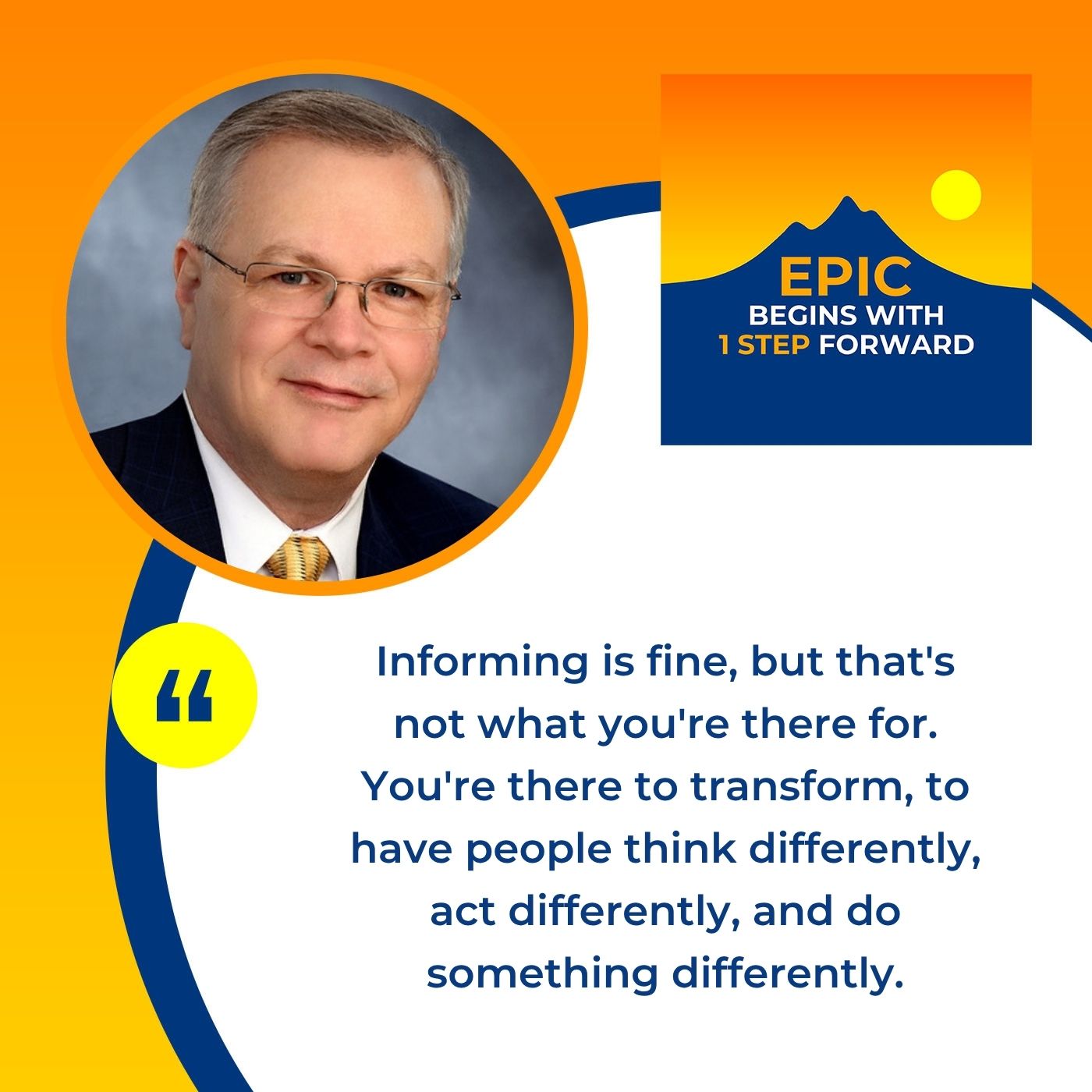
Tell stories. We want to tell facts. One of the things I say to people is, “You’re going up there and informing. Informing is fine, but that’s not what you’re there for.” You’re there to transform. Have people think differently, act differently, and do something differently. That’s transformation. Stories help transform people because they stick with them. You might know of Jay Baer, who’s in the NSA.
Jay had a great line that is, “Judge your presentation by what people remember today or how they’re affected today.” You judge it by how they’re affected, very much like you were saying, but six months from now. If they still have that nugget six months from now and that means something for them, then you’ve done your job. Stories are a great way to make that happen.
I love telling stories. I think stories are an incredibly effective way to teach secrets. Where I’m telling a story purposely because there’s something I want you to walk away with. If I tell you, “Peter, you need to pay attention, and this is the important part.” Maybe you will or you won’t, but just like the three little pigs. If you tell a good story, that’s what people walk away with and then they get that little piece of education that you were trying to drop on them. They don’t even know that you were teaching them.
No, but it sticks with them.
It does. The days I get to get up on stage are great days. That’s my happy place. I love it. It is somewhat harder to get up on stage, one, am I nervous? Yes, but I love being in front of people. Again, that’s why I do what I do. That’s why I have a podcast and a TV show and stuff because I like to talk. I chose the right thing but you’re nervous. You get up in front of a few thousand people.
Now, one thing that I wanted to talk to you about is with the advent of all of this fabulous technology we have and COVID, now people want to do lots of virtual presentations. Being a speaker is a good thing. I don’t have to get on an airplane and take three days to give a one-hour speech because you got to travel the day before to give the speech. Maybe fly home that night if you’re lucky. It depends where you are. My own personal feeling is, although I welcome that opportunity, it is so much harder as a speaker to not be in front of people.
Breaking Past The Screen Barrier
When you’re with people, I don’t care what it is. When you’re with people, you get feedback that you can’t get through a monitor and a camera. It’s visceral. You can feel it. To me, at least, there’s a completely different feeling. Can I get up and speak in front of a camera? Sure, I can but I don’t get that feeling that I want. That feeling back from them that you can almost reach out and touch them.
Only because we sit on video calls all the time, people are not necessarily as engaged. It’s much harder to gauge how you’re doing. I know as a speaker, every speech is dynamic. Depending on how the audience is reacting. Maybe I make the story shorter because I’m like, “I’m losing them in this story. Let me go on. I’ll pull out something else.” Maybe most of the audience is into what you’re saying. You’re like, “Let me expand on this.” They’re engaged but you do. You get up there.
I have to say that the virtual is hard because, first of all, if you’re looking at the participants, there’s what I call the Zoom face. It’s this slack-faced. For those of you reading, it’s like the dead-eye stare. No expression. They’re listening, but they’re not engaged. They’re not smiling. I’ve been fortunate to ask to do a couple of keynotes virtually, and I had to record it. That’s hard because keynotes tend to have some energy to them. I’ve got a lot of energy, but it’s hard to do it when it’s just me in the room.
You don’t need a perfect start to become an impactful communicator. Growth starts when you choose to learn. #PublicSpeaking
First of all, I know all my jokes. If you have something that’s funny, I know how every story ends already. More importantly, if you have something that’s funny, you don’t know how long to pause. If you start to talk too soon and people are laughing, they miss what you say next or if you pause too long, they think something’s wrong with the video.
Exactly. You need the feedback. You really do. Is it a tool that we can use or virtual? Yes. Can it replace being in person? I don’t think so.
Absolutely not.
As a friend says, “You can’t get a haircut through the internet.” There’s something that should be done in person when it can be done.
I related to that. I live here in the San Francisco Bay Area and I was driving over in Sonoma County when I saw a billboard that said, “AI can’t fix your plumbing.” I was like, “That is great advertising.”
It’s true. It can do a lot of things. There’s a lot of things it will never be able to do.
Exactly. I love talking about people’s epic journeys. You’ve spoken around the world. You’ve written a book that is a six times bestseller.
Six times award winning.
Talk about why you decided to write the book and what the book is.
The reason I decided to write the book was because someone encouraged me, let’s say. After I left the corporation I worked for, I spent almost a decade there. I went out on my own and I started a publishing company. I didn’t know anything about publishing but fifteen years later, I sold it to a major publisher, so something worked out okay.
Sure. You figured it out.
The funny thing about it was I was doing my very first podcast years ago. The person I was interviewing was Bob Burg. I don’t know if you’re familiar with Bob Burg or not.
I heard the name, but I don’t know much about Bob.
Pushing Through The Book Writing Struggle
Bob has written New York Times bestsellers, The Go-Givers, the main book. We were talking and he said, “When are you going to write a book about speaking?” I said, “Bob, I know what’s involved with writing a book. I don’t want to spend that much time doing it.” He didn’t take no for any answer, so I had to give him a finish date, by the way, and I did. I finished the book. I finished it three times. The first two times, I didn’t like it, and the third time was the charm. That book follows how I work with my clients.
Facts inform people in the moment, but stories transform how they think six months down the road. #Storytelling
If you were sitting with me one on one, this book is virtually what we’d say all the way through. It’s full of stories for all the reasons we’ve spoken about. It helps people remember as opposed to do this, do this, do this, and do this. Those books I don’t think do very well, or at least not what they’re intended to do. That’s done very well for me. Hopefully, it will continue to do that. More importantly, it’s done very well for the people who’ve picked it up and read it.
I’ve written three books. I’m working on my fourth book.
God bless you.
Here’s the thing. People who read my show have heard me say this before. I’m a talker, not a typer. The fact that I’ve written just one book, never mind working on my fourth, honestly blows my mind. I was a professional speaker. I’m like, “I need to have a book,” because a funny thing happens. When you’re a speaker and you have a book, you’re somehow a better speaker. It does not change my oratory skills, but it makes me somehow a better speaker because I have a book to back me up about what I’m talking about.
My book came and I was like, “I should write a book.” I had no idea. It was an offhanded comment by a friend of mine. Aside from talking about epic, one of the big things I talk about is sibling loss. I was meeting with her. Her brother had passed away six weeks earlier, and I lost my sister 30 years ago. I was like, “How are you doing?” She said, “Before I met you, I was at Barnes & Noble, and there were lots of books on loss of a parent, loss of a child, but there was nothing on loss of a sibling.” As I walked away, I was like, “I know that. I could write a book about that,” and I did.
I didn’t believe in my own writing, because I had lots of feedback in school that I wasn’t the greatest writer. I sat on it for five years. I told people I was coming out with a book, but Peter, I was no more coming out with a book than I was going to the moon. I didn’t want to be one of those people that twenty years later says, “I’m coming out with a book,” and everyone goes, “Right, Zander.” I just got brave, and I put it out. People liked it. It was a book about sibling loss. It’s built on itself.
I do have to say, in writing a book, you said you wrote it three times because you weren’t happy with it. If any of you out there are writing a book, when you’re doing the editing process, you do want to get it right, but there is honestly a point where it’s good enough. You just have to publish it. It’s not going to be perfect. I will tell you that even with myself and professional proofreaders, there will be some mistakes in the book. It kills me. I try not to let it happen, but let’s face it.
If you read the same book cover to cover six times, you know what’s going to be said. You’re going to miss an a, the, an, a period, and a comma. Something’s going to get missed by all of you simply because the psychology of it is you know what it’s supposed to say, you know what you want it to say, and you just skip over it.
Exactly. There was more than one instance in mind, but this is the one that cracked me up. My wife read the book. My editor obviously read it at least as many times as I did. A couple other people read it long before it went to be published. It couldn’t have been out for two days when a friend said, “You have a typo.” I’m like, “You’re kidding. Where?” It’s on page eighteen. It’s supposed to say form, but it said from but everybody read it as form.
As a mental health provider, I love psychology. I’m like, “Why do things happen?” I get it. Our brain just says, “I know that should be form.” All the letters are there. They’re just not in the right order. My books, by the time they come out, I have read my complete book probably 5 or 6 times. The book comes out, I’m out there promoting it, and I’m like, “I don’t want to crack my book open for about two months because I just read it six times.” It’s not that I don’t love what I’ve written, but when you just read the same book six times repeatedly, you’re like, “I need to walk away from that.” It’s like having hot dogs six days in a row. You’re like, “I’ll walk away from hot dogs for just a little bit.”
You don’t need perfection to publish your book. Set an immovable deadline, finish the drafts, and ship it. #AuthorLife
I’ll tell a story or something and I’ve had people ask me, “Is that in your book?” I’ll look at them and go, “I honestly don’t remember anymore. It might be. I think it is.” I’m not sure anymore.
One of the things I love to ask my guests is I love these two words, not yet. There’s so much optimism in it. There are the things that we want to do, but we just haven’t gotten around to it. Peter, what are one or two of your not yets?
Building Hope For Kids Who Stutter
Speaking about books, I want to write a book and I can see it in my head, which means a lot to me once I get something clear in my head. I want to write it for kids who stutter because I was there. What I’d like to do is take people who have become famous who stuttered and interview them and get their input about what they went through as a child and how they came out on the other side.
To give kids who stutter hope, a goal and knowledge that it’s not always going to affect them. They may stutter for the rest of their lives, but it’s still not going to affect what they can achieve. That’s on my to-do list. That’ll be maybe in the next two years, I’ll complete that. That’s big to me. The funny thing is, when I was a kid, everybody was like, “You’re a lisp and a stutter. You must have been picked on,” and I wasn’t because I found out that if you kept your mouth shut, no one knew. That helped. If you were good in sports, you didn’t get picked on and I played baseball, football and hockey. I was playing sports year-round. I didn’t get picked on but I know a lot of kids do. That’s near and dear to my heart.
Sadly, he’s passed, but a very famous stutter was James Earl Jones.
Yes.
He had a very bad stutter. It’s hard to believe that the voice of Darth Vader and so many others is great, just as an actor, but also as a voiceover.
He’s a man who was known for his voice.
Gaining Everything By Simply Asking
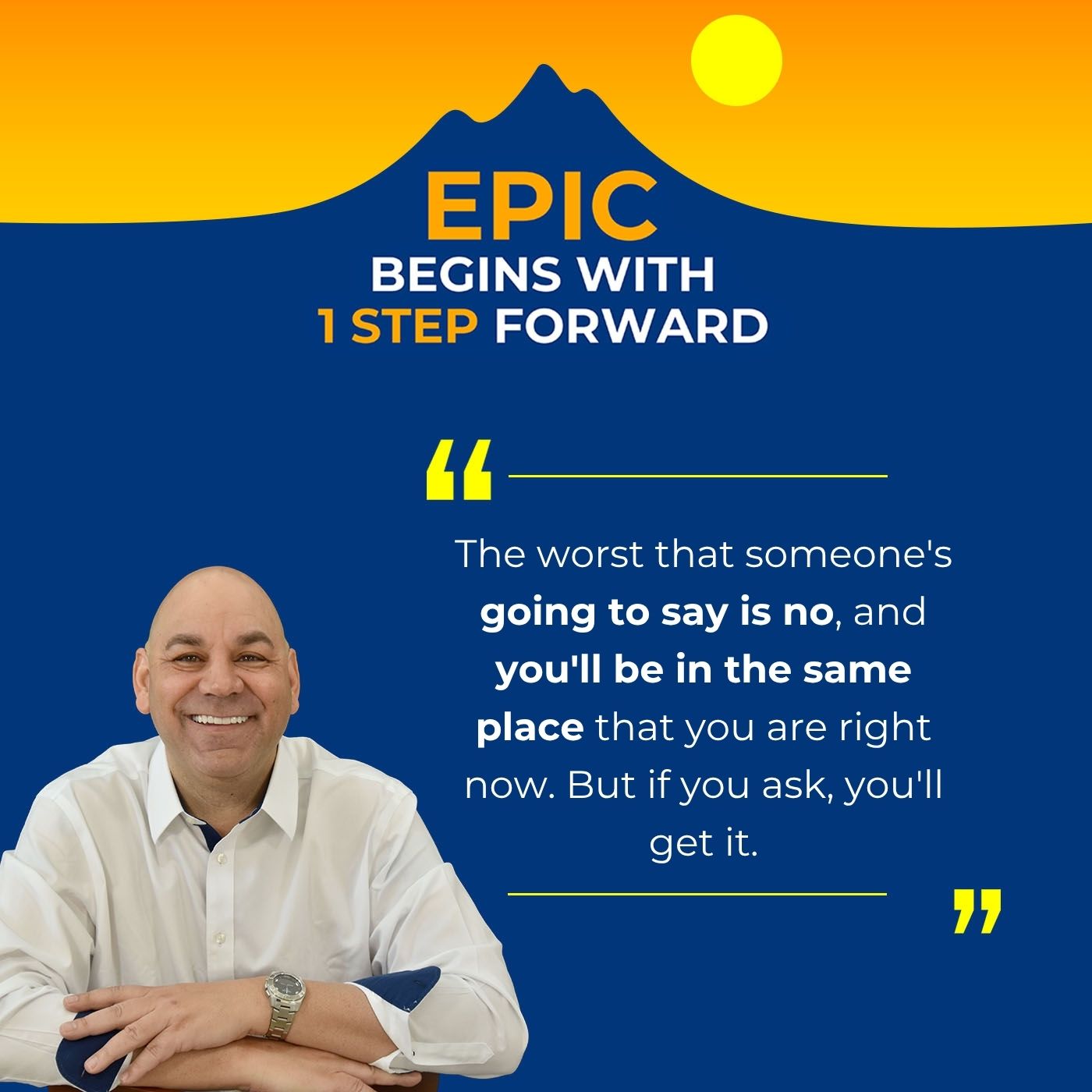
There he was, a stutter. Peter, that’s an awesome idea. I’m a firm believer that we don’t get anything if we don’t ask for it. The worst that someone’s going to say is no and you will be in the same place that you are now but if you ask, you’ll get it. There’s a story that comes from my dad, and you’re old enough to know the reference here. Some people might not, but you’ll get this. Which was, I’m originally from Boston and I see your Yankees thing in the back. We’ll accept that the two of us have an ongoing rivalry about who the better baseball team is.
I’m from Providence.
Yet you have a Yankees hat in the background. Peter, I’m so sorry. Where did we fail you? Anyway, my dad was in politics in Massachusetts when I was growing up. He knew the O’Neill family, so he was there with Tip O’Neill. Tip O’Neill told the story. This woman from South Boston said, “I didn’t vote for you in the last election.” He said, “Why not?” She said, “You didn’t ask.”
I love that story because it demonstrates we get what we ask for. For you, you go out and find those people that you want to interview. Ask. You never know. If they say no, you’re in the same place. You’re not backwards. You’re just not one step forward on it. You’d be surprised how many people might go, “Absolutely. That’s a great idea.”
Most people who went through that will be happy to help kids. To your point about asking, there’s an old sales adage that the number one reason you don’t make a sale, you didn’t ask.
Do you have a book for kids who stutter? That’s great. Any other not yets? Maybe it’s traveling somewhere, speaking on a particular stage.
My goal in life has always been to retire to Maine. That’s not yet. I’m still here in Rhode Island. I’ve lived in other places. I always came back to Rhode Island but my goal is to retire to Maine. I love Maine. My mom was from there, so it was my second home. I was up there every summer visiting family. The other one is to get up to Maine and enjoy that life.
The worst answer you’ll ever get is no, which leaves you right where you started. Don’t fear the ask. #TakeTheStep
Maine is a good place there, but we don’t like outsiders. Much so that we sometimes dress a man up in a moose costume on Columbus Day, and he waves to people at the York Tolls, says, “Thanks for coming. Now leave.”
Exactly. That was my grandparents. They’d always say that about us from down here. It’s always, “Thanks for coming. Come back again, but not too soon.” They’ll have to put up with me and my accent and everything else.
There you go. Now, Maine is a beautiful place. I will say winter is long up there.
Yes, it is and I’ve been there through the winters. It’s a little different than in Rhode Island.
Definitely. How can people get a hold of you, find you and work with you?
They can learn about me, how I help people, they can learn about my book, pretty much everything I do to help others at PeterGeorgePublicSpeaking.com.
I want to thank you so much for coming on. It’s such a pleasure to have you on and get to talk about public speaking. I don’t often get to talk about public speaking, but it is so much fun.
It’s a pleasure to be here with you and your audience.
Thank you. I want to remind everyone that if you’re ready to begin your epic journey, go to EpicBegins.com. Coming January 23rd, 2027, I’m going to have a live event in the San Francisco Bay Area. Go to Epic-Reset.com so you can sign up to get all the details. As always, I want to remind you that epic choices lead to the epic life that you want.
Important Links
- Peter George
- Peter George on LinkedIn
- National Speakers Association
- The Go-Givers
- EPIC Reset – Events
About Peter George
 Peter George believes everyone should be able to confidently share their knowledge and experience. As a speaker, coach, and author, he helps executives, consultants, and financial professionals be calm, confident, and credible® whenever they speak.
His journey began in childhood, grappling with a lisp and stutter that left him shy and withdrawn. Recognizing how much communication would shape his future, he sought coaching, and credits that work for much of what came next.
Over 38 years, Peter has delivered keynotes and workshops for associations, corporations, and universities on five continents. In 22 years of coaching, he has worked with everyone from local professionals to Fortune 100 leaders. He is the creator of the AMP’D Framework™ and the six-time award-winning author of The Captivating Public Speaker