In this powerful and deeply moving episode of Epic Begins With One Step Forward, Zander speaks with Naomi Reynolds—Army veteran, author, and advocate—for an unfiltered conversation about courage, trauma, and triumph. Naomi shares her extraordinary life story, from serving proudly in the military to facing the devastating realities of sexual assault and homelessness, and ultimately finding purpose through advocacy and healing. Her book, Battle Scars to Benefits, chronicles that journey while shining light on the ongoing challenges veterans face with the VA system, mental health, and recovery. Naomi also opens up about therapy, coping with PTSD, and her mission to fight for women veterans’ rights. Her honesty and resilience remind us that every epic comeback begins with a single brave step forward.
Apply to be a Guest on My TV show
#EPICBeginswith1StepForward #ZanderSprague #WomenVeteransAdvocacy #VeteranResilienceJourney #VASystemNavigation
—
Watch the episode here
Listen to the podcast here
From Soldier To Survivor: Naomi Reynolds’ Epic Journey Of Resilience
I am so honored to be joined by Naomi Reynolds. Naomi, tell us who you are and what you do.
Naomi’s Military Service, Challenges, & Advocacy For Women Veterans
Zander, as you said, I am Naomi Reynolds. I’m a veteran. I was in the Army during the Vietnam era and right now, I’m an Author, a Speaker, and if my manager has anything to do with it, I’ll be a podcaster soon to talk to veterans. I’m a promoter and event planner. Women veterans are going to Washington DC to meet with Doug Collins, the Secretary of Affairs. I’m excited about that. I’ve also written a book, From Battle Scars to Benefits. Lovely. It’s already out. It talks a little bit about my life, and as you say, Zander, taking that first step in that journey.
You’ll get to go on a journey with me from the time I went into the military back in the ‘70s until I left under circumstances of sexual assault. I had to leave because I was with child and I didn’t want to give my child up. I’m glad I didn’t. I raised her. She’s a beautiful woman. It’s giving me two great grandkids and a son-in-law. Things work out. Along the way, I had some trials and tribulations. I ended up a little bit homeless. I don’t know if you can be a little bit homeless.
I was going to say, I think homelessness might also be equated to being in pregnancy. You either are or you are.
That’s right. You either are or you aren’t. After I raised my daughter and she went off to college, I finished my college degree at Abilene Christian University in Criminal Justice because I was working for the police department when I first got out. I thought I wanted to be a cop and then I joined the fire department and became an arson investigator to investigate juvenile fire setters.

That was great. After that, I went into the corporate world with Walmart and Starbucks. I am the person that goes in, gets the land, bills the stores, hire the people, merchandise it, and opened it up then off to the next one. I enjoyed that as well. Right now, I’m just working on getting my information out about my book and we’re planning a trip to Washington, DC, hopefully as soon as the government opens back up. It was scheduled for the 7th of October and I had received a letter saying that I was accepted as one of the few women that would come to Washington, DC, so I’m really excited about that because I really need to have a long talk with Secretary Collins about a few things.
I am by no means an expert, but I am certainly aware that our veterans, multiple challenges from physical to mental health to housing, on actually collecting the benefits that they were due.
That’s a huge one. Of course, when I talk about From Battle Scars to Benefits, it has to do with my fight and my journey with the VA. At one point, I was rated 100%. They’ve changed the rules, so now I’m in a fight for my benefits. I’m keeping the faith. It’ll all work out, I’m sure, so long we didn’t know how to take the VA. Are they for us or are they against us? It’s hard to tell sometimes.
Certainly, a lot of different epic experiences, to say the least. If you don’t mind, I’d like to talk sometimes because I have the opportunity to talk about what I call those epic unexpected, those things that happen like, “How do I deal with this?” Certainly, your experience while active in the Army is disturbing.
I loved it. I loved the military. I went right out of high school. I remember we had an assembly one day and here comes the recruiters and I was a senior. My dad was in the military. We’re a generational family of military people, but I was the first of the girls to go. It was different. I had never spent a night away from home. You know how kids do now. My parents didn’t go for that staying overnight. I enjoyed it.
I went through training, got promoted right out of basic and then went to Fort Knox, Kentucky, where I was an administrative person that worked with what they call the Allied Liaison Division. That’s all the foreign officers that come over to go to the armor school. Everybody’s up in Aurora now about the guitar people coming over to train in their airplanes. That’s something we’ve always done.
In my freshman year of college, I did Army ROTC and it was last century, but when there was still a little budget, I was living in Southern California and I got to go visit a factory where they’re making missiles and stuff. I got to go out to the Mojave Desert to the National Training Center, where they do the full-scale training. They were absolutely talking about with our allies coming over to do full-scale trainings, battle maneuvers with the US Army, whole divisions coming over to practice.
We are the ones. We’ve got the best. I enjoyed it there, but that was when I ran into my first epic unexpected. It was after the sexual assault. I found out I was with child. Now, back in the day, all the women would either go to New York or Colorado to have an abortion, even though it was illegal. This was the ‘60s and the ‘70s. It was definitely illegal, but that wasn’t for me. I wanted my baby. I was under the impression I’d never have children to do some other things that had occurred. She was a blessing. I raised her. She went off to college. She’s in a great profession now. I went off to college myself while I was raising her. I got my degree in Criminal Justice. That was the first big epic situation.
I’ve got to imagine having to leave the Army. It sounds like up to that point, you were actually enjoying your time of service, that you had a purpose and stuff.
That was it. I was just thrilled. Back then, they didn’t let you stay. Now you can stay, of course. They’ve got the maternity uniforms and the whole works, take care of you and your child, and your child gets benefits. Around ‘74, one of the service women in the Air Force sued the military because they wanted to make her leave. The court ruled that the Army should not have been discharging people between 1948 and 1975.
I’ve been in search of all of those women so that hopefully, we could bring HR 6023 back to the floor and that’s the one that give us back our benefits that we didn’t get when we were asked to leave. I had my therapist. I’m still in therapy. I think I’ll always be in therapy and I noticed you’re a clinical psychologist or something.
I’m a professional clinical counselor. I also do mental health.
Mental Health, Therapy, & Coping With Trauma
I saw that and that excited me because that’s the only thing that got me through. I think it was about 2014, I went into what they called the domiciliary. That’s when you go in, you stay for 90 days and from head to toe, they take care of you and get you started on therapy. That’s when I was able to turn the corner a bit. I had the best therapist in Dallas at that time. For five years, she was my therapist. Now the VA doesn’t like for you to stay with a therapist that long. Their thing now is to get in there and get better and get on out.
I certainly experienced that as a therapist that a lot of times, insurance says, “You’ve got twelve sessions. Weigh it.” I can tell you that, depending on what challenge brought you to therapy, sometimes, in twelve sessions, I can talk to you and we can get you to a point where you feel that you’re doing okay. Something like the trauma that you endured, that’s not something that gets fixed in three months.
No, because I always carried the thought of what could have been, and I know you’re supposed to let all that go, but my first attention had to be to get my daughter born and raised and make sure she was a happy person. We now are trying to go back and get all of these women their restitution, I guess. I don’t know if we’ll have any luck at it. I doubt it because, right now, the law says they have to go back and pay us from the date we left. That would be a lot of money. That’s already, I’m sure, gone to another country by now.
I guess my question is, is it restitution? It’s hard to say how long you may have actually served. You may have had a four-year term and you’re like, “I’m not going to re-up,” or you could have had a twenty-plus-year career in the Army. Do you have any idea how they’re going to decide?
That’s been the problem. They’ve been kicking this down the road since ‘75 because they couldn’t figure out how to do it. One congresswoman came up and she said, “Just give everybody $25,000.” I was like, “Maybe some people just get $25,000.” I think they got to recognize they’ve got to come to the table and just deal with it. Nobody’s trying to become a billionaire, which is what they think. That’s what the magazines have said, that the Army will create millionaires because of this law, but it won’t.
We’re not trying to become millionaires. If they just leave me my rate of benefits right now, I’d be happy. Now they’ve taken that away, so I went from 100%, which you know how much that pays, all the way down to half of that, less than half of that over our past three months. We’re in a pill now with the board. I had to go see a therapist so they could determine whether or not to expand my PTSD resources.
I’m 75. I don’t plan to go to work. I enjoy working with veterans, speaking to veterans and doing those kinds of things and steering them in the right direction and looking at legislation and claims. That’s going to be my claim to fame. That’s my purpose now. My only purpose is to make sure that those who come behind us don’t have these same problems.
Certainly, I’ve seen stories in video media and stuff, the challenges that people have with the VA, trying to get benefits, trying to get services that it appears that they’re entitled to and yet somehow, either bureaucracy or someone just says, “Sorry, I didn’t put you in the right column, so now, you don’t get benefits.” You’re like, “Yes, I should.”
They’re starting to try to clarify it now. One hundred percent doesn’t mean that you’ll be that way the rest of your life. You have to be prepared that they will reevaluate you and you may not stay there. Now that makes it difficult because maybe you do need to work if you can, if you still need to work. All the rules are changing now. We’re trying to stay up on top of it and let people know. I finally did go ahead and get an attorney. Everybody kept saying, “You need to get an attorney.” I’m like, “Why?” I didn’t think I would have to fight the VA, but there are some things that will have to occur and we want to be part of the solution to whatever that’s going to be.
I think they’re better off to deal with those of us who’ve gone through it and know some of the craps that are in the program so far. MST, Military Sexual Trauma, is one they’re still trying to deal with. They seem to think you can get over it, but again, each case is different. I meet a lot of women and every one of them always say, “I would go back in a heartbeat.” We all enjoy what it offered us. As I said, I went to college on the GI Bill. I bought a home on the VA bill. There are some benefits, still.
There are. Part of the work I do, I do work with sibling survivors, people who have lost a brother or sister. One of the things I always say is I lost my sister 29 years ago and I will never get over losing her. You will not get over your military sexual assault. You could be working your way through it and some days better than others, but you’re not going to get over it.
You might get to a point where you find a place in your life that you can put it and it’s there and you’re okay. Yes, you can function, you can go get a job. As with anyone, if you initially have an injury or you’re wound or something, you might get to a point where, yes, you’re now able to hold a job because you’ve had operations, you recovered. Not saying that’s always the case, but it is the same way that if you break your leg, now you can’t go to work, but you’re healed and now you can go back.
Since about 2011, I’ve always worked from home. I worked for the Internal Revenue from home. I worked for different retail groups from home, customer service and the like. I did try to go back to work a couple of years ago but I can’t do the people anymore. I can’t be in a call center. I just can’t do the people. I’ve been an isolationist.
COVID was great for me. I was okay. “Do you want to go out?” “No, I’m okay.” I can stay in. It doesn’t bother me. Mental health, the VA just doesn’t do a good job with it. Some of the providers told us they’re cut off before they can really make any accomplishments with their patients. They’re told they can only spend so much. I haven’t had an assigned therapist for quite a while. I’ve seen 5 different ones in the last 2 years. For me, it’s like starting all over.
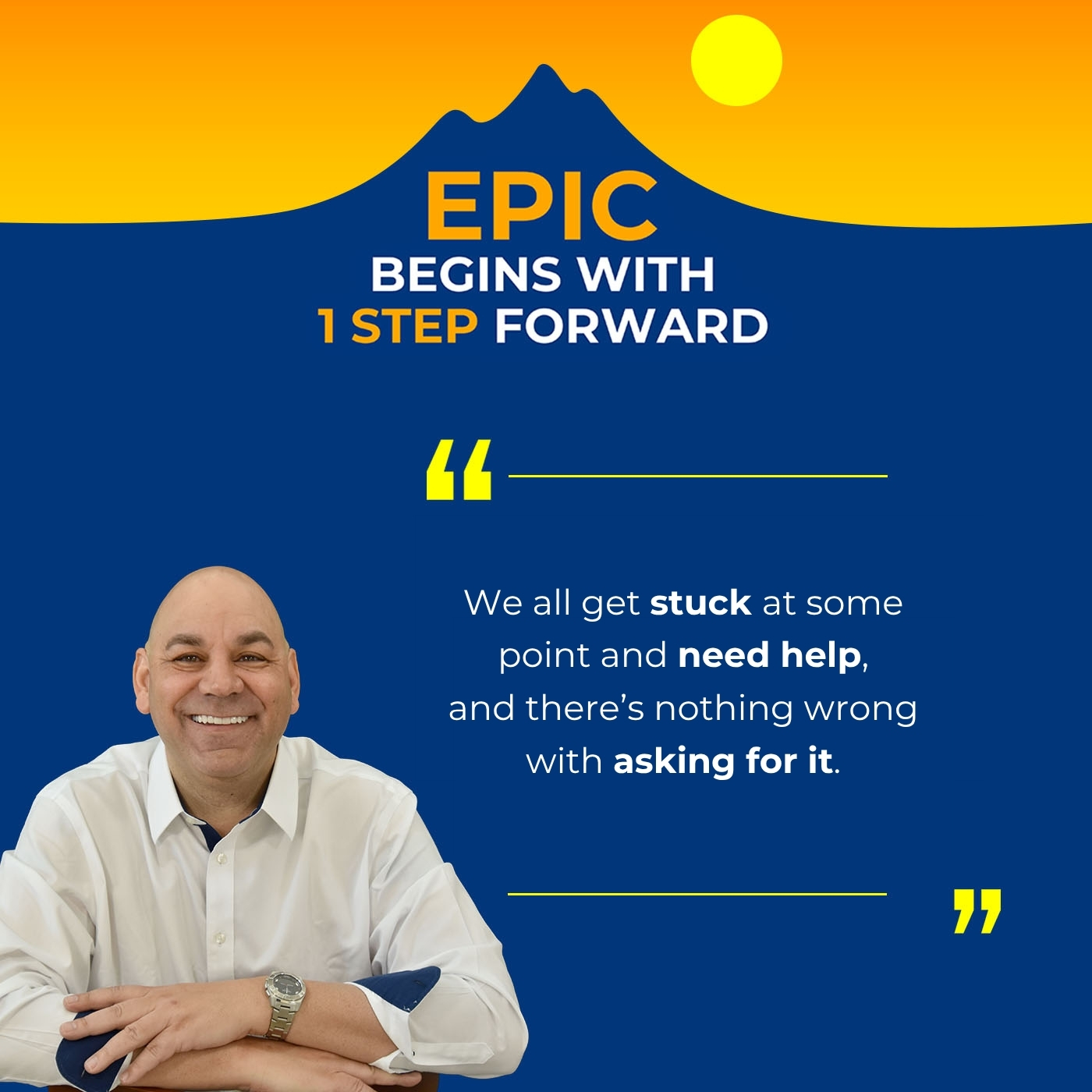
I’ll say to the audience, if you’ve never had therapy, first of all, let me just demystify it. It doesn’t mean that anything’s wrong. I am a firm believer that we all get stuck at some point and we need some help. There’s nothing wrong with asking for help. It’s like if you have a toothache, you go to the dentist. There’s no a stigma about going to the dentist because you need to get your tooth patched.
Sometimes we have mental health issues, we have anxiety, we have depression, we have an experience that we need some help working our way through. You’re right, therapy is a very intimate process. It has to be. If I were your therapist, you’re coming to me. I’m asking you to tell me some really hard things. I’m trying to help you process through that, have perspectives and stuff. It can’t not be intimate.
You’re right. When you have to start with a new therapist, I liken it with my new clients to a dance. At first, it’s awkward. It’s a new dance partner, how are you moving? After a little while, you figure each other out. You figure out how it’s going to work and then it worked. You said you were fortunate enough to work with someone for five years. That’s fabulous. They know you, you know them. You have that trust. When you see someone, I tell my new clients the first three sessions, just stick with it. It’s going to feel awkward. We got to figure out. It’s a feeling out process.
The other thing I want to tell, and you know this, sometimes, a therapist just isn’t the right person for you. That’s okay. It’s okay to say, “I’m sorry, but you’re not the right person.” I know as a therapist, my feelings are not hurt. I get that. I don’t want to see someone if I’m not the right person to help them, if my style is of what they need.
As you say, it’s very intimate. When I first started, I don’t know if you could be a little bit into suicidal ideation, but I was there, but this therapist knew it. I didn’t have to say anything to her. Just by working with me every day, because I had to go into the VA after I got out of the domiciliary. She said, “I want you out of the house every day, so you will see me every day.”
She did that for a month and it was a tremendous help. I talk a little bit about suicidal ideation in my book because I brought it up in a group one day. I go to a group where we have horses, equestrian therapy, I love it. We take care of the horses, rub them down, get to know about them, know their name, where they came from. They’re all retired either from the police department or the army or somewhere.
They’re retired and they’re there for us. They have a beautiful landscape out there. I brought up suicidal ideation one day and it shut everybody that I would even say the word, but I had to. I’ve learned to cope. I got coping skills. I went through CPT and all the other programs and I’ll jump on anything that they throw at me.
Nobody wants help with suicide, suicidal ideation but we have to. It’s real. It might be passive, but it’s real. It does exist. I’ve never married and I’ve never had any more kids. I’m 75. Something went wrong that I could not have good relationships. I just didn’t see that for me. No more kids. It’s just me and my two dogs and I bought a house. It made me feel good to go through that hassle of buying a house because it was a job to buy a house.
It certainly is. Congratulations on that.
Thank you. Me and my two dogs live here. We love it. I don’t feel like I have to go anywhere. When my social work therapist got me into equine therapy, I hadn’t been out. I still order my groceries on Wednesdays. They deliver them. Whatever I need, I order in. I’m not one to get out, do things. In my mind, I still have fun. I still want to travel. I am going to travel, but I don’t need to be in groups. Crowds, I just don’t do that anymore. We all used to go to concerts and do all that stuff. I don’t have that feeling anymore.
I will say, yes, it’s good to get out. It’s good to leave and have a change of perspective.
I’m getting better at that. The equestrian visits once a week. It really helps me quite a bit, but I’m still a little bit at odds with my daughter. I haven’t seen her in about seven years due to my mental health. I’m prayerful and I keep the faith that one day she’ll see that I’m okay and feel comfortable with that. I have a granddaughter in Virginia in college. She’s doing well. She’s going to be a clinical psychologist, which will be great. I have a grandson that build things, so I look for him to continue to build things in this world. I’m proud of all of them. Given time, God willing, we’ll all get together again at some point in this lifetime.
Mental health is really challenging. As you said, people are shocked about talking about suicidal ideation, but it is actually important. For people who don’t know, suicidal ideation, it simply means you’re having some thoughts, not necessarily ones that you’re going to, of hurting yourself in some way, perhaps ending your life, but you’re not necessarily acting upon it. You’re just having thoughts of, “Maybe I shouldn’t be here. I can’t go on,” stuff like that.
Know that there are lots of resources available to you. There. Suicide hotlines, there’s 811 available to you. That’s important. Naomi, I’m sure that you will attest that ask for help helps. It’s not as hard as you think it is. It is perhaps one of those epic first steps. You might think that it sounds really hard and somehow reflects badly on you, but it doesn’t. If you need help, ask for help. There is help available. Yeah, it’s important. It’s clearly helped you a lot.
It has we have a hotline for veterans and usually, the only time I feel the need that I have to reach out is holidays because I don’t see my family and my daughter and the kids so it’s like mostly holidays or special occasions, birthdays or something. Other than that, again, coping skills. When you’re in therapy, you learn coping skills and that’s real. You think about if there’s something like it was something epic coming up, my therapist would say, “Let’s talk about it. Let’s plan for it. What you going to do if this happens?”
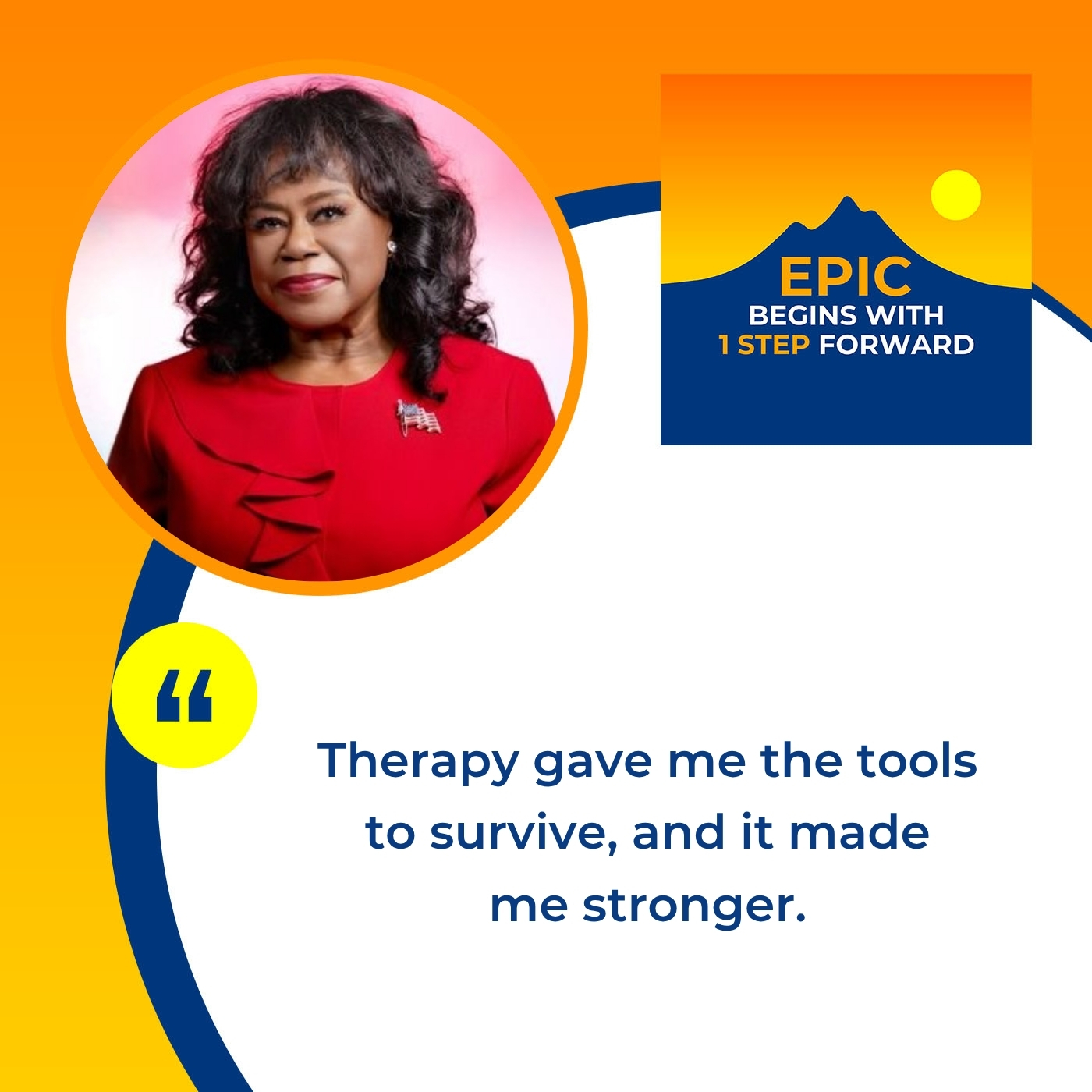
In therapy, you learn real coping skills. If a situation arises, my therapist would say, ‘Let’s plan for it—what will you do if this happens?’
I’d like to say that in therapy, I am giving people tools so that if you have anxiety, there’s actual physical manifestations in your body. You start to feel anxious, perhaps it’s your stomach or your chest or up in your throat. When you notice that, when you have the tools, like anything, tools, coping skills, you are able to recognize and go, “Now I know what to do about that.” There are so many daily things that we do that we’ve figured out how to do.
Practical Wellness Strategies and Staying Engaged Later In Life
You, being 75 and certainly not growing up in the computer era, had to learn how to use a computer and if it froze up, how to do a control, alt, delete and do a reset. You’re like, “What do I do? I froze up.” You then learn how to do it. “There’s a tool. I know how to deal with this issue. I do this. If that doesn’t work, I do this.”
My dogs and I walk a lot. We are walkers. It gets too hot right now, but we walk every evening for at least 30 or 40 minutes. That’s how I end my day, with a good walk.
That’s really important, too. People don’t realize that exercise is awesome. We’re just moving our body, especially if we have anxiety or depression or both of those. We release endorphins, which are our own body’s natural anti-depressant that make us feel good. Exercise can really help if you are having a bad day.
Depression is a vicious circle where it makes you really tired so you sleep more, which makes you more depressed, which makes you sleep more. To break that cycle, exercise, walking. Whatever exercise that gets your heart bumping, you may find that all of a sudden, you have broken that cycle that it doesn’t have you in this vicious cycle. It’s great. It’s really important. Aside from that, it is actually good for you.
When you’re aging, for sure.
Move it or lose it a thing, Naomi.
Move that body.
Naomi, this has been fascinating. How can people get a hold of you if perhaps they’re a veteran and want to reach out to you? How can they find you?
You can definitely pick up my book, Amazon, Books-A-Million, any bookstore. It’s available now in paperback, hardback, and audio if you want to listen to the stories. I think you’ll enjoy it. It’s not just for veterans, but for anybody. As you say, if you’re going through something and you’re trying to make that epic first move, that’s what we all do. That’s why I like your title. I love it. I will be getting your book, too, because epic, that’s a great word for it. You can reach me at HelpingVeteransThrive.com. That is my website.
Naomi, I want to thank you so much for joining me. Truly an epic discussion.
Thank you, Zander. You’re an epic person, too. I like that.
Thank you so much. If you are ready to begin your epic journey, go to EpicBegins.com. As always, remember, epic choices lead to the epic life that you want.
Important Links
About Naomi Reynolds
 Naomi Reynolds is a U.S. Army veteran, author, speaker, and passionate advocate for women veterans. After facing life-altering challenges, including homelessness, grief, and the struggle to reintegrate after military service, Naomi made it her mission to help other women reclaim their lives and rise beyond adversity.
She brings powerful insight from both her military background and her leadership experience in the corporate world, and she’s become a voice of strength, resilience, and healing. Through her work, she supports mental health awareness, champions policy change, and inspires others to turn pain into purpose.