In this high-energy episode of Epic Begins With One Step Forward, Zander Sprague sits down with video marketing expert Cam Beaudoin, whose mission is simple: help speakers get booked by mastering the power of video. Cam shares how he discovered a massive gap in the speaking industry—experts want more stages, but few are willing to watch their own footage or create compelling reels. So he built a business to solve exactly that. From long-form interviews to curated demo reels for top TED speakers, Cam explains how video creates credibility, clarity, and inbound opportunities. Together, he and Zander explore confidence, craft, the grind of entrepreneurship, and why content consistency beats perfection every time. If you want more stages, this episode shows you the step-by-step path to get there.
Apply to be a Guest on My TV show
#EPICBeginswith1StepForward, #ZanderSprague, #VideoMarketing, #ProfessionalSpeaker, #Entrepreneurship
—
Watch the episode here
Listen to the podcast here
Lights, Camera, Bookings: The New Rules Of Speaking Success With Cam Beaudoin
Video Marketing For Speakers: Cam Beaudoin’s Mission
I am so honored to be joined by Cam Beaudoin. Cam, tell us who you are and what you do.
Zander, it’s so great to be here. Thanks so much for having me on. Let’s see, so I’m in Toronto. I do video marketing for professional speakers who are experts. I say professional speakers and I’m going to start with that because that’s the best part to talk about. A lot of people think that professional speakers are public speakers, are these people who get up on stage and share the word and they’re experts and speaking and moving an audience, moving a crowd.
What I’ve learned through my experience while helping these speakers is that the word speaker and expert are very closely aligned. I know a lot of people want to learn more about how do I get up on stage? How do I promote myself? How do I get to move an audience? The truth is become known for something. Become an expert, a deep, true expert in something, and you’re going to see a lot of opportunity to get on stage. Those are the people I help. That’s what I love doing, trying to see how the world of video marketing can get people on more stages and more opportunities.
I can thank you for doing that work because, as a professional speaker myself for decades, holy moly, where does time go, Cam?
Don’t count it.
Stage Fright Vs. Self-Correction: Why Speakers Don’t Watch Their Own Video
I’m not. I get it. Yes, I get to call myself a professional speaker. I’m a member of the National Speakers Association. I earned that designation. That’s awesome. You’re right, it is a person who’s an expert. It’s one of the things I wanted to talk to you about. Do you find that when you’re sitting in an audience and they’re someone speaking and they’re perhaps not doing things right, they’re pacing like a caged animal, they’re, I don’t know, I don’t want to say wrong, but they’re just doing things that you, as a video person helping speakers, it starts to get to you. You’re like, “Please stop hasting around so much or move a little.”
Here’s one thing I’ve noticed. Not enough people who get up on stage too, nobody wants to watch their own video anymore. If you’re an expert, if you were an athlete, you would want to watch your plays and you would want to see how the other team plays and you figured out like, “I fumbled there. I didn’t do it red. I need to swing a little bit harder, a little bit faster at that moment, really, to get good.” Do you know what a lot of speakers do? “I hate how I sound,” and they never watch it again. They’ll pay a videographer $1,000 to come record them on stage and say, “I don’t want to watch my own stuff.”
Nobody wants to watch their own video anymore. If you’re an expert or an athlete, you would want to watch your plays and see how the other team performs.
That’s what I focused on so much. It’s like there’s a lot of great knowledgeable speakers who are boring on stage, but the depth of knowledge that they have, you’re just like, “I’ve got to listen more to you.” While there are some techniques on how to make it more interesting up on stage, and you should definitely move, you should definitely move your voice inflection up and down and try to create interest in audience, but that’s something probably you and I can talk about a lot. Were you at Influence in 2025?
I was not at Influence in 2025. I was actually at another conference speaking.
That was my first Influence. If anyone doesn’t know, NSA has a yearly conference called Influence and I was there. It was my first time there. Anyway, maybe we’ll see each other next time.
Absolutely. Those events are awesome and overwhelming. The one thing I do have to say that I shouldn’t be surprised after all this time, but is how generous professional speakers are with helping each other, even though technically we’re competing against each other to get on that stage. Everyone is so like, “Yes, here’s what I did, here’s how I did this here,” no matter how big the name is.
I met some pretty big names at Influence this year. John Register is one of them. What a great guy. I’m not sure if you know John.
There are a lot of great, knowledgeable speakers who are boring on stage, but the depth of knowledge they have is so compelling that it demands attention.
I don’t know John, but I certainly heard of him.
I was a speaker in the World of Disability Inclusion and Accessibility. I got up on stage and, from a technical point of view, helped people build better websites to make them usable by people with disabilities. That was how I cut my teeth in speaking. John Register is a Paralympian and he has one leg and he lost it, I think, just out of the military. I don’t want to tell his story, I don’t want to butcher it, but you go look up his story. He is a multimillion-dollar speaker and I was having a conversation with him. You’re absolutely right. If you have an interest in the craft, joining these associations, joining these groups, nothing could be better for your career if you really want to get good at the craft.
Absolutely, because here are people who are doing it. You’re like, “What better way to learn than say, ‘How are they doing that?’” there are all different kinds of speakers, so find your own style. Be you. It’s fine to say, “I really liked how that person moved on the stage and stuff.” I asked you that first question because as a professional speaker, I used to work in the corporate world and so there were people who were incredibly smart, but their presentation skills needed some help.
That’s most of the corporate world. Let’s be real.
The Entrepreneurial Leap: Solving A Market Problem To Build A Business
There’s a money maker. Let me help people get up on stage and actually be at least good, if not excellent, on stage, because it can be distracting if someone’s either just standing in one spot the whole time and only talking to the people, the five people in front of them, never mind the hundreds of other people. I get how nervous people get. I get nervous before I get on stage, but then when I get on stage, I’m in my happy place. That’s so good. I love being in front of people. I guess that’s why I’m a professional speaker, because it’s my happy place. How did you get into doing video production for speakers?
I left my corporate job and I was fortunate. It sounds like we have the same story. I was able to go speak professionally through a company, through an organization. They would send me out to go and speak on stages. I went off on my own and continued that pep task. I took a course on professional speaking, on speaking in general how to improve the craft. In our cohort of, I think there was ten other speakers, we were all told at one point to say, “Go create a demo reel,” and our coach, great guy, he said, “What you all have to do now is go watch all your keynotes, find the best parts, and then send that to a video editor so that they can go and compile that into a demo reel.”
Everyone else in the cohort said, “Are you kidding me? I’m an executive. I’m a CEO, I’m a lawyer. I don’t have time to go and watch my own videos.” What most businesses born out of is a problem in the market. I see nine people here who all have the same pain point. Nobody’s got time to watch video. I think I can build a business around that. I started making demo and I built a team in the Philippines and they were watching videos and then curating the content, finding the best clips.
Guess what happens out of that? You can create short form content out of that as well. We were able to create short form content and building storyboards was something I had to learn how to do. Every step along the way, I just took one more step in front of me. One more step. Now we’re building video demo reels for top TED speakers and nine-figure entrepreneurs and people who fly around the international speakers. One guy from Belgium, he’s a $35,000 speaker when he comes to the US. We made his demo reel too. It was like, “Cool.” It’s like you have to learn all these steps along the way, but I saw a pain point in the market, I went to go figure how to solve that pain point. That’s it.
It’s just like the show, epic begins with one step forward. Even though you didn’t know, you’re like, “I’m still going to take this step forward and I will figure it out.” I think all too often, people, when there’s something big and new that they want to do, “I have to have all the answers.” I say all the time on the show, I don’t know why. When we got up this morning, we didn’t have all the answers to all the questions that we would face today. That didn’t stop you from getting up.
Whatever you want to do, you don’t know. You take a corporate job, you don’t know everything that you’re going to have to do. Having worked in the corporate world for 22 years, if I meet every single skill that the job is requiring, why do I want it? I already know how to do everything. I can meet most of them and then say, “Here are the areas that are still areas of development and that’s why I want the job,” because otherwise it’d be really boring. I know how to do everything.”
In your job, as you learn new stuff, “Hold on, I need to do this. I need to build a storyboard.” How do you build a storyboard? You built a couple and then said, “That may not be the exactly the right way for me to build a storyboard. That worked okay, but not great. Here’s what I learned,” and move on. I think that’s really important for any of our journeys. You’re not going to have all the answers, but still go on the journey.
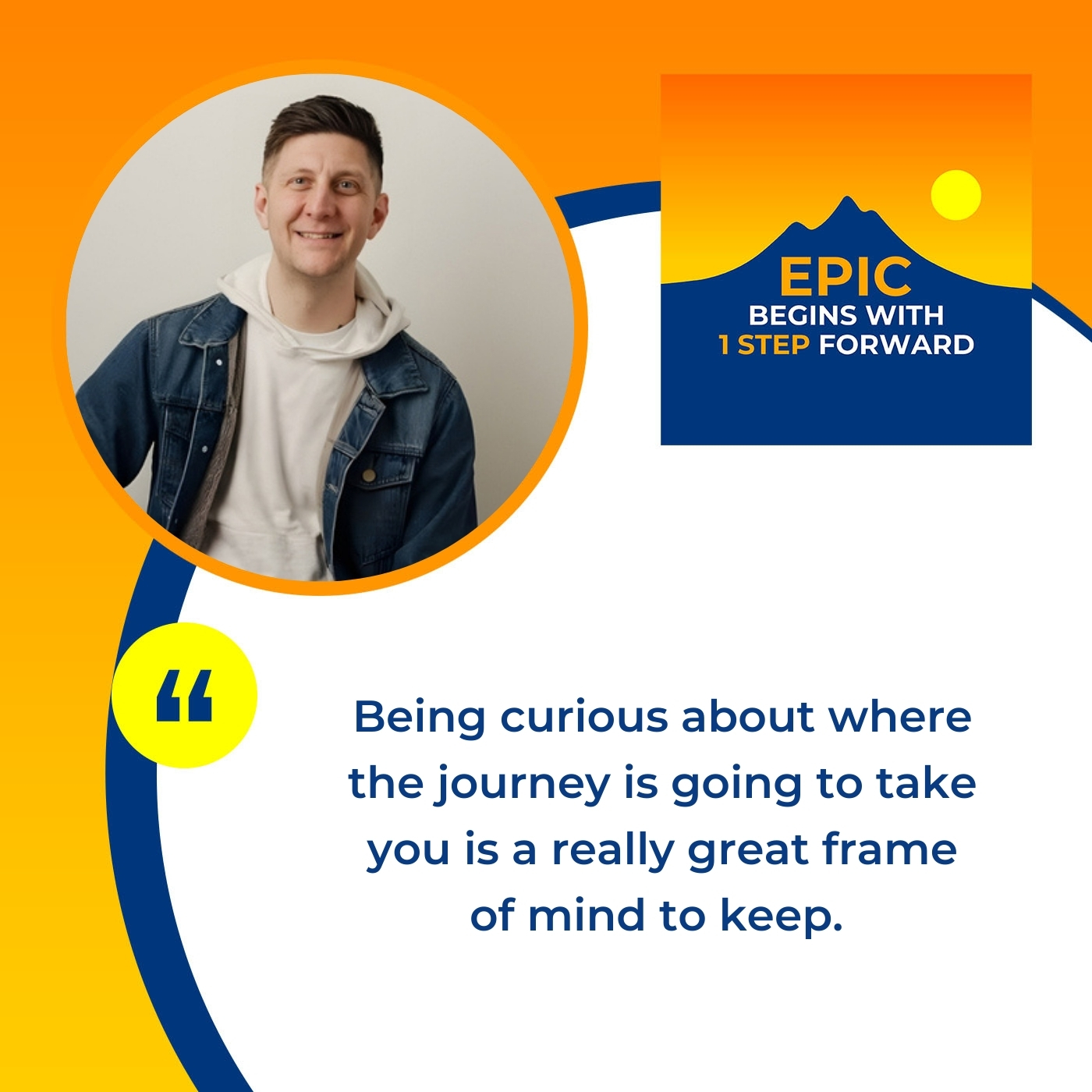
What I think is that if you get curious about where the journey is going to take you, I found that’s a really great frame of mind to keep. For example, when we were starting out, we would just tell people, “Give us all your content and we will take it from there.” I learned very quickly that a lot of people don’t have a lot of great video footage. I started say, “How can I go and solve that problem?” One of my clients came to me and she had a bucket of video interview of her, and it was long form. It was like 90 minutes. She mailed me a hard drive with all the video on it because it was so large, it was like a terabyte worth of video.
We downloaded it, we consumed it. I said, “This is incredible.” I started to do interviews myself. I’d never hired a videographer before. Let me go and make some interviews and figure that out. I started doing virtual interviews and that changed the way that I created the demo reel. That went on for a few months. I said, “I had a speaker here in Toronto. Why don’t I just go record them in person?” I don’t know. I like interviewing people, I like doing what we’re doing now. Maybe I could do that.
I learned how to do that skill and that was when things really started to take off. When I was able to fly down anywhere in the US, bring a camera crew, book a studio for somebody and interview them deeply for 90 minutes about the topic that they’re passionate about, that changed the way that I run my business. It created a depth of information from the speaker that I could then add into this video. It was true, direct to camera, real passionate stuff. That changed the way the output was for me. That was a big change.
The Speaker’s SAG Problem: How To Get A Demo Reel Without Stage Footage
Helping people get on more stages. There’s that caveat, which is you need to have a reel for people to see what you’re like, but you can’t get on stage without having a reel. It’s what I call the SAG problem. The Screen Actors Guild, you can’t get your SAG card unless you work on a SAG project, but you can’t get hired unless you have a SAG card. The whole question for beginning actors is, how do I get a speaking part to be able to earn my SAG card to be able to then get hired for jobs?
As a speaker, if you don’t have a speaker reel, how do I prove that I’m actually good on stage? You may not have a lot of footage of you on stage because you can’t get on stage. I think this idea of doing some long-form video content, nowadays, like you and I are sitting here, you can get high-quality video where you’re like, “Let me take that and turn it into something so people can hear the passion here.” You can actually talk about your subject and get an idea of how you are as a speaker.
You’re going to have to commit to getting good at something and then talking about it and get comfortable doing that. That’s why so many speakers end up writing a book, because then it’s really easy to take your book and then speak about that because you’ve just written all about it, so you have those topics ready to go. Getting comfortable in front of a camera and then speaking about that topic and understanding the pain points, demonstrating your ability to solve problems with that, speaking about client wins or client successes that you’ve had in the past, those are all things that are going to communicate, “Maybe this person knows that they’re going to talk about.”
If you keep doing that, eventually, somebody will call you up or message you and say, “I watched your video on X. I also noticed with the other 3,000 views, 6,000 views, 10,000 views that other people it does as well. Could we have a conversation about bringing you on stage?” That is the journey of inbound. A lot speakers don’t like doing outbound work, but the truth is, you’re going to have to get leads somehow. You’re going to have to put yourself out there somehow. I think there’s a general fear in that for speakers as well. “I know I’m good. Why does anybody else see I’m good? You should just know I’m good because I’ve been on a couple of stages.” That’s something as well.
The Author Effect: How Writing A Book Makes You A Better, More Attractive Speaker
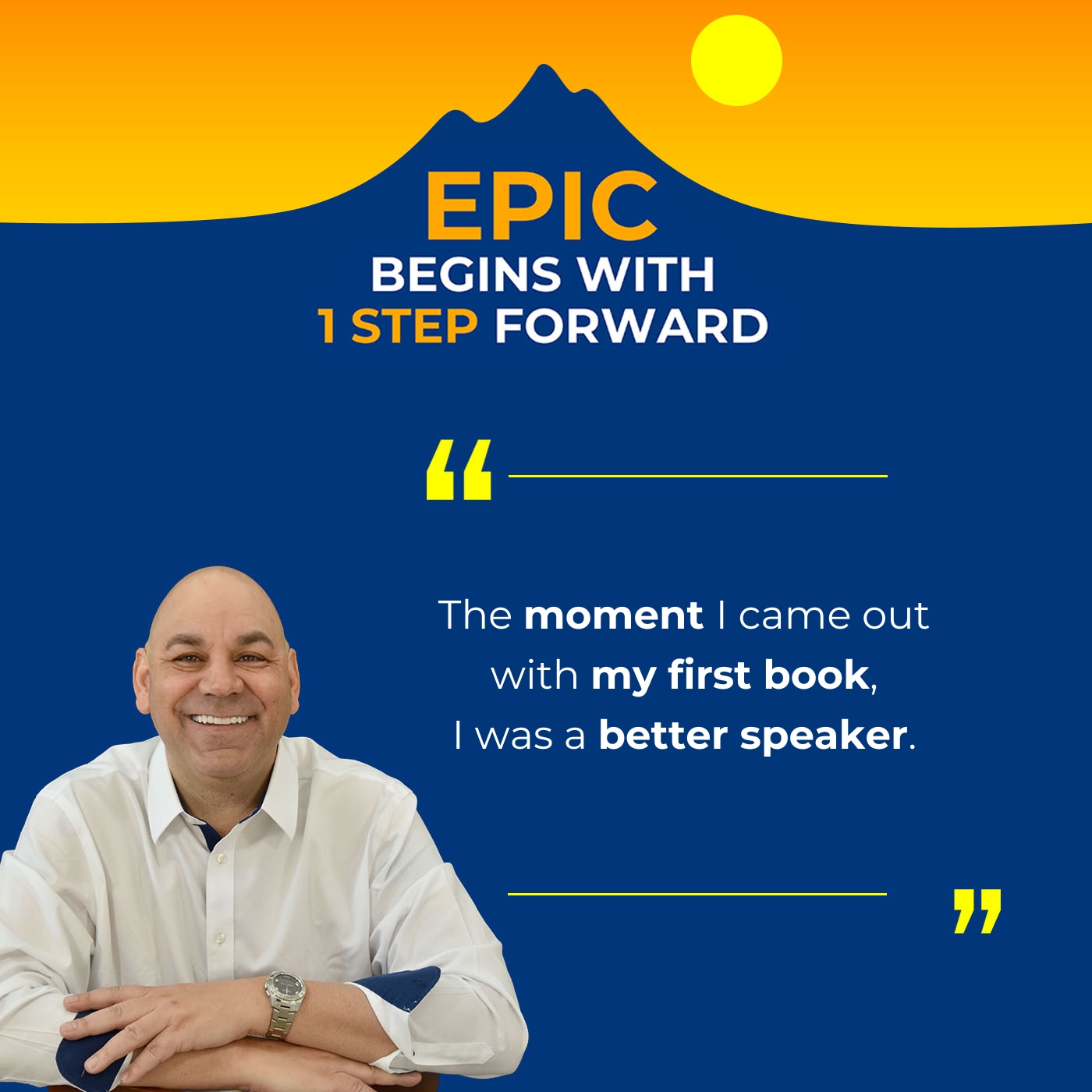
You’re talking about the book and stuff. As a professional speaker, the moment I came out with my first book, I was a better speaker. It has nothing to do with my oratory skill. The fact that I had a book now makes me an expert because I can talk about that subject because I have a published book on that subject and all of a sudden, I’m a lot more attracted because I have a book. I find that funny because maybe I wrote a brilliant book, but I’m horrible on stage. People go, “You wrote a book. Please come up on our stage.”
Now, what I’ve noticed in the market when I speak to event planners is that the same thing is happening with influencers. A lot of influencers, they’ve got these massive social channels and that will attract an audience. Could you just imagine if there’s someone who trades out Pokémon cards? They’ve got some channel on trading Pokémon cards. Someone says, “Come speak on our stage at the National Collector’s Association Guild,” or whatever it is. There’s no guarantee they’re going to be great on stage. That’s a craft.
I spent seventeen years as a technical trainer, so I taught people how to use software. Inevitably, in my journey, there were times where I had to bring in engineers or something, people who were brilliant but cringey in terms of making a presentation. People would show up and I’m like, “I want you to come in and just talk about this super technical part to the class I’m training because you understand it more. When they ask questions, you’ll be able to answer it. I want you to make up like 2 to 3 slides.”
They come in and they have 30 bullet points that are all 8-point font. For those of you who don’t know and maybe haven’t been bored to death by PowerPoint, no one in the front row can see that, never mind in the back row. PowerPoint is an aid to your presentation. It is not your presentation. Brilliant people, but not necessarily good speakers.
That’s why I love videos so much. That’s why I encourage people, you should be creating long form content on YouTube because it practices that same skill of, “I don’t know what to say next. I’ve got this bullet point up on screen and I’m stuck and I don’t know what to say. The comments, I’ve got some trolls in there and they’re saying bad stuff about me too.”
You should be creating long-form content on YouTube because it helps practice your skills.
Live streaming and long-form content are where it’s at. Getting good on that, it will start to remove the ums and uhs from your speech. Even getting on more podcasts will do the same thing. If you’re able to at all, just find places to rehearse and find places where you can just speak and get your reps in. We haven’t spent enough time, I think, as a craft to, to say, “I got hundreds of reps in.”
I keep going back to actors. You’re not going to just show up, roll up and say, “I want to be an A-list. Put me in as one of the Avengers, please.” It’s like, “Where have you acted before?” “Nowhere. Nobody knows who I am.” There’s a reason there are A-list actors. There’s an unbelievable, insurmountable amount of proof that they can act before. There’s probably a pretty good chance that they’re going to crush this role, too. That’s something not a lot of people realize.
As with anything, practice makes perfect. No matter who you want to quote, 10,000 Hours, Daniel Coyle and The Talent Code and all of that. All of that is just practice. Sometimes, there are things that we’ve all done, ride a bicycle, learn how to write, where it was really hard when we began, but now we don’t think about it.
I sometimes marvel at driving a car because I remember when I first got my license, how mentally tired when I first started to drive on my own. I got my license. Now I get to drive around and then I am concentrating on every single street sign, looking at 100 different things. Now when I drive, I still see all of those, but I know how to drive. I’ve developed that skill.
Speaking’s definitely one of them. I know when I was doing the technical instruction, the first couple of classes, I accepted there was stuff I was going to forget to do because I was doing three-day classes. There was a lot of material I had to cover. Sometimes people ask questions, so you go off, not necessarily on a tangent, but that’s what they want to learn. I’m here to teach them, let’s explore this thing and then I get done. Once I delivered a course a couple of times, I was pretty dialed in. For me, it was always like this out body experience.
It’s the same thing with speeches. Part of me knows what I need to do for the talking part and I get to look at the audience. How’s the audience reacting? I have the audience. I don’t now let me adjust it on the flight because I know my material. That’s cool. I love to ask this question of people, which is in my book, I have the concept of not yet. There are things that we want to do, but we haven’t done them. It’s like, it’s not yet. Maybe you’re like, “I’ve always wanted to travel somewhere.” “Have you gone there?” “Not yet.” For you, what are 1 or 2 of your not yets? It could be personal, professional, whatever.
Escaping The Grind: Building Systems For Freedom And The “Not Yet” Challenge
I seem to be hitting these roadblocks in business, I think. Business teaches you more about yourself, I think, than about like money you make or stuff like that. Anyone who says business is easy has never built a real business before. There’s a lot in there. When I think of my, not yets, I keep going back to these upsets in business that I’ve had. It’s like, “Why wasn’t I able to get that?” Taking your foot off the gas, that’s my big not yet. Every time I try and do it, you’re gunning, you’re getting sales, you’re trying to push sales, you’re closing, you’re doing all these things, these activities that you need to do.
Business teaches you more about yourself.
All of a sudden, you’re like, “I thought I could take my foot off the gas.” No, not yet. That was not the time. You think you’ve got all these things in place to be able to have your business going. I’d say that’s my big not yet. I haven’t felt that whole idea of I can walk away and come back. That’s a big thing I’m trying to learn right now to do. How do you build systems and build practices so you can just step away for a heartbeat?
I don’t want to want to say automation, but have built enough that things can run on their own.
Processes or something like that where you can just tell your team. You say like, “I’m logging off. You cannot contact me for two weeks,” and then come back stronger. I think that’s something I’m still trying to figure out.
I get that. There is that fear of saying no. “Cam, can you do this?” You say no for the first time. “I’m giving up money,” but you really may not have the bandwidth or it just may not be a project that interests you. As a host, I get people pitching me all the time and I have to make a decision. Sometimes I’m like, “I just don’t know if that’s an interview I want to do.” I worry, what if people don’t keep contacting me? Somehow, they do. It’s okay to say no and I get that.
I’ve got a virtual assistant and I knew from having other virtual assistants that the first month or so is very intensive in my time to try and teach them how to do the work I need them to do. That frees me up to do the work that I am better at. It’s like, “I need you to be doing X, Y, or Z.” If they’re answering for me, be it emails or making connections on LinkedIn or whatever, they’re going to learn my voice.
That requires a lot of my time to say, “I need you to learn. Here’s how I speak. Watch these videos. Listen to the words. I use my intonation because I’m asking you to act on my behalf.” You said you have a team over in the Philippines. They’ve got to learn how you want your videos edited. At first, it takes a lot of time because they do stuff and then you have to watch the whole thing and go, “Do they have it? Do they understand? No, I didn’t want that many jump cuts. I. No, that wasn’t the right transition.”
However, once they get it then you’re like, “I pay attention to it but I know I can trust that it’s getting done the way I want,” and then you go on. Yes, definitely as an entrepreneur, walking away for a week or two weeks because you need to spend time with your family. You want to go on vacation. It’s scary because you’re like, “I’m not getting paid.” If you’re with the family, “I’m just spending money.”
That is something that is constantly on my mind. How can I rebuild processes? How can I create better content or better systems in place that I can figure out how to go away and come back? You’re absolutely right. I think there’s this general impression. I think we all go through this process. I’m just going to hire and then all of my problems are going to go away. I’m just going to hire this person and they’re going to be experts. Done. You could learn very quickly that you still have to spend the time, you have to invest the time in that person as well to make sure that they understand not just your tone and your voice but what to do.
What’s comes so naturally to us as entrepreneurs is sometimes very hard to communicate to other people. It’s like, “Do it this way.” “Why?” “It’s because that’s how I want it done.” Sometimes that’s the answer. There’s not much of a why, but you’ve got to do it that way because that’s how I want it done. We’re not comfortable with that because we don’t want to be a bad boss or stuff like that too.
Hiring For Growth: Why You Need To Outsource Before You’re Ready
I also believe that oftentimes, you need to hire people to do work that maybe is not your strength, but you need to do it and you have to do it before you’re ready. You’re like, “If I could get these two paid speaking gigs in, I’d have the money and I could hire someone. To get them, I actually need to have that person or those people ahead of time to get me there, to free me up, to be able to do the stuff that I want to do.”
I use the analogy of I could change the oil in my car theoretically, but it’s a much more efficient use of my time to go to the oil change place and have them do it because they’re experts and they can get it done a heck of a lot quicker than I can. If marketing is really not the thing that you are very good at, you could do it, you have to work really hard. Maybe if you spend some money and get someone who is an expert at it, your life is a lot easier.
I think that’s a really hard concept to understand for a lot of people. Some of it’s about control, some of it’s just about money. You’ve got to understand that this is a part of business. Anyone who wants to use speaking to grow their business, that’s going to be a part of business. Actually, I got a question for you, and this is something I try to ask a lot of speakers. Is speaking the destination or is it the vehicle? Does it get you where you want to go or is it the place that you want to go?
Destination Or Vehicle? The Thrill Of The Live Speaking Stage
For me, it’s where I want to go. My happy place is being on a stage. I love being in front of people. I love sharing my message. I’m finding ways through my show, my broadcast TV show for me to be able to talk. I’m highly creative. I’m like, “How can I get to talk more days than not? I’m going to have a podcast. I want to get on stages,” because I love that. It’s such a thrill.
I can tell you, the pandemic was so hard. I was fortunate I got asked to do some virtual keynotes. Let me tell you, Cam. Sitting in front of my camera, delivering this really great speech is really hard when it’s just me in the room. Part of what helps me with the speech is the audience, the energy from the audience. How’s it going? If you have something that’s funny, when you’re not live, you have no idea how long to pause. Either I start to talk and people who are watching it are still laughing or people think there’s something wrong, a technical issue because I’m not talking because I’m waiting for laughter.
You wait for the reaction. I’ve been there.
You don’t get the feedback afterwards of people saying, “I really love that part of your speech,” or, “I didn’t really like that.” Now I don’t like to hear that. It is important because any speaker, you want to know what’s not working.
I’m just going to go back to video. That’s why it’s so important to do content like this. Even if you’re guesting on podcasts and using and creating short form content, what I use my short form content for, they are signals as to what my audience really wants to hear more about. That’s the best way of doing it. We don’t get live feedback, but checking out the views or the likes or the comments on your videos, it’s going to tell you what people really like. That’s what you can incorporate into your talks. It all feeds into itself. It’s all content machine.
It’s also that great mystery of you put up a video, it gets good comments, it gets views, you’re like, “That’s great. That’s what people want to see.” You create some more and then that next video doesn’t get as many views. I joke all the time, I have no idea about the algorithm. One week I’ll have a video that does really well and the next week, I’m like something similar to what I’m like, “That seems to be popular.” I put it up and it does okay, but not great. You’re like, “I have no rhyme or reason as to why this video did well and this one didn’t do as well.” I think the key there is just keep putting out content.
That’s right. I post six times a day. I went back in my backlog and cut up all my old podcasts because I said I’m going to get serious about this. We post six times a day on my socials and from that, I have a pretty good idea of what my audience really wants to hear more about. From that, it fuels long-form content. The long form content fuels more short form and brings people down the funnel further down into either my newsletter or what services they want to purchase from your things like that.
That pattern is so easy. If you are a regular on podcasts or you have your own podcast, just start doing that. Just start cutting it up with AI, lots of tools out there. Pay for somebody to do it. Post it all, a lot of it and you can get someone, again, in the Philippines or usually AI can do this too, schedule it out for the next couple of weeks, 6 times a day, 5 times. They do volume. I think a lot of speakers are at a lack of data. They try to make decisions when they don’t have the data. “This doesn’t work.”
A lot of speakers try to make decisions when they don’t have the data.
How do you know it doesn’t work? You posted it one time, one thing. Post it twenty times and then see if it really didn’t work and then you can analyze it like, “Why didn’t it work?” It’s because it’s boring. It’s because they don’t know how to create content yet. That’s the real world. There are people out there who’ve created content for years and they still suck at it and they still post. It’s a continuous journey on trying to figure out how to get better at the craft. It’s a skill like any other. Welcome to content.
Cam, I want to thank you so much. Really a fascinating conversation, at least for me. I hope the audience also enjoyed it. I enjoyed having you on. How can people get ahold of you if they need some help?
Best place is at TheFrequentSpeaker.com or just find me on YouTube. I’m posting there every day, like I said. If you really want to get ahold of me, though, LinkedIn is probably the best way to chat. Go find me Cam Beaudoin on LinkedIn. I’m the only one. Pretty easy to find.
I want to thank you so much for joining me, Cam. I want to remind everyone that if you’re ready to begin your epic journey, go to EpicBegins.com. As always, epic choices lead to the epic life that you want.
Important Links
About Cam Beaudoin
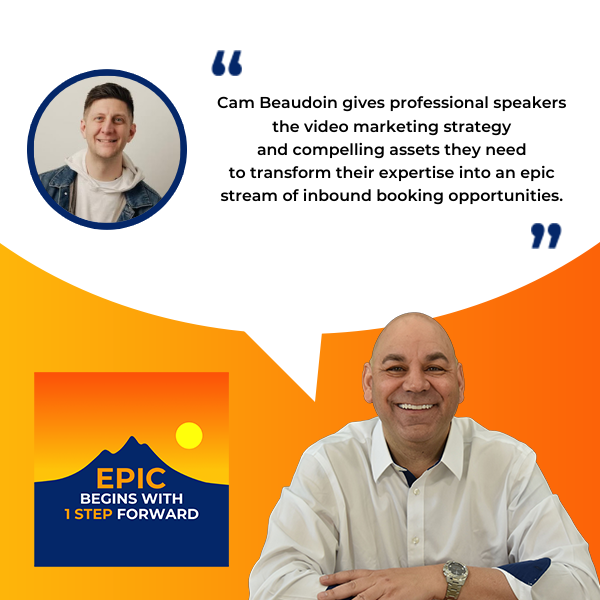
 Most experts wait for stages to find them. Cam Beaudoin builds magnetic video systems that attract the right stages and get speakers booked.
As the founder of The Frequent Speaker, Cam helps professional speakers land high-paying gigs without chasing them down. His agency works behind the scenes to attract event planners through powerful, story-driven video.
Cam’s clients include 9-figure founders, award-winning coaches, and thought leaders ready to play bigger. His videos have generated over 1 million views, helping speakers command top stages without endless pitching.