In this inspiring episode of Epic Begins With One Step Forward, Zander chats with Anya Cheng, founder and CEO of Taelor—a groundbreaking fashion-tech company using artificial intelligence to style busy professionals. From her beginnings as a reporter in Taiwan to her work at McDonald’s, Target, and Meta, Anya’s journey is one of relentless persistence, bold pivots, and saying yes to opportunity. She shares how Taelor AI uses data, human insight, and machine learning to revolutionize the way men dress—no more shopping or laundry, just confidence delivered. Along the way, Anya reveals lessons on entrepreneurship, adaptability, and defining your true value proposition. Her story proves that success doesn’t come overnight—it’s built one small, intentional step at a time.
Apply to be a Guest on My TV show
#EPICBeginswith1StepForward #ZanderSprague #Taelor #AIPoweredFashion #EntrepreneurshipAndAI
—
Watch the episode here
Listen to the podcast here
Dressing For Success—Powered By AI And Epic Determination With Anya Cheng
I am honored to be joined by Anya Cheng. Anya, tell us who you are and what you do.
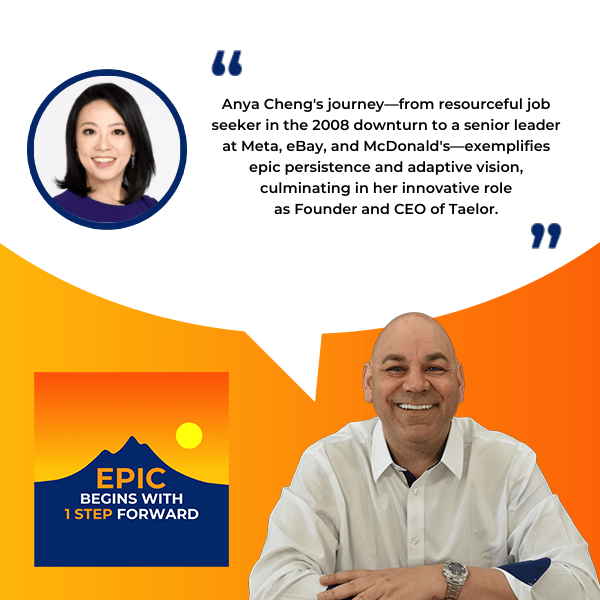
This is Anya from Silicon Valley, founder and CEO of Taelor AI. We use AI to pick clothes for busy men, and we send people real clothes for you to rent. For $100, you get to wear ten items of clothing per month. After you’re done, return the dirty clothes. No more shopping or laundry. Who says AI cannot do your laundry? Before starting the company, I had fifteen years in big tech companies. The most recent is in Meta, where I help you with our Facebook and Instagram shopping.
I was head of product for eBay, and helped them to build new business in the US, Latin America, Africa, and Asia. I was a senior director for McDonald’s, and helped to build our food delivery business when Uber Eats started, and helped Target build a tech office here in Silicon Valley. I’m excited to share more about AI technology, products, entrepreneurship, and business.
My first question is, what haven’t you done so far? So far, we’ve got food, clothing, and technology.
I have only published two books. My third book will be launched when I finish selling my current company, so I’m a couple of years ahead. I’m looking forward to asking you to be a book endorser for my third book in a few years.
How did you get started in tech? You’ve worked for many very notable companies. You’ve done some notable things with these companies. I’m always interested to find out how people got there. I know my own corporate story has its own interesting quirks. I ended up in places I never thought I would. It’s all because I said yes. How did you get into this?
Anya’s Background & Career Start
It started several years ago when I moved to Chicago from Taiwan, where I was originally from. I went to Northwestern University and got my Master’s degree in Marketing. Unfortunately, I graduated in 2008. You might remember when Lehman Brothers went bankrupt. My previous job was as a reporter. I didn’t have a marketing background before, but my dream was to work for a media company to do marketing, which was a dumb idea. When was the last time you saw CNN launch advertising to promote CNN? There was no job, and I didn’t know it.
I didn’t get any campus recruiting possibilities, but then I would wait outside of every single school, outside the engineering schools, history schools, and medical schools. As soon as there were campus recruiting events and recruiters came out of the building, I would send in my resume. “Hello, I’m a student from another department. Not this department, but the same school. This is my resume.” I didn’t get an interview.
People told me, “Anya, this is dumb. In the US, we call it networking. You have to network to get a real job interview.” I’d say, “What is networking?” They’d say, “You’ll find someone, and they will refer you to someone.” I’d say, “I don’t know someone. I don’t know anyone.” That’s not true. I was a student, so I knocked on the door of every department’s professors. I was a student, so I know them, kind of. I would knock on the doors of professors and say, “This is my resume. I know you worked for this company before. This guy was on your LinkedIn connection. Can you connect us?”
One day, there was a professor who said, “I don’t know you at all. I cannot refer any job to you, Anya, but I’m hosting a meeting tomorrow. There’s an amazing YouTube show by a gal who runs a farmers’ magazine company. You can listen to the talk. By the way, can you bring another twenty students? We need someone to fill the seat.” I went and listened to the talk. My English was bad. I have no idea what she was talking about. In the end, I approached her and said, “Amazing talk. This is my resume.” She said, “Okay, I’ll connect you to my recruiter.”
I went on the interview. As soon as I finished the interview, I walked out of the building with the farmers’ magazine. I thought, “This is it. This is the company.” It’s a media company, and they were looking for marketers. I was a reporter. I have a Master’s degree in Marketing, perfect. A few weeks went by, and I called the recruiter. “This is Anya. I interviewed a few weeks ago.” She said, “Stop calling me. I was laid off.” The recruiter was laid off from the company. I said, “Okay, since you have nothing to do, do you want to grab a coffee? She said, “Sounds good. I have nothing to do.”
We grab a coffee. She told me a lot about the company, who the business owners are, what’s going on with the industry, and she gave me an idea too. She said, “Have you heard of New York and Los Angeles? They are bigger cities in the US. Bigger cities have more jobs.” “That’s a great idea.” I went out on a two-month trip. I was cold calling a whole bunch of 2000 Northwestern alumni. I served as a coach on different friends’ couches for two months, one week each.
I ended up meeting the New York Times’ CEO and CNN’s VP because I bought newspapers from the newsstand on the street. In the newspaper at the time, it’ll say the publisher’s name, and then they advertise, “Call this number.” I called each of them, and it turned out maybe they thought I was an advertiser. They all talk to me, but nobody is hiring. I thought this would work, but I need to be ten times faster. This is too slow. I got to go to the conference. There will be thousands of people. There will be amazing speakers, including a book author of Apex. I need to go, but the tickets are very expensive.
I thought of an idea. I called an amazing company back in Taiwan. I said, “Do you want me to cover this amazing conference for free?” They say yes. I called the conference and said, “I am a reporter from Taiwan. Give me a press ticket.” I got in, so I talked to a whole bunch of them, but after meeting 500 people, nobody was hiring. I went back to Chicago, ready to go back home to Taiwan. Before I went back, I realized I had learned a lot during that process.
I thought of the magazine company for the farmers. I went on to interview their reader, interview their advertiser, and open a magazine. They said, “Advertising, call this number.” I called him, then I reached out to the owner and said, “Do you want to hear about what your competitors are doing?” She said, “Okay.” I went and I presented a business plan.
Do you remember the employee who was laid off? I said, “Your employee told me about this. Your advertisers say this, and this is what your competitors are doing. I highly recommend you do this, but to do this, you need a talent who knows marketing, who has a media background, who is not very expensive, and who is just out of college. I happen to know someone named Anya Cheng. She asked me, “Do you want to be a contractor?” I didn’t know what that meant. My English was bad. I said, “Yes.” I went home and I googled contractor. I didn’t know why she wanted me to be a plumber, but that’s how I got my first job and started my journey.
That is a great story of epic persistence. I do get that. You want to get into a certain field. You don’t have the experience, but your persistence does pay off. I do have to say my own experience is that saying yes to opportunities opens so many doors. Even if you’re like, “I know nothing about farmers, but that’s okay. Yes, I can do the job,” and there you go. That is great. In working in these large corporations, what were some of the most valuable lessons that you learn, like working at McDonald’s and Target?
Changing Small To Achieve Big
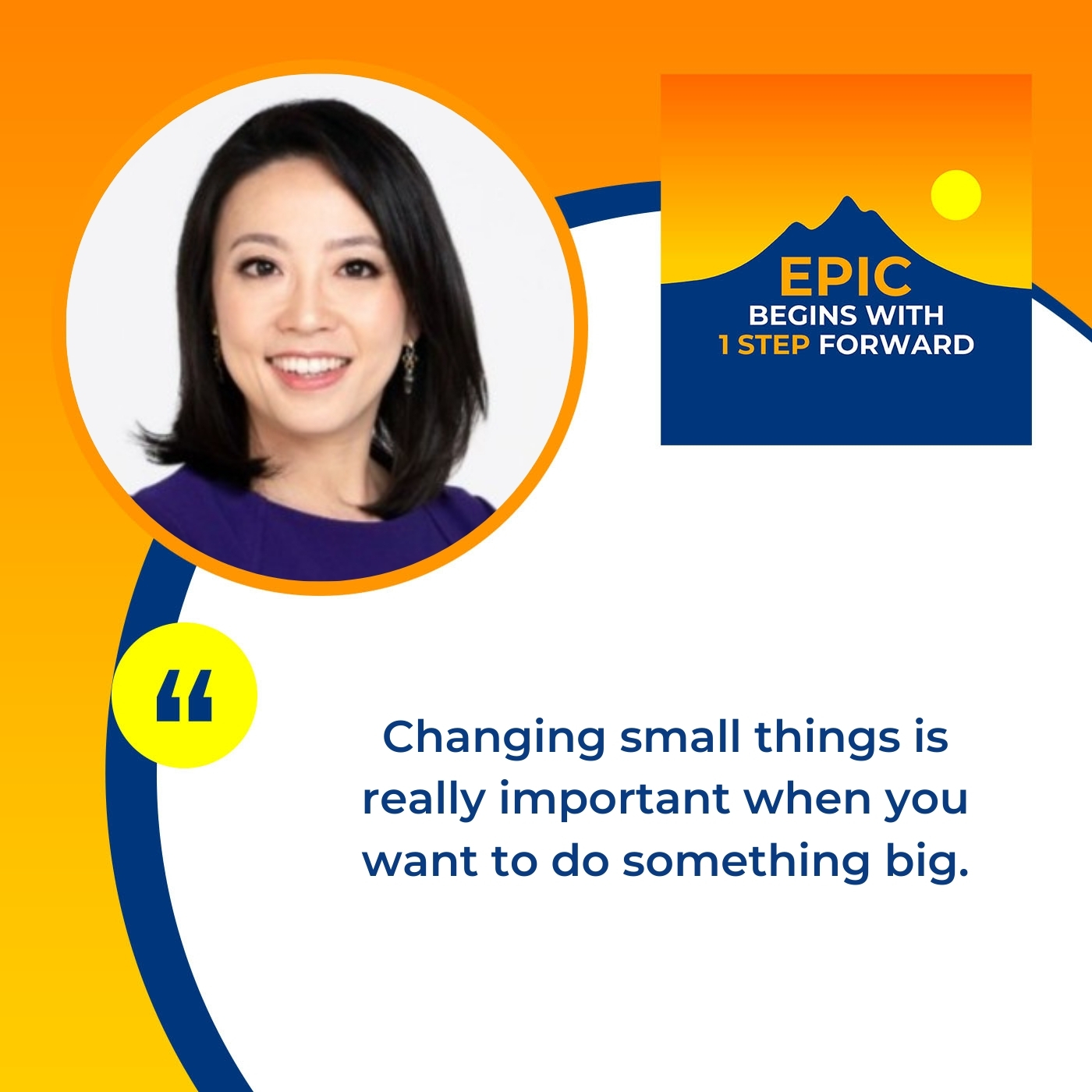
At McDonald’s, in order to change big, you need to change small. At that time, they didn’t even have Google Analytics. Their website does not even have tracking, but they believed that they could jump ahead, so they hired executives from Amazon. They were talking about drones, the delivery of food, and autonomous vehicles to deliver food. That was several years ago.
We were fighting there and doing cool presentations for almost two years. After a few years, the leader left the company and went back to the old team, which had been proudly building the technology for years. Of course, you can’t blame that change management is hard. Those were the old legacy people who hate innovations. I also think that when you want to change something big, you have to change one step at a time. Most people, when they want to be successful, think of “Ah.” No, this is a river. Imagine the use of knowledge as a river, and you are a stone.
Most people want to be picked up, be thrown away, and cross the river. The reality is that most people are never lucky. They were the stone under the river. They turned around and turned around one step at a time. Eventually, they cross the river. I think that changing small is important when you want to do something big, but frequently. Not that small and slow.
One step at a time. In my many years of experience and stuff, as much as we all say that we can multitask and we’re good at multitasking, I have not met the person who can type an email with their left hand and write code with their right hand. The fact of the matter is, as much as we’d like to think, I like this tech joke that I’m a single-core mind in a multi-core world. Meaning I can do one thing at a time well. I can try and do multiple things, but I’m not going to be doing each of them very well.
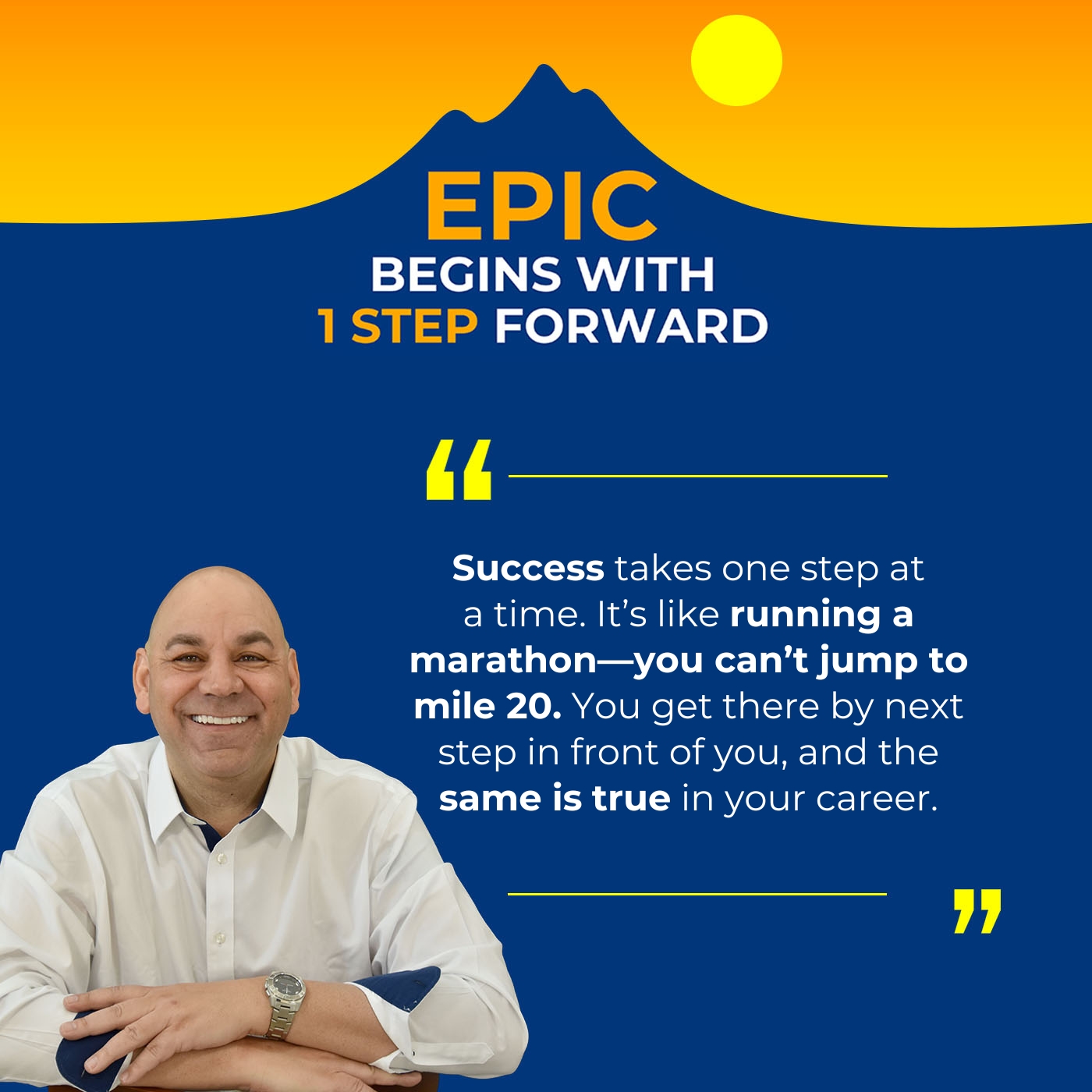
You’re right. Any big change we want to make, it does takes one step at a time. To use another analogy of running a marathon, you can think about all of that distance, but you have to run the next step in front of you. You can’t jump yourself up to the half-marathon or the mile 20. You have to do all the steps to get yourself there. That’s true in the work world.
I’m not a big sports person, but I do swim. When I do swimming, I usually think of, “Can I swing one more run, just one more run? That push of one more run says how I get to breaking my personal record, although it’s not very high.
It doesn’t matter. Your personal record is the record you’re on. It’s your record, and you get to break it. You’re right. In any swimming, if you want to swim 500 meters or whatever, you have to do the first 25. You can’t say, “I’m going to do 500 meters,” and all of a sudden, I’m at 450 meters. It doesn’t work that way. You have to do all of the work.
Focus On The Core Value Proposition
My time at Target was important for what I learned. It was to focus on the value prop. When we were starting the business, my task was we want to get more e-Commerce revenue on tablets. That meant we want people to buy stuff on iPads, on the Target app, or on Target’s websites. If you think of that, while Target is an amazing company in the US, the second largest retailer at the time, Amazon is faster, Walmart is cheaper, and eBay has more assortments.
What Target is known for is that if you are a mom, you go to the store. You thought that you only needed to buy one thing, but then you came out with eighteen things in your basket. You want to run to the stores to get away from your noisy kids, you like the experience, and you bought stuff that you don’t think you needed. That’s hard to bring to e-commerce. What we did was we launched only one feature, which was shoppable Pinterest, Instagram, and social.
Whatever is shoppable, people post something on Instagram. These are viewable on the Target app and become shoppable on the Target app. We didn’t do anything else, such as registry or compare price, compare products, or any of the new features. We only fixed the cart and checkout payments, made sure people can pay, and also launched this one feature. As a result, we won eleven awards, including the Best Shopping End of Year on Apple.
What the story told us was that it’s hard to win everything, but you can do one thing that’s a lot better than any other person. I tend to see start-up people having their chart. A company delivers this thing and that thing. B company does that thing and that thing. As a C company start-up, we are ten times smaller than other companies, but we do ten of these things, check, check, check. How was that possible? It turns up that most people buy because there are all the resources. What I see is that you just need one check, but your check has to be a lot bigger. The mark has to be a lot bigger.
You only need one check, but that check has to be much bigger. The mark has to be much bigger.
We only do one thing, that Target is about inspiration. Taelor AI is about offering an AI stylist for busy men. As a service company, we help people look good, but we are not only about looking good. We are about helping people look good so that they can get a job and get them to close a deal. Our customers don’t care about looking good. They care about getting a girlfriend or boyfriend. They cared that they closed the million-dollar deal for the company. That’s what we are helping them to dress up for.
I’m interested in Taelor AI, but I want to get back to something. In this super-competitive marketplace, people have to know what you’re selling. I remember years ago, reading a marketing book, talking about how to market your small company, and stuff. They used the example of Sears. You may not know much about Sears.
I do because I used to work for Sears.
There you go. Part of the problem with Sears was that for a hundred years, people knew Sears. You went there to buy appliances and tools. You could buy clothes. The value prop was there. We all knew what Sears was selling. All of a sudden, I go to Sears and I can get financial advice from E.F. Hutton, and I can have my taxes done by H&R Block. The problem was that all of a sudden, the consumer didn’t quite know what Sears was about anymore. They didn’t know what they were selling. Now, Sears barely exists if at all. Part of that is because people didn’t know what people were selling.
Any company, if you’re clear about what you’re selling or what you’re solving for, it’s easy to make the value proposition. As you said, that’s start-up goes, “We’re doing these ten things.” I worked in Silicon Valley for many years. I heard that every company in the early 2000s was creating a paradigm shift. Every single company I interviewed with and that I talked to, my question that I always had was, is there one company that is just sitting there having all of these paradigm shifts on it?
If everyone else is creating a paradigm shift, it’s got to be going somewhere. Where is this paradigm shift happening? If I’m making a paradigm shift and you’re making a paradigm shift, who is that shift on? I thought maybe there was one large old company that had all the shift coming on to it, because no one else was. Everyone else was making the shift. It’s interesting. If people don’t know what you sell or if you don’t know what you’re selling, how can people know how to buy it?
The Genesis & Evolving Value Proposition Of Taelor
In the Sears case, we actually were number one in terms of size and speed, like really fast. As you say, when you people don’t know the true value prop, like Target for inspiration and Walmart for the cheaper price, or at Taelor, we offer service. We’re not just about looking good. We help people to do good and achieve their goals. No matter how fast your website is, nobody cares because they don’t have a strong value proposition to go shop there.
This is important. In our case, for example, when we started, our suppliers, like 300 fashion brands that we have been working with, we thought the value prop was monetizing the inventory. You have some clothes, so then we can help through AI styling, and help send them to customers’ hands for them to rent.
Quickly, we discover that those fashion brands care even more for the data, like insights or feedback that we provide to them. “The sleeves are too long. The pants are too tight.” Sometimes you don’t even know what’s true value prop is. Once you find out, then you double down with that. We found out that the data is so valuable because it can help predict what’s going to sell next year. Renting out clothes is not just about making money. It’s about getting the feedback, which is powerful for them.
Being a man, I’m like, “Rent some clothes. I don’t have to go out and buy. I can look fashionable on my TV show.” How does it work? How are you using AI to dress men?
How Taelor Works
We use I to replace the traditional human stylists. Remember in the old times, celebrities in Hollywood had a stylist, but nobody else did. Now that there is AI, everyone can have human stylists. Our customers pay a monthly fee. Let’s say for around $100, they get to wear ten clothes for months. From there, we asked them about their goals. We also asked them, of course, the body measurements, the height and weight, which we don’t always use 100%. Why? Because most of our customers somehow think they are taller and thinner.
Whatever information you need tends not to be 100% correct. We asked them for some other information to validate. For example, go to your closet. Take one of your favorite outfits. Tell me what brand and what size it is. Our customers would say, “I’m definitely size medium. Wait, my favorite outfit is actually extra large.” “Yeah, you gained weight a long time ago.”
We also asked them to provide some fit issues. Are the sleeves too long, pants too tight, or some common fit issues? Most importantly, of course, is the goal. Do you want to stand out? Do you want to look more mature, more polished, more trendy, or do you just want to make sure you close the deal and get the job? The goal is important, and from there, we show some pictures to the customer. If a customer is unsure about the AI, and they want to talk to a human stylist, no problem.
We have a fifteen-minute consultation call for people to talk on Zoom with our human stylists. All of this information fits into the AI, and then the AI starts picking outfits based on every week or month of customers occasion. “The next two weeks, I have two farmers’ markets and then two client meetings. After that, I’m going to Hawaii for vacation.” Whatever the occasion is, we help them pick the outfit, and then they get real clothes to wear for a couple of weeks. Once they are done, return the dirty clothes and within a few days, they can get new ones. No more shopping or laundry.
That’s cool. I’ll have to check that out. Are you using this, where the customer sends in a picture or something, and somehow the AI model can see? Height and weight are great, but someone could say they’re 6’2” and 220 pounds, and 220 is proportioned differently. Maybe someone is super muscular, and maybe someone is more dad bod, or whatever. Are people sending in pictures that the AI is scanning to go, “I get what body type this person is.”
We do allow people to send a picture, and a lot of people do, but I won’t say body type. Most people know their body types. Are you more like a giant or a shorter person? Are you a little bit fat-bellied person? Most people can identify that without using AI, but people can send in a few pictures, and then if people like, they can even upload some picture of inspiration, like, “I send in a picture because I was watching the NBA game and I like what Curry is wearing.”
The Role Of Customer Feedback In Taelor’s Machine Learning
Whatever information people want to share. Sometimes people share their company information. “My company is pretty old school, so check this out. This is my loafers’ information.” Whatever information you think can be helpful for our AI and human stylist. From there, most importantly, is that we get feedback. It’s like your Netflix show. Maybe on day one, they will recommend you some random movies, but then after you liked it and you watch something here and there, quickly, we get to the machine learning. The machine learn through the customers’ feedback.
Every piece of information you think could be helpful goes to both our AI and our human team. The most important part is getting feedback.
It’s unlike traditional e-Commerce, which rarely gives you feedback. When I work for eBay, Target, or Sears, people don’t give feedback unless they are super angry, like one star. Some people give fake feedback. On Amazon, now a lot of merchants give five stars. You get an amazing extra $5 coupon for next time. It was like, “Okay, five stars.” You actually have no intention to give five stars. Our model is a subscription. You don’t lie to your Netflix show because tomorrow, you want better recommendations. We get feedback right away.
In addition, we also know the future. AI only knows the past. AI doesn’t know the future, but we’re always 300 fashion brands. They are designing something for next year’s collection. We also know the future, and we know the quality of garments. Typically, when you buy something, after you wash it ten times, the second button goes off. You never go back and tell the fashion brands. When the model is rented, just like a rental car, we know that after washing it a few times, “Okay, here is the issue.” Although most of the time, after renting three times, the item had already been sold. In some cases, when we wash longer, we get the quality data and we feed these back to the fashion brand and help them to improve their quality as well.
Honestly, nothing is more annoying than when you find the perfect shirt or the perfect pair of pants and think, “This is great.” Sadly, the quality of the workmanship doesn’t match what you paid for. You wash it once. You have it cleaned once, and all of a sudden, stitching is coming out. It changes size, even though you did everything you should. You’re like, “That’s annoying.” Maybe the manufacturer goes, “Maybe we need to fix that, so we don’t get the reputation of being expensive by having the garment fall apart.
Today, the world is not always fair, because the fashion brands, the one that has a bigger marketing budget, say, “We are sustainable. We are high quality.” You believe in that. You don’t know because you have no way to know.
How would you know, unless you buy it?
Taelor’s Impact On The Fashion Industry
In our model, we actually know the true quality of garments because we are a rental company. We wash them. We know the true quality of the garments. Soon, we will be monetizing the data back to those fashion brands because we actually have the true information about the quality, and they are very specific. “You will be on the second bottom because of whatever reason.” We are not going to help the world be better if we help them keep renting assets inventory, which is fine. It helps instead of burning them, the assets inventory.
A Lowe’s will be a lot better if we actually help them to do a better job of producing stuff that the customers truly want. Truly, it is doable. This is what drives us. On the one hand, we want to help people achieve their goals. Why? People who achieve a goal have to know how to be fashionable. They should all look presentable, and they have equal opportunity because they make great first impressions. They should only focus on what they care about, not their outfits. On the other hand, we want to help fashion brands be more sustainable with this unique data, and then test our upcoming collection on our platform as well before mass production. Our customers can try the latest stuff, but then the brand can also get feedback.
I assume that if I were a customer, I could give feedback, so the model could choose better for me next time, where I go, “That red shirt did not look good on me,” so that it won’t recommend it. There’s that degree of being able to say, “Even though I thought this would look good, when I put it on, it didn’t look good on me for these reasons,” so that the model will not keep giving you the same short, cut the same way, the pants cut the same way, or whatever.
Yes and no. Usually, it’s the opposite because our customers are people who are not into fashion. When you say, “I only like blue. I only wear bottom-out shorts.” Usually, it is the opposite. We’re like, “Why don’t you try this green polo?” “I never wear green. I never wear a polo.” “Why don’t you give it a try? It is a bonus item for free for you to try.”
After a customer tried it, it was like, “Amazing. I look amazing in this,” or they were like, “I’m not sure. I never wear green. Green will be weird,” but then they go out for dinner and their friends are like, “You look amazing. You look a lot younger and perfect.” “Okay, sounds great.” Most of our customers don’t know why they want. If you let them pick, they will only pick blue, solid color, bottom-up shorts, and jeans. That’s all. Usually, it’s the opposite. They do provide feedback. Usually, it’s a fit issue because sometimes people gain weight or lose weight, so they provide a fit issue for their current body situation.
Sometimes they provide feedback on occasion. “I’m going on vacation. I have a book tour coming.” We have a customer say, “I want an outfit to win the case at court. I am divorcing. I’m fighting for my children’s rights. I want to have my children. I don’t care what I wear as long as it helps me win the case.” It’s the requirement.
Anya, this is truly fascinating. How can people find you? How can I find Taelor AI?
The holiday is coming. If you know people who have a busy life and are not sure. I don’t think the person needs anything else in their life, but saving time looks great and having options. They have services like these, almost like an assistance for them. Taelor’s gift card is a great option. Go on Taelor.Style, use the code Podcast Gift to get 10% off gift card, and use the code Podcast 25 to get 25% off the first month. If you are a fitness center, dating site, school career center, executive coach, life coach, or consulting company, we offer holiday gifting. We offer an affiliate program for partnerships. Also, for AI investors, feel free to reach out to me. My email is Anya@Taelor.AI.
I will have those codes in the description and Taelor.Style. Anya, thank you so much for sharing. It was truly an epic journey you’ve been on and that you continue to be on. I wish you all the best of luck.
Thank you so much. Anya from Taelor.Style.
I want to remind everyone. If you’re ready to begin your epic journey, go to EpicBegins.com. As always, epic choices lead to the epic life that you want.
Important Links
About Anya Cheng
 Anya Cheng is the Founder and CEO of Taelor, a leading men’s clothing subscription service that provides personal styling and curated rentals, powered by AI.
A Girls in Tech 40 Under 40 honoree, she previously led eCommerce and digital innovation teams at Meta, eBay, Target, and McDonald’s.
Taelor’s mission is to help people dress up to achieve their goals—whether it’s for a job interview, date night, or big presentation—because looking good shouldn’t be a barrier to success.