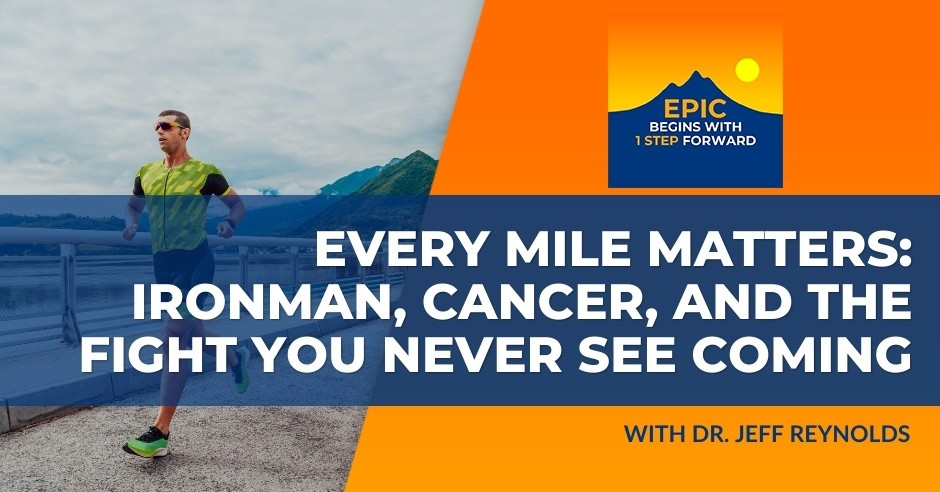
In this powerful and deeply human episode, Zander Sprague sits down with Dr. Jeff Reynolds, nonprofit CEO, endurance athlete, author, and two-time cancer survivor. Jeff shares how training for Ironman Florida unknowingly prepared him for the hardest races of his life: prostate cancer and stage 3B colorectal cancer. From finding out he had cancer via text message to enduring surgery, chemo, radiation, and relentless recovery, Jeff reveals how an endurance mindset, gratitude, and community carried him through. They explore the lessons hidden in mile 18, the difference between being sore and being hurt, and why early screening saves lives. Jeff’s story is raw, hopeful, and motivating – a reminder that life’s biggest challenges aren’t chosen, but how we respond to them defines everything.
Free E-book – https://dl.bookfunnel.com/afk096okro
Apply to be a Guest on My TV show – https://www.epicchoicemedia.com
#EPICBeginswith1StepForward, #ZanderSprague #EnduranceAthlete #CancerSurvivor #RoutinePhysical
—
Watch the episode here
Listen to the podcast here
Every Mile Matters: Ironman, Cancer, And The Fight You Never See Coming With Dr. Jeff Reynolds
Author And Ironman Triathlete Dr. Jeff Reynolds
I am so honored to be joined by Jeff Reynolds. Jeff, tell us who you are and what you do.
First and foremost, Zander, thanks so much for having me on. I appreciate the opportunity. In my day life, I’m the President and CEO of a large non-for-profit organization on Long Island called Family & Children’s Association. We provide a variety of services to vulnerable folks in our community. Those services include everything from a nursery school to addiction treatment and recovery services, mental health programs, shelters for runaway homeless and traffic kids, and some senior services.
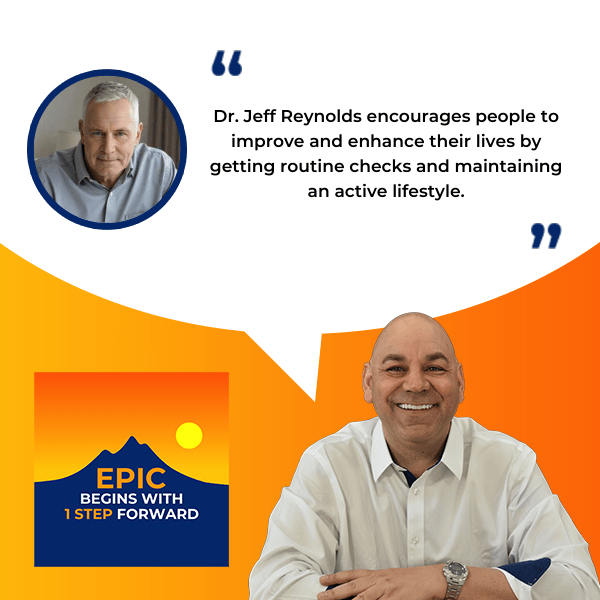
In all, we serve about 35,000 people per year. The other reason you had me on is I published my first book called Every Mile Matters: Turning Triathlon Training Into Cancer Triumph. Not to give away the punchline, but I’m also a two-time cancer survivor and an endurance athlete. I love talking about ways in which we can take steps forward, improve and enhance our lives.
First of all, congratulations on two-time cancer survivor. That is very impressed. When I saw your profile, I’m like, “He’s a triathlete.” I am not a triathlete. Although, I have run marathons and ultramarathons in years past. I’m not doing it now, but it’s always good to talk to another endurance athlete. There’s so much that we learn about ourselves when we put ourselves in that situation to challenge ourselves. How do you get into doing triathlons?
It’s a funny story. I was at a conference. I was in my mid 40s at that point. I’m going through what anybody would characterize as a midlife crisis. I’m at a professional conference. It’s 2:00 AM. We’re doing what sometimes people do at professional conferences at 2:00 AM in a bar. A bunch of people are like, “Do you want to run a 5K in the morning?” I’m like, “In like four hours? Okay. What could go wrong with that?”
Hours later, I’m there at the start line wearing cargo shorts and the T-shirt I would wear under my suit that day and sneakers that are not equipped for running in any type of imagination. I take off like a bad out of hell when the gun goes off. Ninety seconds later, I am sweating, panting, cursing and walking. I made it through the race in 36 minutes. I look at myself and say, “I’m out of shape. I need to do something about this.”
I did what any seen individual would do. I went back to my hotel room and started maniacally registering for every 5K near my home that I could find. 5Ks became 10Ks became half marathons became marathons. I’ve done fifteen of those and then I went back to that conference two years later. I won the 5K and decided, I’ve done these. I’m mediocre at one sport. Maybe I could suck at three sports.” I took up swimming, biking, and running.
I went and got swimming lessons. I bought a bike to cost twice what my first car cost, then built it there, too. I started with sprint triathlons, moved to Olympic distance then half Irons. In the beginning of 2021, I said, “I want to test myself. I want to come up with a big boy audacious goal that scares the hell out of me a little bit.” It was IronMan Florida. I trained over the course of 2021 for that. The first weekend in November 2021, I did IronMan Florida.
Although, some folks would associate IronMan with a superhero. When it comes to endurance sports, it’s a two-mile and change swim. It’s 112 miles on the bike and then a full 26.2 miles marathon. You have to do that all within 17 hours. Otherwise, none of it counts and you’re disqualified. You don’t get the free banana and the free medal that you can’t even wear to work the next day. I did it in 15 hours and 9 minutes. Certainly, a highlight and a great example where at the beginning of the year I said, “I’m going to do this.” I put my mind to it and was able to complete it. Quite frankly, I was on top of the world and felt like I’m in the best shape of my life. I didn’t set any world records doing this but I got it done.
You finished it. I wasn’t winning any of the halves or full, but I completed all of them. They give you a medal whether you come in first or you come in last. That’s one of the things that’s great about endurance sports. You do get not only the personal reward but you have some bling to say, “I did this.” Hats off to you for doing a full Iron because that’s insane. A lot of people that I knew when I was running and then I started to do road biking. They’re like, “Are you going to do a triathlon?” I’m like, “No.” I love road biking but I honestly can’t imagine. Let me ride my bike for 112 miles and now let me go run a full marathon.
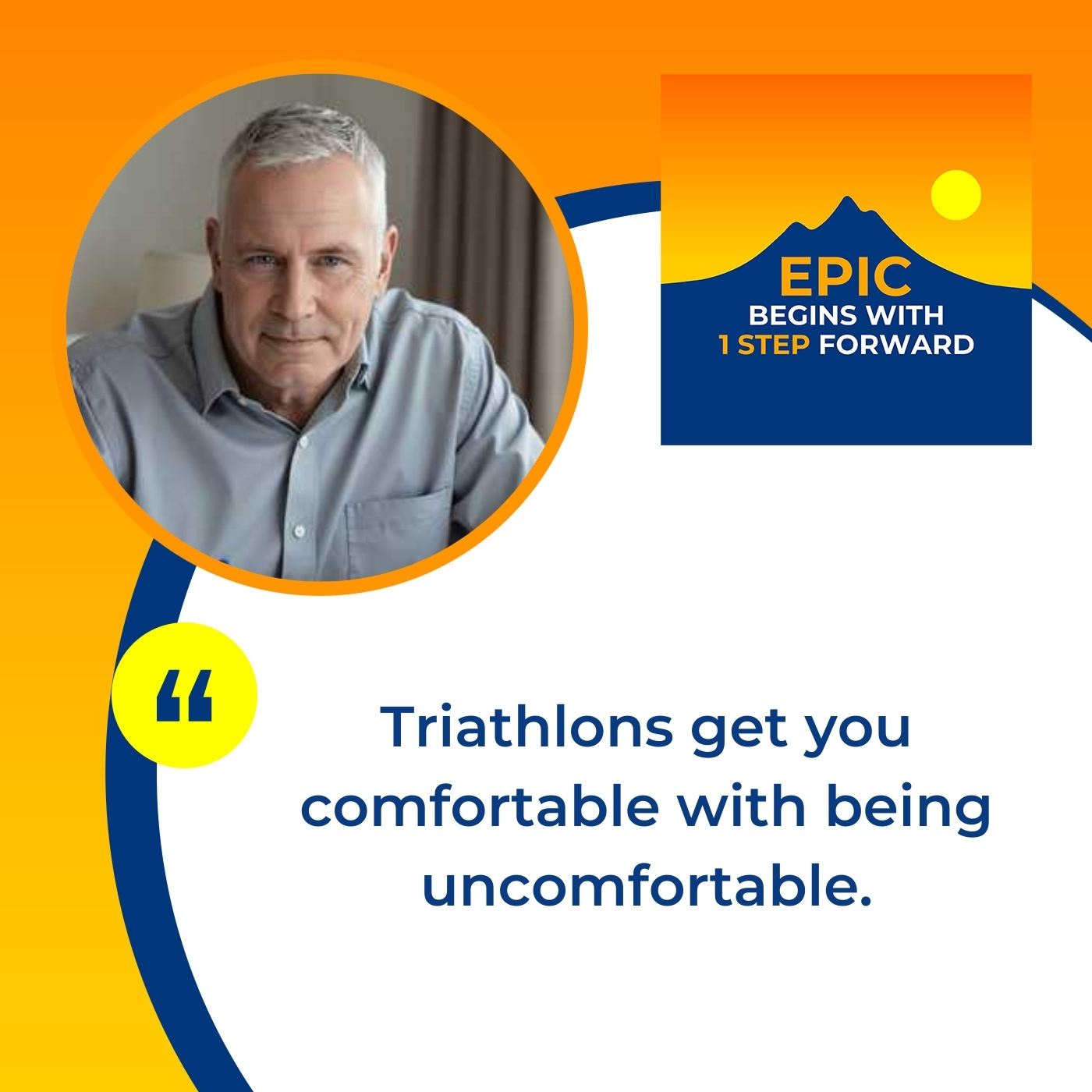
You were depleted to say the least but you said at the opening and I agree so fully with this. You learn a lot about yourself in endurance sports and there are some very dark moments. One of the moments I use as a metaphor all the time is mile 18 at the marathon. You and I know that thing called the wall. It’s this fight between your brain and your legs saying, “Stop. Stop. Why are you doing this? This is crazy.” You’re far enough into it to be tired, but not close enough to the end where you like, “This is just a little bit more and I’ll be done.” I always feel like part of why I love triathlon is it gets you comfortable with being uncomfortable. You acknowledge it and you move on.
You learn a lot about yourself in endurance sports.
I know through all of my marathon training and road bike training for centuries. There’s a lot of time. You have a lot of time to think. You have a lot of time to sometimes question your sanity.
Your life choices.
I can tell you Jeff that there was more than one race where it seemed like a great idea when I signed up, but did not feel so much like a good idea when I was doing it.
We finish and we go and do it again.
We do. One of the things I talked to people about and it was a question I had for you. Which is, when you finish, let’s say your first half marathon You’re ecstatic that you’ve done it. How long was it before you asked this question, “Now what?”
Literally 30 seconds. That’s the way my mind works. I tried it with a coach. One of the things my coach said to me as I was getting ready. It was a couple days before IronMan at Florida and she said, “Make sure you savor the finish line.” Generally, we get to the finish line and we race across. We get the aluminum blanket and that thing.
In IronMan, you’re not going fast. You don’t have a choice but to savor. You’re in every minute of it, but I did think about it as I approached the finish line. It’s dark out. It’s 10:00 at night at that point and you could hear it from afar. It was like, “That’s the finish line. I could hear the music. I could hear the announcer.” I was very intentional and conscientious about saying, “You’re on the Black and Red carpet now. Enjoy every moment of it,” because these moments don’t necessarily happen every day.
I may not either be able or want to be back here.
This could be one and done.
I always imagine hearing those magic words, “Jeff Reynolds you are in IronMan.” Did you cry?
Absolutely, and I do now in races. People will understand once I tell the story, but here’s a full circle moment. Mike Reilly is the guy who retired from IronMan. He’s the announcer. When Mike Reilly doesn’t announce your race, it’s not the same. When I heard Mike was announcing IronMan Florida, it made a difference to me.
Mike did call me across the finish line. I have a video of it that a friend did for me. When I did the audiobook version of my book, I reached out to Mike and said, “Here’s my story. Here’s my deal. Would you do the audiobook?” He did the narration for my audiobook. We spent three days together in a studio in San Diego in a nondescript office park. Where all these famous folks go to record their audiobooks and music. It was a full circle moment in which I was able to say to Mike, “You’re the guy who called me across the finish line and now you’re reading the audiobook about my journey.”
How Dr. Jeff’s Life Was Changed With A Text Message
It was a full circle moment. Finish lines now hit differently. To fill in the blanks for some of your readers, because I’ve hinted at the cancer dynamic a couple of times. I finished IronMan Florida in November of 2021 in the best shape of my life. I was feeling good about everything, going for routine physical and life changes for me with a text message. It’s a Friday on April 1st, 2022. April Fool’s Day appropriately enough. I dropped in on the highway and I got a text message. It’s from my health care provider. I get to a light. I jump into my healthcare portal because they can’t text you directly.
I scroll through pages of medical jargon that I don’t understand and then I get to the punchline. The punchline is, clinically significant prostate cancer is likely. I found out I had cancer via a text message on a Friday on the way to the dentist. My journey didn’t start that day. It started with the routine physical and then some tests then I dug a little bit deeper, and this is what they came up with. I got spun into this world of, how in God’s name can I have cancer? I just did IronMan Florida.
Honestly, one thing that like a red light going off, I’m like, “I just did IronMan Florida with cancer. I can do this.” I do hard things. I did both of those things at the same time. I can deal with cancer. The test that is the IronMan race become a testament to what was possible. Prostate cancer technology detection treatment has changed dramatically in years. I had surgery in July of 2022. I fought with my doctor about when I could run again, because I couldn’t run. I spent hours walking around the nurse’s station after my surgery.
I racked up more than a mile just pacing around the nurse’s station. They probably should have, at that point, ordered a psych eval but they didn’t. I wanted to run the New York City marathon that year. I didn’t set the world on fire. I peed some blood and lost a toe nail but I got it done. That was an intense finish line because I’m like, “I’m back. I did this.” I got that finished line feeling again and I can’t wait for 2023 with all this behind me. By that, I’d become an evangelist for routine screenings. I did a commercial for the Prostate Cancer Foundation of America. That’s literally shown millions of times. It’s not a week that goes by where I don’t get a text message from somebody I know saying, “I saw you on TV.”
I wanted to jump in. I wanted to say to other men, particularly younger men who don’t see themselves as being at risk. I had zero symptoms whatsoever to say get checked. It makes a big difference. It did for me. Men are notoriously lousy taking care of their own health. I became an evangelist for this. I took some of my own advice in August of that year. I went and got a colonoscopy. I woke up from the colonoscopy and the doctor said, “You got a couple polyps. I took him out. I’m not worried about those but I also found a significant mass that I could not remove.” I said, “How significant?” He said, “It’s very significant. You need to get an oncology referral on the way out.”
I did that. If I wasn’t sure that this was a big deal, he called at 7:00 at night. I’m on my Peloton trying to cycle away from the horror that I’ve just experienced. He’s like, “I’m just calling to check on you.” I’m like, “You don’t call to check on people after colonoscopies, unless things are bad.” He’s like, “Pretty much. Did you get that referral?” Eventually, I’d be diagnosed with stage 3B colorectal cancer. I also had a great medical team.
I went through 27 rounds of radiation and 35 rounds of chemo. I’m still part of a clinical trial where they monitor me pretty aggressively. I’m now 22 months out with no evidence of disease. It looks like a pretty complete response and you hear the guarded language there. Doctors no longer say, “You’re cancer free. You’re in remission. It’s much more guarded later. We don’t see any evidence of disease at this time.”
For all intents and purposes, it was the response. They were looking forward to the response. I will talk about the ins and outs of this, but just to put the final point on this. I did IronMan 70.3, New York in September. I ran up all 1,500 stairs of the Empire State building in October as part of a fundraiser for the cancer team at NYU Langone. I’m back out there and doing it.
That is awesome, Jeff. Honestly, what an epic story, truly. You’re so right. I’ve also had that. I call them the sneak and peek. I need you to check for colorectal cancer and colonoscopy and stuff. It’s not pleasant but very often, when you do these things routinely, stuff gets caught. I’m about the same age as you. I certainly know lots of stories of, “If he’d had a screening, they would have been able to catch it and it would then kill them.”
By the time they found it, it was stage four and there wasn’t a lot that they could do. Pay attention. Our bodies are fantastic instruments. If you pay attention and go, “This doesn’t feel right.” One thing as endurance athletes and anyone who exercises, it does honestly help you in the rest of your life, especially with your health because you understand the difference between hurt and sore. If you’re running or riding a bike or swimming or whatever, repeatedly, you learn the times, “I can push through this,” and the times of, “This isn’t a push through. This is I am hurt.”
In running a marathon, your feet will hurt. The bottom of your feet will hurt. Luckily, knock on wood, I never experienced plantar fasciitis. You learn that because you’re out there all the time. You’re spending hours and stuff. I do think you’re right. These tests aren’t always the most pleasant but wouldn’t you rather find out?
The worst thing somebody could say to me and I’ve had guys do this about prostate exams is it’s inconvenient, it’s yucky and I don’t like it. I’m like, “Spend a week with me.” Even the follow-up testing, I have to do now. Do you think a colonoscopy is unpleasant? You haven’t seen nothing. You don’t have to do it every three months. For my male friends that would say, “I don’t want to have a prostate exam.” I described to them and excruciating detail what a prostate biopsy is like then they go get their checkups.
He’s the thing about endurance athletes. I have two friends. One was diagnosed way before me of colorectal cancer and one diagnosed just a little bit before me. Neither one survived. I compared notes with them and said, “I had no symptoms. Did you?” In both cases, they said, “I had some bleeding. I didn’t feel right but I assumed it’s because I beat the hell out of my body that you’re going to bleed occasionally. You’re going to feel tired and feel run down.”
The other message for endurance athletes is get things checked and don’t necessarily automatically chalk them up to training or to a lifestyle or whatever else. Both of those gentlemen, I will tell you, could easily distinguish between being hurt and being sore. Both were smart about not racing when there was something serious going on. Both said, “I had some GI distress. I had some bleeding. I was tired.” Those are symptoms of a potential problem, but they’re so easily confused with any number of things. You don’t think, “Maybe it’s cancer.”
Sometimes, a level of and I don’t want to say paranoia. I know when I go in to have my annual, physical and stuff. I’m bringing up so many things that are probably irrelevant but here’s the thing, Jeff, and my audience. The thing that may seem unrelated or one thing doesn’t seem related to the other, if you just mention it to your doctor. They’re the experts. They’re the ones that go. “Hold on. You’re tired and you have bruises that aren’t healing as quickly as they should.”
You’re going, “I’ve got a bruise that seems to take a long time to heal.” Maybe they blow it off but if you add, “I seem to have a lot of fatigue.” All of a sudden, they go, “Let us check for leukemia or something like that.” Even if you think it’s relevant, tell your doctors everything that’s going on because you never know. How many people are happy when they say something? They’re not happy but I’d say, the best of bad news. You mentioned something and you find out that it’s stage one. Not stage 3 or stage 4 or whatever.
My prostate cancer was stage two, but I said to my doctor, “I want to run in the New York City marathon. Let’s do the surgery after the marathon.” He’s like, “Absolutely not. The likelihood of spread is so significant. There’s no way we should wait.” When I think about the second go around, you stage cancer across a continuum. Stage 3B for me was precariously close to stage 4.
Had I gone another six months a year without a test, it could have been a completely different ball game. The survival rates are vastly different between the stages. The importance of early detection can’t be overstated and I agree with you 100%. When you go to your doctor, you’re paying for a service. It’s your one shot to get things checked out. Put it on the table and it might be nothing, but better safe than sorry.
The survival rates of cancer are vastly different between stages. The importance of early detection cannot be overstated.
You can walk out of there feeling like I laid everything out to the best of my ability. You don’t want to have regrets. I had no regrets. I didn’t put off my tests and so I didn’t walk out of there saying, “If I had done things differently maybe the outcome.” I walked out of that saying, “Thank God, they caught it early. I don’t put off tests.” Imagine if I had.
Two Biggest Realizations After A Cancer Diagnosis
Sadly, I know from my life and hearing from my parents and stuff, “He didn’t go have the colonoscopy or whatever.” Had he done it at 50, they would have caught it. Now at 60, there’s not much that can be done and that’s horrible. Enough talking about our mortality and stuff like that. One of the things I do and we just talked about. I didn’t get to prefer it and go, “Here’s the epic unexpected,” but certainly these two very unexpected things that you would expect. What are one or two things from that experience that you take away have meaning for you and you share with people?
I’m happy to talk about that. There are people out there who will talk about something like this happening to them being a blessing and a gift. I’m not in that camp. I don’t believe that cancer is a blessing. I don’t see it as a gift, but I do think it does help create some moments and mindsets in you. For me, that was the case that I didn’t necessarily have before. There’s two things. One is an incredible sense of gratitude. I remember falling into a pattern with my training. My coach would give me training to do. I have an app that I log into and I’d say, “I have to run five miles.” These days, it’s not I have to. I get to run five miles.
I’ll never forget sitting in the infusion room all hooked up to my port and everything else. It overlooked a sidewalk and I saw people running by old day. I’m like, “What I would give to be out there doing this.” I exercised through chemo. It helped immensely, but I didn’t exercise to the same extent. I wasn’t running five miles. That sense of gratitude, you learned a new profound respect for the people around you, your ability to wake up every day and the gift of time.
My sense of gratitude for the things around me, including my friends and family who supported me through both diagnoses. That grew. The second thing that I got from this, there’s an entire chapter in the book on spirituality. I wrestled with it. I can write fast but it took me several weeks to write that chapter. It’s not very long. It’s thirteen pages, but the amount of work that I had to do that I hadn’t done before. I didn’t realize I hadn’t done it before around my own spirituality.
Cancer is not a blessing. But it helps create some moments and mindsets you do not necessarily have before.
It was so challenging to write about. I wrestled with these questions. They went from future tense to pass tense in terms of, what do I want my legacy to be? It became, what is my legacy been if this is it? Questions about what I believe happens to me when I die. Do I believe in God? If so, how does that play out in my everyday life? I almost left the chapter out because I’m like, “It’s holding up the whole book. Nobody would know that it was supposed to be in there. I could just leave this out. That’s like jumping on a subway at mile 18 of the marathon and jumping on the finish line and saying, “I’m dying.” No.
You Rosie Ruiz it where you’re like, “Let me take the T in.”
I decided to plow through and do it and try to resolve some of those questions. My sense of spirituality changed pretty dramatically. It’s not one of those, “I thought I might die. I finally found God,” type the stories because that’s not the way I roll. It was, I’ve got to put into perspective what I believe and how I feel about things and do an examination of how I’m living my life. Those were two of the things. There were some other things that certainly emerged from me. I chose a sport that, by and large, is a solo sport. It’s not a team sport. It’s not like football.
You’re the only one who can do that, that 142.
It’s you and your own thoughts for 140.6 miles, but your family makes sacrifices for you to train. My family made a lot of sacrifices on. I would leave on Saturday mornings and say, “I’ll see you in 10 hours because I’m going to ride my bike for 100 miles and then I’m going to run.” It’s the volunteers and the race directors. The people who put the race on and make sure that you stay safe. I always said IronMan doesn’t feel like a team sport, but you can’t do it alone. The same thing for me applied to cancer.
I needed to rely on the healthcare system and friends and family. I had a job that was very understanding. Although, I didn’t miss five minutes of work. I had a job that was willing to roll with whatever. I learned that sense of tribe and camaraderie in all of this that you would not have learned otherwise.
Dr. Jeff’s “Not Yet” In Life
Now, we have a few minutes left. I love to ask my guests this question. Which is, in my book, I talk about two powerful words that are not yet because for me, there’s so much optimism. For example, when you were training for IronMan Florida. Jeff, have you run it? Not yet. It doesn’t mean you’re not going to and you’re not. You haven’t done it yet. For you, what’s one or two of your not yets? Things that you hope to accomplish or want to accomplish but haven’t gotten to yet.
I’m slowly getting into sharing my story with more people to encourage screening, to talk about men’s mental health and that notion of gratitude and how we all have this invisible countdown clock above our heads even if we don’t see it. Making the most of your life and connecting with others in a way that’s very rich. I will go back and do another IronMan probably not in ’26 but probably in ’27. I don’t know what comes next.
One of the things I learned is that they are usually accumulative experiences. In my case, IronMan are preparing you for a race that you never signed up for and you never saw coming. The more you can build yourself up emotionally, socially and physically, it’s like money in the bank for whatever you want to do. There’s no stopping you. In the book, I write about a tattoo I have. It’s the IronMan, the M dot with a blueberry wrapped around it for my cancer survival. Around it is scrolled, every mile matters and miles to go before I sleep.
Building yourself up emotionally, socially, and physically is like saving money in the bank for whatever you want to do.
We all have miles to go before we sleep. The question is, what are we going to do with them? Are we going to make the most of them, or are we going to tick off our weekdays until we can get to the weekends? Have the Sunday scaries and do it all over again? One day, on average, we’ve only all got 79 years on this earth. Are you making the most of it? Are you making big bold steps? Are you doing stuff that scares you just a little bit? Do more of those things while you have the chance.
Get In Touch With Dr. Jeff
Jeff, thank you so much. What an epic conversation. I appreciate you sharing it and sharing the encouragement for men to go out and get screened. It’s so important. I want to thank you so much for coming. Where can people find your book? If they want to hold you, how can they get a hold of you?
The book is available on Amazon and Barnes and Noble. All the places that you would generally buy books. The audiobook by Mike Reilly is available on Apple, on Audible and all those regular places. The book has a website, EveryMileMatters.com or look me up on social Dr. Jeffrey Reynolds, on Instagram, Facebook, even TikTok and LinkedIn. If you’re struggling with something, including a recent cancer diagnosis. I’m always here to listen. I’m always here to help.
I appreciate that, Jeff. Thank you so much for joining me. I want to remind everyone that if you’re ready to begin your epic journey, go to EpicBegins.com. As always, remember, epic choices lead to the epic life that you want.
Important Links
- Dr. Jeffrey Reynolds
- Dr. Jeffrey Reynolds on Instagram
- Dr. Jeffrey Reynolds on LinkedIn
- Dr. Jeffrey Reynolds on YouTube
- Dr. Jeffrey Reynolds on Facebook
- Family & Children’s Association
- Every Mile Matters: Turning Triathlon Training Into Cancer Triumph
About Dr. Jeffrey Reynolds
 Dr. Jeffrey Reynolds is an author, Ironman Triathlete, two-time cancer survivor and nonprofit executive from Long Island, NY. He’s the author of “Every Mile Matters: Turning Triathlon Training Into Cancer Triumph,” which immediately became a top new release in several categories on Amazon. “Every Mile Matters” is a powerful memoir that draws parallels between Jeff’s endurance sports training and surviving two cancer diagnoses within two years—prostate cancer followed by Stage 3B colorectal cancer.
Reynolds, an avid triathlete and 15X marathon runner, demonstrates how the mental toughness, discipline, and perseverance he developed through swimming, biking, and running became essential tools for navigating cancer treatment, from radiation and chemotherapy to recovery. The book explores how cancer transforms a person physically, emotionally, spiritually, and socially, while offering practical insights on building resilience, finding purpose in adversity, and living with intentionality.
More than just a cancer survival story, it’s a guide for anyone facing life’s inevitable challenges, emphasizing that the same grit required to cross finish lines can carry us through our darkest moments and toward a more meaningful existence.