In this powerful episode of Epic Begins With 1 Step Forward, Zander Sprague sits down with entrepreneur and humanitarian Kurt Avery, founder of Sawyer Products, whose innovations are transforming access to clean water around the globe. What began with outdoor products and water filtration evolved into a mission that has already impacted more than 40 million people in 80 countries. Kurt shares how Sawyer’s affordable filtration systems are helping eliminate waterborne illnesses like cholera and dysentery, while also supporting groundbreaking malaria prevention efforts for children. From disaster relief in Haiti and hurricane zones to remote villages in Africa and Central America, Kurt explains how simple, scalable solutions can save lives on a massive scale. This inspiring conversation is a reminder that epic impact often starts with solving one practical problem exceptionally well.
Free E-book – https://dl.bookfunnel.com/afk096okro
Apply to be a Guest on My TV show – https://www.epicchoicemedia.com
#EPICBeginswith1StepForward, #ZanderSprague #CleanWater #MalariaPrevention #DisasterRelief
—
Watch the episode here
Listen to the podcast here
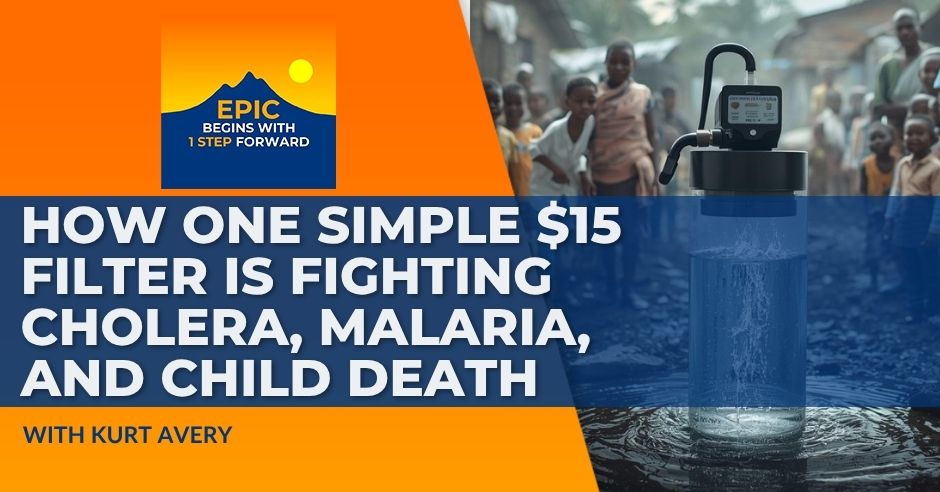
How One Simple $15 Filter Is Fighting Cholera, Malaria, And Child Death With Kurt Avery
How Kurt Found His Way Into The Outdoor Industry
I am so honored to be joined by Kurt Avery. Kurt, tell us who you are and what you do.
I am the owner and founder of Sawyer Products, and Sawyer is in the outdoor industry. Everyone knows the Off! Cutter Repellent. We are the next one, but we are the boutique. We are the high end. We have a very loyal following. We do all the military. They go nowhere without us. We treat both the clothes and the skin, and then we do water filtration. We are the king of the water filters domestically and internationally.
Talk a little about how you got into doing outdoor supplies, water filters, all of that.
I had an interesting corporate career. Then one day, I heard the boss take credit for absolutely everything I did. I said, “I see how this game works.” We are just going to go out and do it ourselves. I had that entrepreneurial spirit. I started out with what is called a snake bite kit. It just sucked the venom out of a snake bite and bee stings. It is still in Walmart today. That was 1984. You are talking about 42 years ago, and the product is still doing fine. That got us into the outdoor industry. We are all camping things.
The way you build your business is you sell more things to the same customers. As we were pre-internet, and all the influencers took us to another level, but we would sit in the stores for 10 or 12 hours all day and explain stuff. We also asked, “What else do you need? What are you missing? What can we help you with?” That got us to the repellent business with some very sophisticated repellents. We hooked up with a company that invented the bed nets and did all that stuff. As we keep going on, the big problem is water. There were clunky things out there. There were chemicals.
We came across a filtration device, which is from kidney dialysis. If you can clean blood, you can clean water. We put that into a lightweight, low-cost thing. We went to the stores, and they said, “You have got to put this in.” That is intriguing. They said, “We sell these things, ceramic filters and whatnot, for a hundred bucks a piece, and we make 50 bucks on each one. You want us to sell this for $19.95 and only make $10?” I said, “You are going to sell a lot more, and it’s the right thing to do.” When we started, the industry was 70,000 units of these clunky things.
Now it is millions of these filters. As time went on and we took over the domestic market, we became the boss. You go on any of the trails, the Pacific Crest Trail, or the Appalachian Trail. It is all Sawyer filters. Nobody is using anything else. I will not go into the specs, but it is the only thing out there that really, really works. They never wear out. We had the big earthquake in Haiti in 2010. We have got the solution. We sent a couple of hundred thousand down there. That put us on the international map because that is when everybody realized that is the filter you need for international.
It is not big, just a little thing. It never wears out. It is 0.1 micron absolute, so you are getting everything that makes you sick. Nobody else can make that claim, or the fact that it never wears out. We have already proven 100,000 gallons, but it certainly keeps going. We have 15 or 16 years in some of these countries, where they are still using the filter every day. You just backflush and clean it as you do with your pool pump. We are down now. We have done some 40 million people since we started with clean water around the world.
Every hurricane, we are always there. People go in ahead of time, or the big operations fly in right away, because you have to have water. When Helene hit, we sent 10,000 up to Tennessee and North Carolina. We are connected with the hiking community. It was really touching because they took them up to where the helicopters and cars could not go to give them to the people to drink the water at their feet. That is what we do. Now we have found the solution to eliminating or seriously reducing malaria among children.
That is really important.
It is the same thing we do for the military, where we treat their uniform and the chemical on the uniform, which is odorless. It is just like ink in your shirt. Keeps the mosquitoes away. The study was published in the New England Journal of Medicine. One application or repeated applications reduced malaria in the kids by 67%. You are talking a buck, a buck and a half at most, something like that. It is very inexpensive. It is just what we did for the military for 30 years, just applying it to the wrap that the moms carry the baby in. That just got going. That one is up and running now. There we go. I mean, we are kind of stuck in the middle of the two biggest problems.
No, definitely. Clean water and affordable malaria prevention are obviously really important. Kurt, are you the one who is coming up with looking, going, “Where is that pain point and what is my solution for it?” That is normally how businesses. They will see something. Someone will see something and go, “That is a problem. Let me see if I can have a solution for it.”
The thing is, I do not know science. I cannot spell science without spell check, but I am a marketer. The marketers are the interpreters between the end consumer and the engineers. Engineers come up with something, but they do not know how to make it so it is usable and repeatable. The customers have needs. I always use the example, Henry Ford said, “If I asked them what they wanted, they would have said a faster horse.” You have got to see what the problem is and then go back to the engineers. It is back and forth, back and forth. We are the interpreters until you eventually get to the solution.
Expanding The Mission To More Than 80 Countries
That is really cool. Look, I do not do a lot of camping, but I have gone to some unique places where I needed water filtration. I have to say, I have likely used your product because, certainly, why pay $100 for a water filter if you can pay $20 and it is just as good and, as you said, better or better? I think that is great. I assume that you are obviously getting your filters over to developing countries, like in Africa and stuff, where they are just pulling water from the rivers or whatever.
We are in 80 countries. We are everywhere, even the ones you would not think of. We have been in Gaza from the beginning. We are in North Korea. We are in Iran and Yemen. Wherever you look in 80 countries, there is always a place where you need water. We are in 80 countries through 140 different charities. Some of the ones you know, like the American Red Cross, keep it in stock at all times for disasters. Samaritan’s Purse keeps two plane loads for disasters. World Vision uses it. We have our own charities. We install millions of these every year.
Everyone can do 10 to 20 people. We have been to seven countries so far. This latest one, which is just out, has been out in the last couple of weeks. For $0.30, you can give somebody ten years of water. We are working on that one. The new model is that we go to the schools, we install them in the schools, the schools teach the kids, the kids teach the parents, then they take the thing home, and it will do all the relatives and everything else. You just stick it on your tap. All you have to do is put it on your tap.
I assume that there are obviously many developing countries that do not have running water. They are going to pull it. I assume that you obviously have things that you could put over a cup, a bottle, a bucket, or something.
We have four different delivery units. The bucket system, where you do. We do not care if the cows poop in the water. We will make it safe to drink, literally. They go and do that. You could just screw it on top of a bottle, too. You just take any old bottle, and you just screw it on and off, you go. You can put in dirty water. You do not even have to have a clean bottle. You take a dirty one.
We have all different delivery units, and all three work. Even in some countries, you need all three of those solutions. Our newest filter does all three of those. It can go on the tap, it can go on the bucket, it can go on the bottle. We consolidated. It took almost twenty years of developing this stuff, or fifteen years. We also do something unique. We measure everything. We do some GIS tracking. We go in there, and we know within two weeks, 95% of the sickness is just gone. It is gone. The reason it is not more, a year later, it is 98% because they still have to learn what to do with the other stuff.
They are not washing their hands right and they are not doing all that, but eventually we teach them all that. We give them 10% to 20% more income, which is huge. The water is now clean enough that women can start businesses. They are still able to cook because they can make tortillas or whatever they could not do before. Kids go to school, parents go to work. There are no diapers over there. Just think about not having diarrhea. Most people get diarrhea once a month in those countries.
There is dysentery, there is cholera, there is all of that, and your filters can help eliminate those things.
Cholera is a really nasty one. You are healthy in the morning and dead in the afternoon. It works that way. When you hear of a cholera outbreak, and then a week or two later, you do not hear about it, that means our filters showed up.
The right and efficient use of water filters can put a cholera outbreak to a halt.
Got it.
We stop it like that. We have so many places. Yes, but everything, any waterborne sickness. Tuberculosis and parasites. Kids lose a third of their nutrients to the parasites. We take care of that, they are gone. Kids are healthy. You go to villages where kids were jaundiced and whatever, and now they are alive, they are perky, and whatever. We save hundreds of thousands of babies every year.
We went to a village in Uganda, and the missionary said, “Why don’t you name your kids till they’re three years old?” They said, “If they make it to three, we know they’ll live up to that.” They lose about a third of them. There are 250 filters in the village. Come back a year later. They named that birth because they are not losing the kids anymore.
That is awesome, Kurt. That has got to feel really good that you have been able to help create so much goodness in the world. That is really, honestly, truly epic to see some problems and go, “How can I solve that?” The malaria thing, obviously, most of us in the United States and perhaps in Europe understand that malaria is there in countries, but we do not really understand how big a challenge that is, and how hard it is to come up with an affordable solution. Again, there are solutions. I know there is a nonprofit that gives out basically mosquito nets that go over.
We invented that, by the way.
Look at you. There you go. Good for you.
Everyone does now, but the problem with that is it is only good when you are under the bed net. What do you do the rest of the day? A
Mosquitoes are not like, “Hold on. I’ll wait until you’re in bed.”
Malaria has some solutions. There are vaccines and things that make you get really sick. They tend to get immune to it, but not the babies. Six percent of the babies die, 600,000 or 700,000 a year, of malaria before the age of two. If you get it before the age of two and you still live, you have cognitive issues that will affect you for the rest of your life. It is a huge problem. We are honored to be able to work with it. It came out of UNC-Chapel Hill, so we are honored to be part of that program. That is great. A very little thing, a very simple solution.
The fact that, as I know, having, as I said, done some camping and gone into like some jungles and stuff like that, sometimes the repellents and stuff that you are wearing so you do not get sick are basically like putting gasoline or kerosene on your clothes, and you smell so bad.
That is the other brand.
I know.
Carefully Wielding A Two-Edged Sword
We are so technically advanced. You will not smell it. It stays on the skin. Do not do that thing. We are very different. We treat your clothes, so the clothes are your big barrier, too. They work as well as that. You mentioned what an honor it is. It is an honor to be in the middle of these two solutions, but it is a two-edged sword because there is also a responsibility. I remember many years ago, ten years ago, whatever, we were installing some of the first filters, and the grandma said, “If you were here two weeks ago, my grandson would be alive.”
You have an urgency. It is an incredible blessing, and yet you still have that question, “Why do we not require any infrastructure? Why does somebody not just put $10 million behind this or a hundred million dollars into it?” It is just so easy. Stick it on the faucet or stick it on a bottle. We’re right there now. Sawyer can fund one country. I am focused on Guatemala. We are everywhere, but I think within three years, Sawyer alone can make nobody sick in Guatemala.
That would be great.
We have done seven countries already, but they were small pilot countries. Now we are ready to take on a little bit bigger 1, or 12 million people.
You obviously need someone like Melinda Gates or some person who is like, “Sure, 100 million to take care of all the waterborne diseases. Sure, no problem.” There you go.
We have been with them. They are not particularly interested, but there are other ones that will be. We are out there, we are in the White House. We have a guy in the White House looking at foreign policy, the whole thing. We do three to five million people a year, but I could have 30 to 50 million people a year have the capacity to do that. This tap filter pays for itself in two hours. I mean, 500 gallons a day with a less than $20 filter. That rounds out to zero, and it lasts for ten years, you know?
Yeah, no doubt. All you have to do is sort of just backwash it to rinse out stuff.
We even put in a QR code, so if he has a smartphone. If you have an issue or whatever, you just hit that, and we have got videos in eighteen languages explaining how to do this, how to fix it, and what your problems were. We have WhatsApp so you can communicate with us. It is a behavior change. It is not just giving them a filter. It explains the whole thing, best practices. We are way beyond just having the best filter. We have the whole system.
Would you say, Kurt, that your goal is to try to eliminate malaria and most waterborne diseases again, because if the people who needed this had this, yes, some people obviously are going to get sick and die, you cannot be 100%. Most of the people did not have to worry about getting those waterborne illnesses, which would be huge.
We are at the jumping point, but I am a very religious person, and so it is not whether I want to or not, it is whether God is willing to do it or not, because it takes the money, it takes the infrastructure. You have to train. We are way beyond it. You even have some countries, like I do not know if we will ever get into India. Those things have big problems, both malaria and water, but I do not know if we are ever going to be able to get in there. It is going to take somebody more powerful than Sawyer to crack that one because it is a very closed society.
I am just going to let it go where it goes. I can just provide the technology, the instructions, and the change. At this point, all it takes is money because we have everything else covered, and we do a lot. We give all of our profits and all of our costs. We can fund enough to do 3 or 5 million people a year. If you want to do 50 million people, somebody else has got to step in and say, “Okay.” You are talking $15 or $20 a filter. Filters do 20 people for 10 years.
The economics there are like the ROI is you cannot even imagine because you are like, “Imagine one filter, 15 or 20 people, 10 years, millions of gallons of water for $15.”
The other thing: it does not require any infrastructure. You do not need to go build water treatment plants. Give you an example. The Canadian government owed one of the reservations to a water treatment plant. They promised them a water treatment plant, $31 million. They could pipe it only to 500 homes. There are 5,000 on the reservation. They spent 31 million on 500 homes. For $50,000, we did the other 4,500 homes. That is how economical it is without infrastructure. Yes, we are ready. We will go at our own pace because we dedicate everything we have to it. You measure your company in your currency, and a lot of people measure it in dollars. We measure it in lives saved.
That is an awesome currency to measure it in, Kurt. That is awesome.
I have halls in heaven. What am I going to do with it?
Aside from the water filter and malaria, I know you guys make other stuff. Do you have some examples of some of the other stuff that you guys make?
No, that is really our focus. We have a big US market. That is what I did. We are number one and number two on Amazon right now with insect repellents. We are at the top. Again, we own the outdoor market, and we do filters. We have a very big domestic market that funds what we do overseas. We just keep improving what we do overseas. Our domestic technology is there. One of my mantras I learned is that I went to the Kellogg School of Management at Northwestern, and one thing is that.
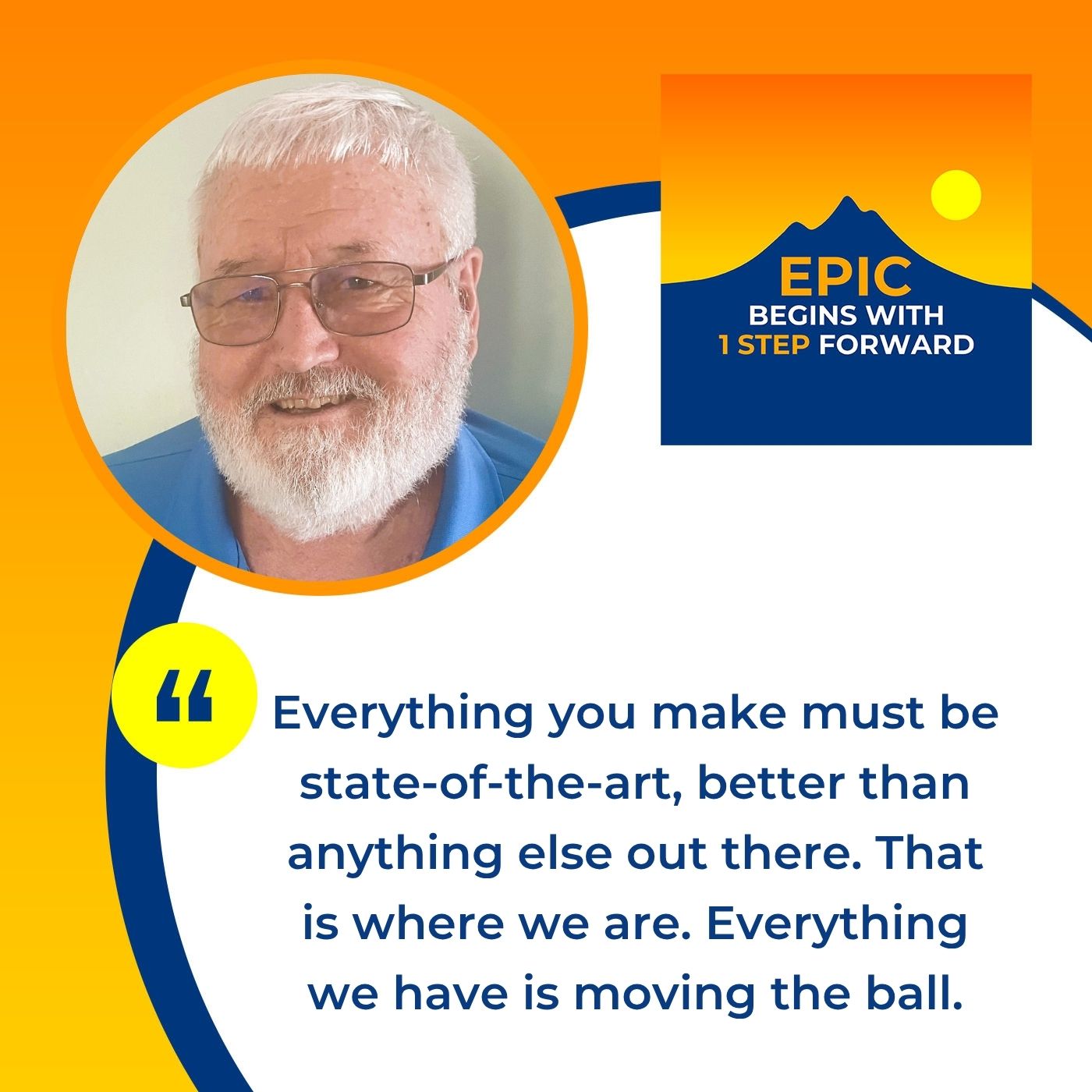
No need, no me-too products. Everything you make must be state-of-the-art, better than anything else out there. That is where we are. Everything we have is moving the ball. We are the best, and not the biggest, but we’re the best. We have a very loyal cult following. Our lane now is to take this technology overseas for millions and millions of people.
That is great. I know that for the domestic consumer market, you obviously are the leader. Do you guys do anything within the US for those rural communities that do not necessarily have the best water? I’ll just pick Appalachia or something where there is obviously abject poverty.
We are up in there, sure. We do not do chemicals forever, so we are not taking out that. We do not care about the chlorine taste or whatever. We are strictly biological. We take out of the water everything that is going to make you sick.
Got it.
We do a lot. The American Red Cross keeps it all the time. Anytime you are going to see a hurricane or whatever, we are there. Last year, Helene was a big example. 100,000 filters went up there for the people who got hit by the hurricane. Texas, Louisiana, on and on, all of those things.
That is really awesome. Living in California, I would be like, knock on wood, but a big earthquake, we do get those from time to time, and I would assume.
We’ll be there.
Kurt’s Not Yet In Life
That’s great. In my book, Kurt, I talk about when we are on our epic journeys, those things that we dream of doing, and then we start that journey. You obviously are on a wonderfully epic journey to try to eliminate sickness with malaria and waterborne illness. I talk about the concept of “Not yet,” those things that we talk about doing, dream of doing, but we just have not started, or we just do not know how to solve them yet. My question is for you. What is one or two of your “not yet”?
Obviously, I said we are very pleased that in ten years we have done 40 million people, but I am ready to do 40 or 50 million a year. We keep designing, as I said, we keep improving this, and we are constantly listening. We get a lot of feedback. As I said, we had four different solutions. Now we turned one filter to do all three of those solutions because we listen, we do constant research to see what the data taught us. Here is one that just came out of the Guatemala study, just finished, and Honduras finished. We reduced the carbon footprint of these people by 50% while running water.
That is the greenest thing on the planet. Let us quit knocking down trees and buying propane just to boil water to drink because you do not need to. That is huge, and that is not even out there yet. Nobody knows we are getting ready. That will be published in the next 3 or 4 months in medical journals. We have not even told the world that we are the greenest product yet. There is so much in front of us, and we just constantly keep learning a few more pieces to fine-tune what we have.
There is so much in front of us. We can constantly keep learning a few more pieces to fine-tune what we have.
The work that you are doing is truly remarkable. What a great mission to be on, and not only be on the mission, but look at what solutions we have. That is really cool. I could somewhat hear your frustration in saying, “I have the capacity to help 30 to 40 million people a year. Come on, people. Come on, world. Let’s get on this and let us do this.”
That has only been recent. In fairness to the people who have not donated yet, they did not know. We also have to work on getting the story out, which is very helpful from you. Thank you very much for giving us this chance, but we have got to get the studies out and the research out. We are saying, “State Department, we shut down USAID, which is good. They were really bad because we tried to tangle with them.” We are foreign policy. We will go in and pick a country. We will go to make everybody not sick. We can just do that in a year or two.
It honestly sounds like a very small team that goes in there. We are sending in a team of, I’ll guess, 5, maybe 10 people that can show everyone how to use this.
You work within the system, so it takes more than that because you have to build the distribution network, but we do not go in with Americans. Gringos stay home. It is always locals, but you work with the Ministry of Health, and you work with the Ministry of Education system. They have the resources to just think about that. Go to school. What does it take, two hours to teach a classroom how to use a filter, and they go home?
Not only that, but the reward is that kids are going to come to school 30 more days a year because they are not sick themselves. You work within their system, so you have to connect with the government because they have the capacity to distribute it. We cannot go in with our own team. We do that, and there are countries where we absolutely go in with the government.
Do you find in working with the government that the filters end up where they do not go from point A to point B? There is a detour, and all of a sudden, someone realizes that, “Here is something valuable, I am going to turn around and sell it on the black market or whatever.”
We have quite a few countries where it does not get through customs. No, they are not throwing them out. You have got a filter that is worth, say, $10 or $15, whatever it is, depending on the system. They immediately go on Amazon and see that something like that sells for $50. Now they want to put your tariff on there, and some countries have 100% tariffs. They want us to pay $50 for a $15 filter. It is not going to work. That is where you do have to get the government on your side. It took us two years to get Egypt to not put a tariff on this thing. It is a painful side.
On the other hand, who is the biggest donor in the world? It is the United States. If we got the State Department to say, “We’ll put it right through.” We are working with OAS, which is the Organization of American States. They have connections and a child charity called ChildHope. They have 900 schools. How simple is that? Setting it up in the schools can get you 3, 4, or 5 million people. That is the route we are going because we have to show our government a distribution model that works. You cannot just have the product. You have got to be able to distribute it and educate.
We have to show a distribution model that works for the government. You cannot just have the product, but also be able to distribute it and educate people about it.
Get In Touch With Kurt
You have got the end-to-end, the whole end-to-end. Here is the production, here is the distribution, here are the actual people using it. That is great. Kurt, if they are interested, find Sawyer, donate if they want to donate, or contact the company if they are like, “I’m doing a project in this country, and wow, if I could bring your product in, I could have a much bigger impact.”?
They will, yeah. First of all, we are in 80 countries, so we are liable to come across you somewhere. The ones who have not known, the people who do food and stuff, have not realized how important the water is to go with it. Sawyer is a for-profit company, but we have the Sawyer Foundation. The Sawyer Foundation, when I exit the market mentally or physically, will own Sawyer because I could sell this company three days a week.
I am not going to because they would just want the money. It is going to go to the foundation. The foundation is a 501(c)(3), so fully tax-deductible. You can either go to SawyerFoundation.org or you can go to Sawyer and see some of the stories and then link over there. We guarantee that 100% of any donated money will go overseas. Sawyer takes care of the overhead, very little overhead, but Sawyer takes care of it. 100%. There is no overhead taken out of any donations.
Kurt, I want to thank you so much for joining me. Just encourage you to keep going on this epic journey to help so many millions of people. It is really inspiring.
We appreciate you giving us a chance to tell our story. That is what we are about now.
I want to remind everyone that if you are ready to begin your epic journey, go to EpicBegins.com. As Kurt is so wonderfully demonstrating, epic choices lead to the epic life that you want.
Important Links
- Sawyer Products
- Sawyer Products on Facebook
- Sawyer Products on Instagram
- Sawyer Products on YouTube
- Sawyer Products on TikTok
- Sawyer Products on LinkedIn
- Sawyer Foundation
About Kurt Avery
 Kurt is the founder and president of Sawyer Products, a company at the forefront of innovation in outdoor protection and humanitarian aid. With a background in marketing for Fortune 500 companies and an MBA from Northwestern University’s Kellogg School of Management, Kurt launched Sawyer with a mission to develop practical, life-saving solutions—most notably in water filtration and insect repellents. Under his leadership, the company has grown into a global force, serving both outdoor enthusiasts and vulnerable communities around the world.
Since 2008, Sawyer has donated over 90% of its profits annually, partnering with more than 140 nonprofits across 80+ countries and improving the lives of over 40 million people. Their clean-water initiatives have dramatically reduced waterborne diseases and improved health outcomes in underserved communities worldwide. Kurt’s approach to business is deeply rooted in purpose, faith, and impact—a philosophy he shares in his book, Sawyer Think: How a Small Company Disrupts Markets and Changes the World.