In this insightful episode of Epic Begins With 1 Step Forward, Zander Sprague sits down with career strategist Sam Alvita, founder of Work Rewritten, to unpack the rapidly evolving world of modern employment. From shrinking skill lifespans to AI-driven disruption, Sam explains why traditional career advice no longer works—and what to do instead. They discuss layoffs, the emotional toll of job loss, and the impersonal realities behind corporate decisions. Sam shares how to reframe rejection, build agency, and create a flexible strategy in a workforce where stability looks very different from what it did decades ago. Whether you’re entering the job market, pivoting mid-career, or adapting to AI’s impact, this episode offers practical insight and an empowering perspective for navigating change with clarity and confidence.
Free E-book – https://dl.bookfunnel.com/afk096okro
Apply to be a Guest on My TV show – https://www.epicchoicemedia.com
#EPICBeginswith1StepForward, #ZanderSprague, #CareerPivot, #SkillLifespans, #AIDrivenDisruption
—
Watch the episode here
Listen to the podcast here
Work Rewritten: How To Navigate Careers In The AI Era With Sam Alvita
I’m honored to be joined by Sam Alvita. Sam, tell us who you are and what you do.
Thank you so much, Zander. I am excited to be here. My name is Sam Alvita. I run Work Rewritten. It is a career strategy and career consultancy where I do a lot of writing and help a lot of people move through big transitions in their lives. I do a lot of things adjacent to that, including workshops and podcasts. I’m excited to chat.
How The Workplace Is Evolving Quickly
The workplace is very different and evolving quite quickly. When I worked in the corporate world for 22 years, I was always talking to my parents about when jobs would change. I might change jobs, might get reduced, in forced, downsized, outsourced. All the different terms for “I got laid off.” My parents being older, they go, “What did you do wrong? Why are you moving?”
I’m trying to explain to them, “The way the workforce is, very few people work at a company for 50 years. The way employees view employment and the way that employers view employees.” Having said all of that, what are your thoughts about this work rewritten in terms of how the workplace is changing and how both sides are treating each other?
To your point, work has changed tremendously over the last few decades, especially within 2016 to 2026. In the 1940s, 1950s, if someone started a career, they could reasonably assume that whatever skill training they got for that very first job would last them. They would upskill slightly, but that skill set would last 30 years. That 30-year window has been shortening and shortening.
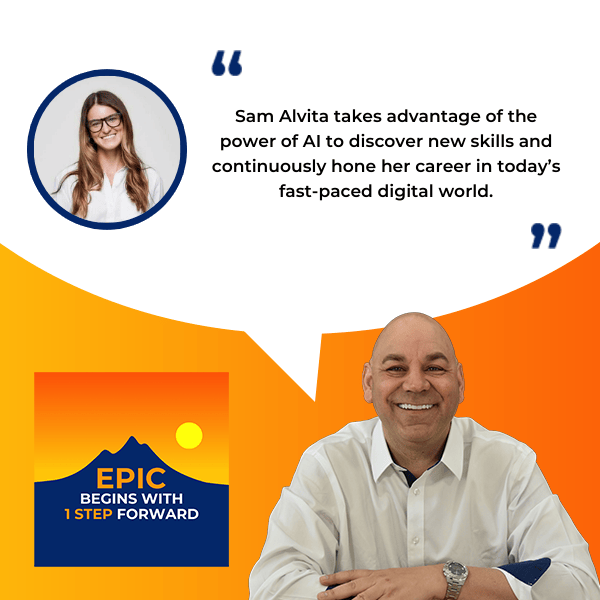
By the ‘80s, let’s say around fifteen years. In the early 2000s, about ten. This time, we’re looking at a skill window that’s about 2.5 years long, going down to about six months to a year. That in and of itself, the skills that you may have learned in a university setting or an initial job training aren’t going to last for a full career. That’s a big part of it. As you said, layoffs have been rampant. I know very few people in my life who have never been laid off. It’s something that is a reality that a lot of us are living with. A lot of us are learning to adjust to.
I always phrase it, and this may not be the best way to phrase it, but I said to companies, “I’m like a Kleenex. I am highly needed. When I’m not needed anymore, I am thrown out without a thought.” I spent seventeen years doing technical instruction. I taught people how to use software for various software companies.
Sadly, instruction, education are not viewed as important to companies like, “We have a product. We need a trainer. Let’s hire a professional trainer. Times are tough. We’ll get an engineer to do it.” The engineers are brilliant people. They are not necessarily the right people to teach. I swear I spent half of my time educating management. Basically, going in knowing that I would be the last to be hired and the first to be fired.
If someone started a career in the 1940s and 1950s, their skill set training would last for 30 years. That 30-year window has been shortening.
Let me tell you where my value to the company is. I always joked that I was a zero-sum employee in this sense. I did multi-day training. People were paying back then about $3,000 for the training. If I had ten people in the class, that’s $30,000 a class. I ran this class twice a month. There’s $60,000 a month. You take my salary, my benefits, and any additional stuff. By about April or May, I’d already generated enough income to cover what it costs to have me as an employee.
Any other training I did was gravy. I was a zero-sum employee. It didn’t cost you to have me employed. Yet, I got reduced, in forced, and stuff like that. I lost my job. I can see that stuff is happening. It was disheartening because I did grow up believing that if you work hard, you do well at a company. You’ll get promoted, get more skills and you get to stay there. I learned quickly in the late ‘90s and early 2000s that that simply wasn’t a reality. I had to look out for me. That’s hard because you don’t even know. You’re like, “Do I stay? Do I go?”
As you said, some skillsets are good for 1.5 years or 6 months. I’m guessing that you worked in the corporate world a little and stuff. It takes at least 3 or 4 months to figure out how to do the job you just got hired for. How does all of this work? If you do that and all of sudden, two months later, your skillset’s gone. How do you help people manage all of this?
Exactly what you just shared has been so common. So many people are experiencing these big reductions in force, these needs to re-skill. To your point about your own skill set, the skill set was extremely valuable and extremely lucrative. The company was going to see if they could make more money without that particular person.
I know for a lot of my clients, it feels extremely personal when they’re laid off. It’s terrible. It’s extremely impersonal, unfortunately. There’s a lot of narratives that I try to break down with my own clients and in my own writing. Starting with, “I was laid off. There must be something wrong with me or my skillset.” This is a numbers game.
To treat it as such is challenging but is helpful in thinking about our own strategy. The opportunities available to us. Where we can go next and not staying so loyal to these companies and following these old narratives of, “You need to work at this place for 2 to 5 years. You need to do X, Y, and Z.” Your stability comes from staying in one place and not upskilling and not looking outside of where you are. Breaking down some of those narratives and helping people get a lot of agency can be helpful in navigating this world.
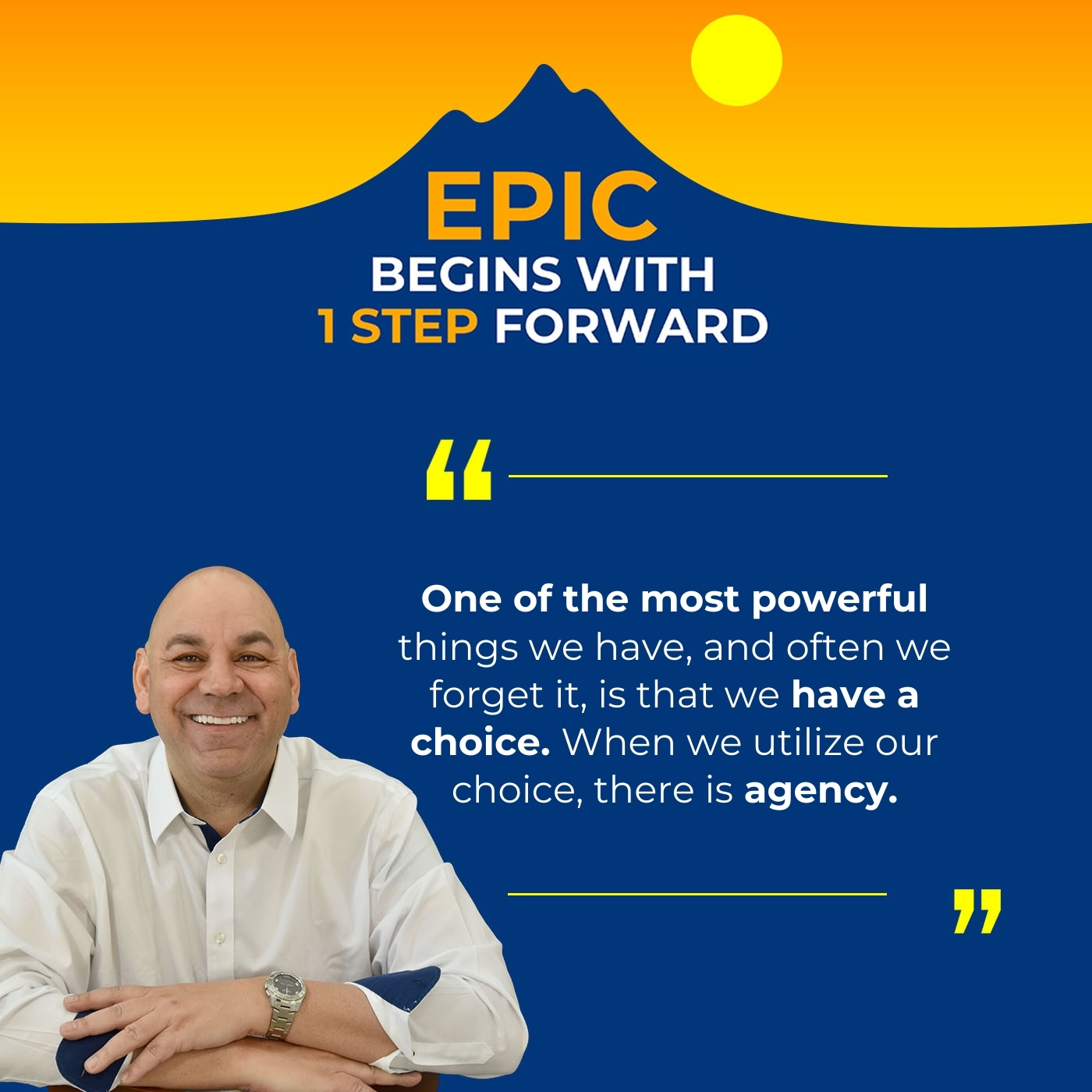
As I talk about in my work, one of the most powerful things we have, and often we forget it, is that we have a choice. When we utilize our choice, there is agency. There is this feeling. I am the first to admit, especially when it comes to jobs and stuff like that. Sometimes, our choices are crap and crappier. Sometimes, you’re like, “There’s not a choice that I want.”
However, as I’m sure you’ve experienced in your clients’ experience. If you do nothing, your passive and bad things might still happen to you. At least if you took some agency and said, “I am making a choice. I can see the writing on the wall.” My experience tells me, “I sense what’s going on. I might want to make sure my resume is updated. I might want to look around and see what else is available.”
It’s interesting. I worked in a big Fortune 100 company and was told when I interviewed that if I didn’t have a new job every two years, I wasn’t seen as being caring about my career. I always found that weird. Let’s call it six months to learn fully how to do your job, who do you work with, how does that work, and how does this company work. There’s six months.
I have one year to do my job. I have to spend the next six months in the current job looking for the next opportunity within the company. That just doesn’t happen quickly. I was like, “I do my job for a year and then don’t do it for six months because I’m looking for my next opportunity.” Honestly, I was like, “That doesn’t make sense.”
There’s so many narratives like that where you’re like, “How am I supposed to do X, Y, and Z thing with the current structure as it’s set up?” I know a lot of big corporate companies will set up a promotion structure that loosely follows that two-year cycle. They put very arbitrary metrics. They pass over people for promotions. If someone’s still in the role, they’re going to promote them. There’s not a business need for it. There’s this dual narrative going on like, “Be promoted. Do all these things perfectly.” There aren’t always clear pathways and clear rule sets that set someone up for success. That in itself is a bit of a losing battle.
Determining Your Strengths Through StrengthsFinders
One of the things I work with people. I’m sure in the work that you’ve done working with people around work. There’s the Gallup StrengthsFinder. I did that at a company I worked with. I was like, “This is cool.” As a manager, it is helpful to understand what skillset does my team possess. I’m good at presentations. I love doing that. It floats my boat.
I was in a role where there were people who were doing presentations but that wasn’t where their strength was. I was like, “Why are you not putting me out there? I’m good at this. I like this.” It shifted. I got to do the presentations and the person who was doing the presentations it wasn’t their skill set. My manager was looking, saying who can do what on my team and how do I best use their skills. I’m guessing that you know about StrengthsFinder. You could say, “I don’t like it. I like this other tool.” There are lots of great tools out there. Talk a little, if you can, about what you think about StrengthsFinder. How you might suggest someone use it or you use it with your clients.
That particular tool is fantastic for a number of reasons. Mainly because it’s very specific. I don’t know the number of strengths.
There’s 30 or 32 or something like that.
There’s so much nuance that comes from that. I think with my clients, how I’ve used it in the past is thinking through. If these are your top five strengths, what do you need from a work environment because of those strengths? What do you bring to a work environment because of those strengths? How I’m using it a lot is positioning oneself in the world. The bottom five strengths are helpful too. For me, I don’t know the exact term, but meticulous data analysis is my very bottom line.
Don’t do a job that requires that.
I stay far away from that job. Don’t even think about it. It’s helpful to navigate. What I loved about your example was even less so of what tool is being used but more that a manager is looking at their team much more holistically and being like, “Do I know what the strengths of my team are? How can I utilize strengths that may not be extremely obvious to support our team and to support that person? I encourage more managers to do that. Everyone has a lot of skills that are not being used.
In your current role, you just may not have the opportunity to do something that it turns out you’re good at. For the audience, the StrengthsFinder basically looks at things that you are intuitively good at. It makes sense to you is the way I like to say. The idea is that if you can spend 75% of your day in your areas of strength, work seems a lot easier. You’re a lot more successful. The company is getting the best out of you because you’re like, “I like this. This makes sense to me. I can do this.”
How AI Is Transforming The World Of Work
If you’re a strategic thinker, you should probably be utilizing that skill to help do strategic thinking. If it’s not, you shouldn’t be in that position. What do you see with AI coming in? That’s clearly changing how work is done and who’s doing the work. How do you see that changing? As you said, we’re down to six months. Is that because of AI because AI is changing stuff so quickly?
That six-month window again is career dependent. It’s like, 6 months to 2.5 years as a blanket. If you work in marketing, jobs like that are being changed on almost a monthly basis of what new tools, what new prompting, or what new is coming up. I would say with AI, one of the things I’m seeing a lot of is there are these big narratives in the news of like, “AI is taking everyone’s job. Everything’s going to change. The robots are coming.” There’s whatever narrative.
Instead of focusing on how AI will take everyone’s jobs, focus on the new opportunities becoming available to people because of it.
There’s much less emphasis placed on what opportunities are becoming available to people because of AI. That’s the narrative that I use with a lot of my clients, especially those in industries or phases of work that are already being hit hard. For example, I’m working with far more entry level clients than I’ve ever worked with before. Their job posting percentages is like 40%. There are fewer jobs to pick from coming out of the gate. It is terrible.
That’s not a great starting point. There are people that are going to need to pivot immediately after university, which was never a thing of the past. There’s a lot of big changes happening to certain places already. Instead of sitting there and being like, “AI is taking my job. I don’t know what to do. There’s nothing I can do about it.” I try to approach it with a lot of agency. What are the opportunities that are becoming available because of AI? How can we think about this as a positive thing? At least something that we have more control over than maybe what the news positions it as?
I will point out, because I’m older, and part of what I majored in in college was History. I remember and look at it and say a very similar thing happened many years ago when computers became more common. “Computers are pushing people out. We don’t need to do it.” There was also the promise that with computers, we’d only have to work two hours a day. We can do 8 hours of work in 2 hours.
My personal experience was I was still working 8, 9, and 10 hours. I was probably doing the 1940s equivalent of a 24-hour job. Computers have made things so much easier. They’ve sped up stuff as is AI. It means, as you said, there’s a shift. It’s not that people aren’t still necessary. Here’s the thing. We currently know more than AI.
I use AI to help me do some aspects of my job and it’s great. I’m still checking what’s being put out. There are things where you might ask AI to help you write a letter or something. You still got to read the letter. Don’t copy and paste it right in. You’re asking it to do a whole bunch of research for you. What are the current jobs that entry level minimal AI knowledge can get? You still have to check it. At the end of the day, it’s ones and zeros. On or off. There isn’t that logic that we have to filter out and understand the nuance.
I think too there’s a lot of the narrative. For example, I’m a writer. I do a lot of creative work for clients outside of my own work as well. I do not like to use AI for my writing. I can do the writing much better. I do love to use it for my calendar management and my invoices. Some of the more boring pieces of my job that don’t require my brain in the same type of way. There’s that multifaceted use case of maybe it’s not your core function.
I’m a neophyte. I’m understanding but I’m probably using 0.00001% of what AI could do for me in my business. There’s also stuff that I’m just not comfortable with. I am not creating an agent that’s going to be sending out emails on my behalf without me seeing it. I am my brand. If I sent something out that AI decided to like, “Here’s your question, Sam.” I send you an email and there’re things that are factually wrong. The tone just isn’t the way I would write.
Again, it’s great. It can help you automate some tasks. Don’t surrender and go, “Take care of all of that.” Let me make sure that I know. If you’re using it for calendaring, it’s great. Make sure you know that it booked you for six hours of meetings back-to-back. You’re like, “Not what I wanted for my Thursday.”
I think every single person is in some learning journey with AI. It’s doing something like your six hours of meetings back-to-back and being like, “That’s not what I was hoping for at all.” It’s a journey for everyone. I know that.
Every single person is on some learning journey with AI.
I will admit. It’s cool. In 2025, I was interested to understand what it takes to try and monetize my YouTube channel. I don’t think I’m there but I want to understand the process. I could have probably taken what would have been two weeks of me trying to search for all the info and put it together and stuff.
I asked ChatGPT and in three minutes, I had something where I had a good overview. Not a deep dive. I’m like, “Here’s what’s required. Here’s some top people in my industry. Here’s how they may be monetizing. It doesn’t know for sure, but here’s how it may be monetizing. Here’s how many views they’re getting. Here’s what we project they’re getting.” I asked it to tell me what different segments within YouTube get paid for stuff.
Why Asking For Help Is Never A Bad Idea
I told it, “Go look at my YouTube channel. Tell me what you think I monetize at.” It’s super helpful, seriously. In twenty minutes, I had all kinds of information that I otherwise would have taken, I don’t even know how long. Honestly, not a task I wanted to embark on all the different pieces and try and figure it out. That’s cool. What do you see, Sam, as your role in helping people? What you’re doing is super cool. People don’t ask for help nearly as much as they should. There’s nothing wrong with asking for help. It’s okay not to know.
I could not agree more. It’s tricky. A lot of people feel like they should know. Especially in the work and career space. There are some very codified narratives of like, “You do this and then you do this. This is what success looks like.” If you follow these steps, you’ll land a great job. If you’re not landing that job or not finding the same success from that narrative, there’s a lot of shame that people will carry. Especially when the narrative isn’t that accurate for a mess that is not of their own creation. There’s a lot of work to be done in terms of reframing that narrative and giving people a much more modern playbook that does work.
In my work as a mental health provider also, when people come to me, I’m like, “It’s okay.” We all need help at some point. There are things that we try and solve on our own. Perhaps you’ve lost your job. You’re feeling despondent. You’ve been looking for a job. You’re not getting interviews. All of that can make you depressed, can make you feel down. I’m like, “I’m here to help you.” It’s okay to ask for help.
I’ll be pejorative and say for men, this idea that, “I should know.” You want to know what? There are people who may be 35 or 40 years who’s been in the workplace. All of a sudden, the landscape has completely shifted. They don’t have any information tools to figure out how to fix it. They’re not broken. Everything just changed. It’s like if you live in an area where it never snows. All of a sudden, you’re someplace and there’s nothing but snow. I don’t know how to deal with snow. I don’t have the clothes. I don’t know how to drive in the snow. I don’t have a snow shovel. It’s not your fault. It just happens.
I love that metaphor. That exact metaphor of everyone is living in a place with snow. Whether or not they are ready for it seems to very much be the case with the job world.
Sam’s Not Yet In Life
One of the things I love to ask my guests is in my book, EPIC Begins With 1 Step Forward. I have this concept of Not Yet. Those things that we want to do, would like to do, or dream of doing. I love to ask my guests. Sam, what are one or two of your Not Yet?
I am in the process of landing a publisher for my first book. That’s something I’ve dreamed of doing for a long time. It’s been a very long process that has taken a lot of work. I still have a lot of work left. I feel like I’m in this space where it will happen at some point. I do not yet have a book and I’m learning daily.
The way I would phrase that is, “Have you found a publisher?” “Not yet.” If you say no, it’s so hard, like it’s never going to happen. Not yet to me is so optimistic. It’s a work in progress. I’m more, “I haven’t found that publisher yet but I’m still working on it.” It lets people know. “Not yet. Come back and ask me again.” It’s fine. That’s cool. Congratulations. I’m guessing you’ve written the book.
I’ve written the book. I have an agent doing all the things. It’s in motion.
It’s quite the process.
I’m sure you know it very well.
I do know it very well. I love that. There’s things I’ll share with you, but not necessarily here on the show, that I think are important for you to understand as you go through the publishing process. That’s great. Congratulations on that. Do you have any other? How about a place that you’d love to travel to but haven’t gotten there yet?
I wanted to go to South Africa. I have not gotten there yet.
I can talk to you about that, Sam.
You’ve been there too? I’m ready for all this information and advice.
Get In Touch With Sam
People have heard me rave about South Africa enough. I’ll give you that information. Any of my regular audience would be like, “He’s going to go off for twenty minutes about South Africa.” I’m not going to, folks. Sam, if people need help, how can they get a hold of you?
I am available on pretty much any social media site at ByWorkRewritten.com. I write a lot on Substack. That’s my primary place if you want to find my tools and my advice in a very actionable way. Go there. My website ByWorkRewritten.com, has access to all of my programming. If you want to book a free strategy call with me, all that information can be found there.
That is great. Sam, I want to thank you so much. What an epic conversation. How interesting to talk about the modern workplace and careers. Thank you so much for joining me.
Thank you so much. I’m so glad we had this conversation.
I want to remind everyone that if you’re ready to begin your epic journey, go to EpicBegins.com. As always, remember, epic choices lead to the epic life that you want.
Important Links
- Sam Alvita
- Sam Alvita on LinkedIn
- By Work Rewritten
- By Work Rewritten on Substack
- EPIC Begins With 1 Step Forward
About Sam Alvita
 I’m Sam Alvita, founder of Work Rewritten, where I focus on how people make career and work decisions in an era of constant disruption. My work draws on research, real-world experience, and systems thinking to help individuals and organizations navigate uncertainty with greater clarity, agency, and long-term resilience.
I specialize in translating complex shifts in the labor market, such as automation, changing incentives, and non-linear careers, into practical frameworks people can actually use. Rather than offering generic career advice or alarmist takes on the future of work, I help audiences understand what is structurally changing, which assumptions no longer hold, and how to make smart, responsible moves without burning everything down.
My work centers on why so many capable people feel stuck at work, how decision-making needs to evolve in unstable environments, and where meaningful opportunity is emerging that many people overlook. The goal is always the same: to help people think more clearly, act with intention, and build careers with greater dignity and agency.