In this powerful episode of Epic Begins With 1 Step Forward, Zander sits down with chronic illness coach Jeffrey Bone to explore resilience, identity, and what happens when life takes an unexpected turn. After exposure to black mold triggered a cascade of debilitating symptoms, Jeffrey spent years searching for answers before being diagnosed with Common Variable Immune Deficiency (CVID), a rare immune disorder. He shares the emotional toll of losing his health, the grief of letting go of an old identity, and the challenges of navigating a medical system that didn’t initially have answers. Together, they discuss creativity as a healing tool, the importance of curiosity, and how we can continue growing even when life changes dramatically. This conversation is a moving reminder that we are always more than our circumstances.
Free E-book – https://dl.bookfunnel.com/afk096okro
Apply to be a Guest on My TV show – https://www.epicchoicemedia.com
#EPICBeginswith1StepForward, #ZanderSprague, #CVID, #ChronicIllnessSupport, #ImmuneDeficiency
—
Watch the episode here
Listen to the podcast here
You Are More Than Your Diagnosis: Jeffrey Bone’s Epic Journey
Navigating Chronic Illness: The “Zebra” Diagnosis
I am so excited to have Jeffrey Bone with me. Jeffrey, tell us who you are and what you do.
Thank you very much for having me on. I am a chronic illness coach. I help individuals who are experiencing chronic illness navigate the world of chronic illness. A lot of that is based on my own chronic illness and having traversed the terrain on my own. A lot of heart fought knowledge that way.
Let’s talk a little about your chronic illness. I have to say when I was reading your bio, I’m like, “I have never heard of that,” but that’s not necessarily surprising.
That’s part of the zebra condition. As they say, when physicians hear hooves in the street, they think of horses. Not zebras. Sometimes, it’s a zebra and that’s my condition. What ended up happening is I had black mold in my HVAC in my office. I didn’t know it and I developed sinusitis. It seemed pretty straightforward. We all had sinus infections and get prednisone. The body just flips out. Feet vibrating, bladder hurts, and my brain feels like a neurological concussion. I have fatigue. I’m not sleeping. It’s gone wild.
I don’t fit into the decision tree of any of the doctors. It’s like, “He’s stressed out. It’s anxiety.” All because it doesn’t look normal. My kidneys are fine. The white blood count is fine. Eventually, I found a physician and they did some additional testing. He said, “It looks like mold.” I get the office and the home tested. Lo and behold, there’s black mold. I go through that treatment protocol and I do it for about a year. I was like, “I still don’t have any good days.” I go to a toxicologist. The only reason I end up with a toxicologist is because I felt toxic.
Lo and behold, when he tested my IGG or the immunoglobulin. Those are clinically low. I get sent over to the immunologist. They gave me a vaccine. My body doesn’t make antibodies to the vaccine. I have low IGG scores. I don’t make antibodies to the vaccine. I have common variable immune deficiency, which is a primary immune disorder. Compare that to an autoimmune disorder. It’s the complete opposite. Autoimmune is when the immune system is attacking healthy tissue and mine doesn’t even get out of bed. Mine’s under reactive, so it leads to a lot of different infections.
I imagine. That’s what I would do on my show called epic unexpected.
Yes.
Those things that happen that change and shape our life.
The plot twists. I had no idea this plot twist was coming. It created a series of dominoes that were just physically devastating, emotionally devastating as well as identity devastating.
I do want to talk about that identity part because that’s an interesting thing. First, I wanted to understand. Now that you have a name for it, how has it progressed or not progressed? How do you take care of yourself?
I have to do weekly infusions with immunoglobulins. People donate plasma. When they donate plasma, it’s being turned into these immunoglobulins that I have to infuse. Many different people with many different conditions will infuse immunoglobulins. That is how I managed it, but I have to keep my sinuses clean. I have to rinse them out on a regular basis, because I’m very prone to getting sinus infections. If it gets into the ear, I get vertigo. It’s not a lot of fun.
You have this general fatigue that comes with it. It’s a little bit like a dull spirit. I’ve had significant ones. When I was undiagnosed, I had fatigue where I could barely function. Now, my fatigue is not that level of not being able to function. This is where it sandpapers life down and just dulls it down a little bit. It’s not a lot of fun, but it’s one of those things where if it was decades and decades ago, this treatment wouldn’t even be available.
Now, for your immunoglobulin treatment. Do you have to go to a doctor’s office or a clinic or is it something that you can administer at home?
I do it at home. It was a little daunting because you have to make the mental switch. You’re having to stick needles into your abdomen, into the fat of your stomach. I don’t think I’ve ever said this. Oddly enough, the thing that helped me a lot is that I was reading the autobiography from Anthony Kiedis from Red Hot Chili Peppers. He was talking about shooting up with rusty needles and all the rest.
If Anthony Kiedis can be strung out from multiple days and finding veins for his drug use. I can take these clean needles and stick them into the fat of my stomach. That’s like, if he did that, I can do this. I took it that it wasn’t as big of his deal as I was making it, which allowed me to dive in and do that as a natural thing. We don’t grow up stopping ourselves, typically.
Overcoming Fear: Finding Structure In Medical Treatment
Normally not. Unless you’re diabetic or have a medical condition. Anything that we have to do, even if it’s unpleasant. Repeatedly, you do learn that this is okay and now you’re like, “No problem.”
It becomes familiar. The brain likes familiarity. The brain is a big fan of familiarity and it wants to be safe. Unfamiliarity is unsafe. That’s where you repeat the task and you reassure yourself. Over time, it becomes a little bit of a hassle but then I feel so privileged when I get annoyed with it. I can imagine all the people that came before me that didn’t have access to this.
The brain is a big fan of familiarity and it wants to be safe. Unfamiliarity is unsafe. That’s where you repeat the task and you reassure yourself.
On the psychological standpoint, first of all, repeatedly doing it. It’s nothing like a little in vivo exposure to something that we don’t like. When we keep getting exposed to it, that fear goes away just because you keep having that that experience and going, “I will be okay.”
You’ve read the book a few times and you know exactly what to expect.
The same way if you take something. I love roller coasters but I will often ride a new roller coaster twice because the first time, although, it’s thrilling. I have no memory of what it is because you’re just freaking out with what’s going on.
You don’t know where the turn is. You don’t know where the twist is and the and the loop. It’s so unfamiliar. It doesn’t get encoded and you can’t sit back.
You do it again and then you can talk about it. People are like, “How was that roller coaster?” You’re like, “It was great. I had a great time but I can’t go again.” It’s as if you had amnesia.
I don’t have the words for it. It always reminds me of David Foster Wallace. His quote of, “How can I have all of this inside me but to you, it’s just words.” Which is, we have all these experiences but I can show you through words of what my experience is.
That’s so true. Especially these epic unexpected events. I can describe stuff that’s happened in my life in probably pretty good detail. I’m a good talker. I love words. I’m more of a talker than a typer. I’m like, “Let me.” If you haven’t experienced that, you can go, “That sounds interesting.” If you haven’t experienced it, you don’t know.
It’s the frame of reference.
One thing you said which is true. I talk about it all the time and I talk about it in my book. Structure is our friend. Structure psychologically makes us feel safe. That new thing that we keep having to do becomes easier. A simple example I use is, I’m going to have you, Jeffrey. Think back to high school. That first week of school, you were stressed about, “Where do I have to go from my first class to my second class to my third class? Where is the classroom? What’s the best way to get there?” By the second or third week, you don’t have that worry anymore because you know.
There’s the structure, “I go this way to get to my classroom. It’s faster if I go this way.” We are creatures of habit. As a species, we’ve made it all these millions of years because we create safety. We keep it safe. Change is also very important. We don’t grow and we don’t develop if we don’t have change. Sometimes, that unexpected change forces us to grow. For you, how have you seen yourself grow because of your chronic illness?
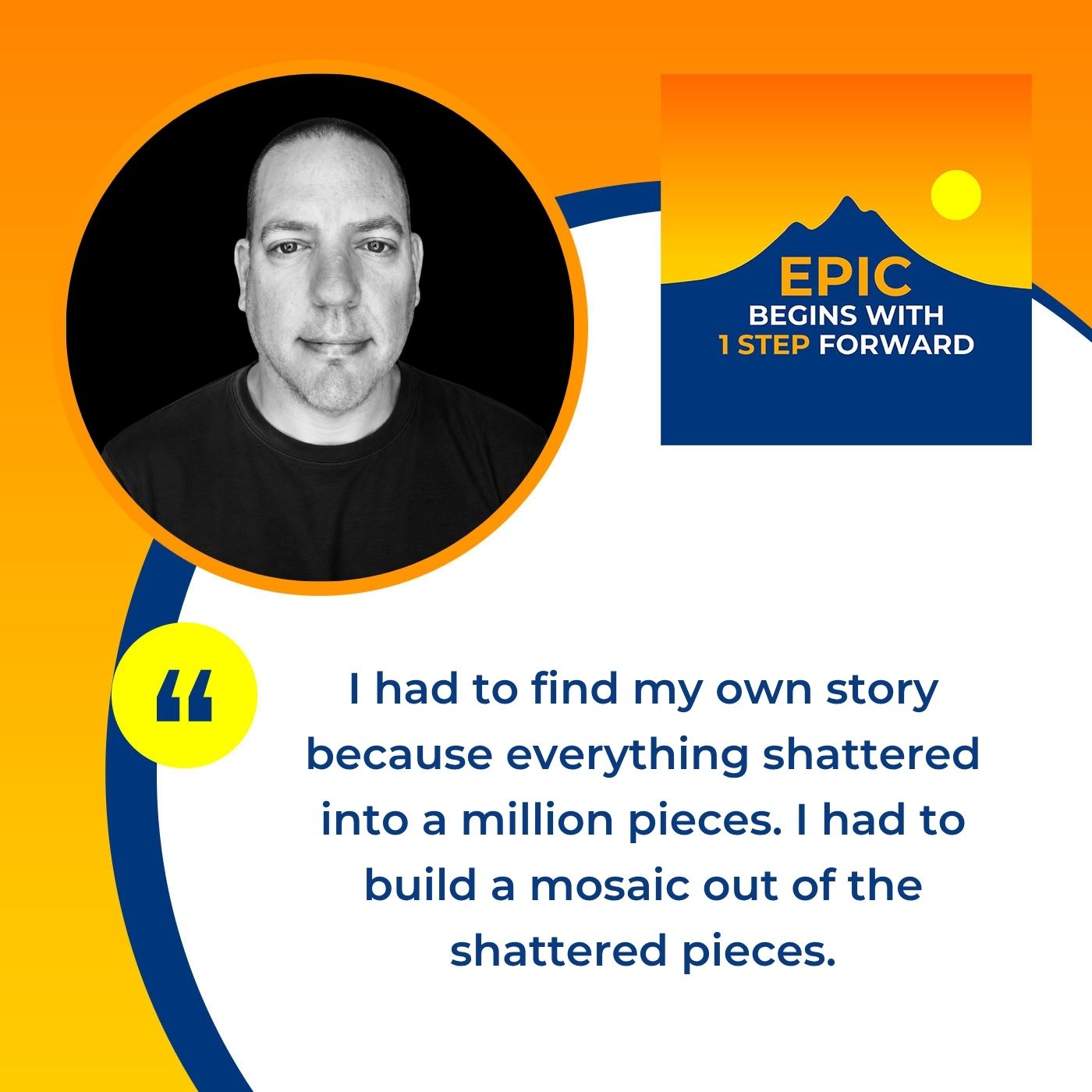
Throughout my career, I was always focused on other people’s stories. I had to find my own story because everything shattered into a million pieces. I had to build a mosaic out of the shattered pieces. I had never pursued any creative outlets before to find that voice. In the midst of all the chaos and as you said, where is the structure? My first structure was poetry. I didn’t have to be a pro, long, and have chapters. It didn’t have to have structure or commas. Nothing had to be capitalized, but I gave it a little bit of structure of poetry.
Poetry was very beneficial. It’s like micro journaling. It’s like micro dosing journaling. That was my initial way and then it bled into creating other things. Whether it’s guided imagery meditations or chronic illness journals or other books. It was this creative outlet. Also, my show that I created about chronic illness. It was all about where my voice is. Where is it that I can express and where is my control within that? What seems authentic to me? What is it that I value as a human being? Knowing that we only have so much time here on Earth. It’s like, “What am I doing with this time? How can I create that structure that has that familiarity but it’s still authentic to the person that I am, where it’s meeting my values and needs?”
Some of the work I do is around siblings lost and work with people in grief and stuff. What you’re talking about is there’s all of this emotion and energy inside of us and finding those creative outlets that allow us to get it out. It doesn’t have to be pretty but you feel so much better when you’re like, “I can’t put into words necessarily.” Maybe you paint or draw. You write poetry or coloring books.
It doesn’t have to be something that’s going to hang in a museum, but it’s this expression. You choose a color to draw the line, so to speak. That is that expression. We express ourselves in so many different ways.
I know for me, but I’m going to guess for you. I know you’ve created some coloring books.
Out of fun. Not out of profit.
Creative Outlets: Processing Trauma Through Expression
There’s catharsis there, “I’ve gotten this out. I am not going to hold on to it.” With your background in mental health and mine, I realize our bodies are incredible vessels of maintaining homeostasis. We can only hold stuff in so long before we either vented out through whatever thing or there’s a gigantic explosion. At some point, it’s coming out. When I’m talking with people about grief, I’m like, “You can try and push your grief down but at some point, it is coming out.
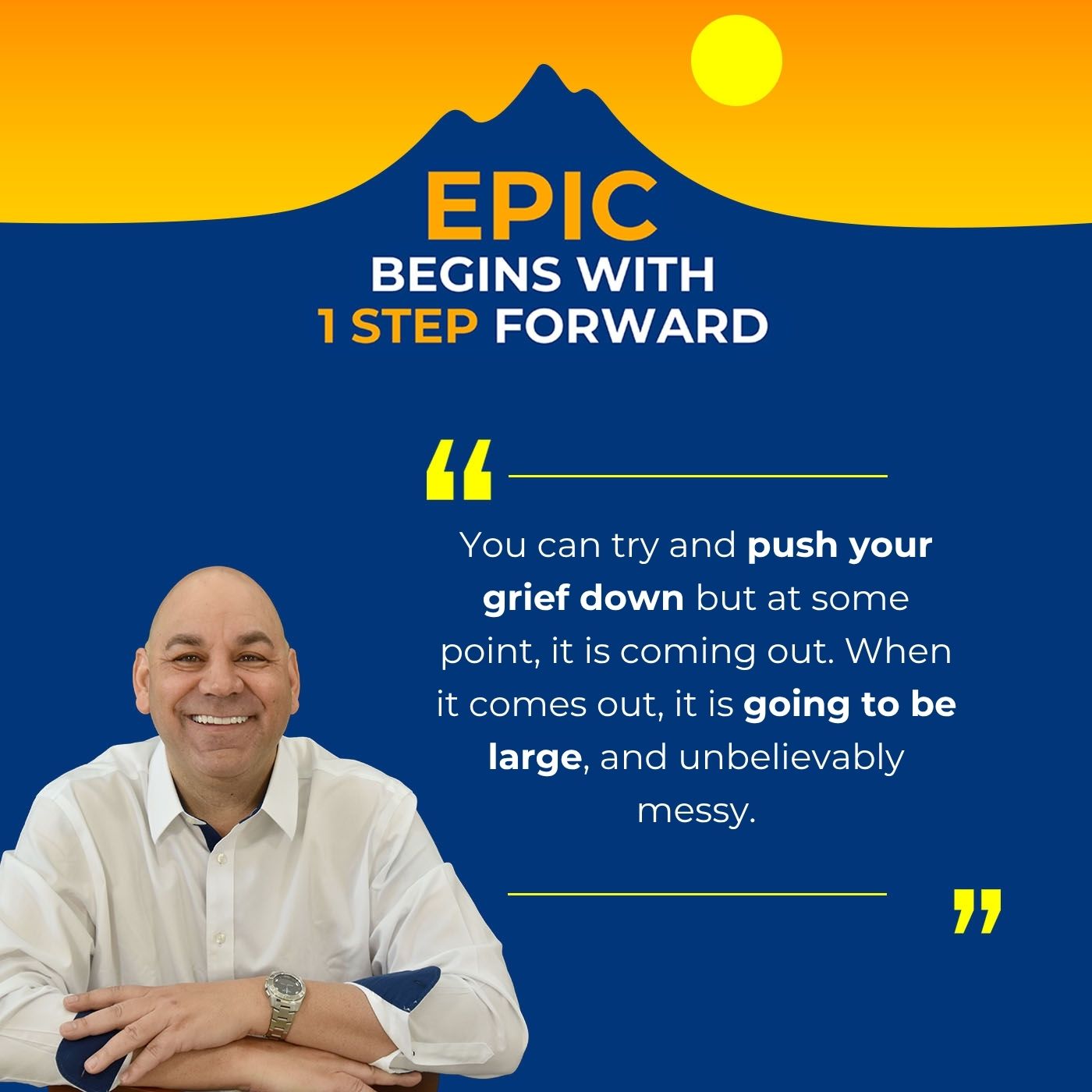
When it comes out, it is going to be large, and unbelievably messy. Something is going to be that final little straw and you are sitting in a corner sobbing for an hour. It was just that your car had a flat tire, but it isn’t the flat tire. Your reaction seems so over the top and people like, “What’s going on?” It’s because the body’s like, “That’s it. We’ve had enough. We got to go.”
They see an opportunity and then the body talks. There’s a reason why firefighters do control burns. You don’t get this overwhelming forest fire. All these modalities of being able to talk about it or write about it or express however it is that you share. Whatever your cathartic event is. They’re uncomfortable oftentimes initially, because avoidance is easy. Avoidance always works in this short term. You say, “I don’t want to think about this.” “You may buy yourself a little bit of time,” but it’s going to build and build. That volcano is going to talk.
It is. It’s the same way in the mental health counseling I do. I encourage my clients to go up and get some exercise because if you’re experiencing anxiety, depression, or whatever. A fifteen-minute walk can do wonders for you.
As to what I was going to say. The body is designed to move. We live in a modern world where we can just sit all day long. We can doom scroll all day long and we forget to move. We talked about creative outlets of expression, but part of the expression is just movement.
I know from my own personal experience. Many years ago, my older sister was murdered and I was depressed after. It was all I could do to get out of bed and go to work. I was not productive at work, but I didn’t want to sit in my apartment and think about that. You get into this horrible cycle, which I am guessing you might have had. You’re feeling depressed, which makes you tired. You’re like, “How do I even pull myself out of bed?” I got myself back into the gym. It’s so hard, but I felt so much better because I got the endorphins going. I moved the blood. I broke that cycle.
You were in control. You’re the author of your own existence at that moment.
You can be the author of your own existence.
For you, I’m guessing that you might have had one or two episodes of feeling, especially at the beginning because it is so hard when you’re like, “I know something isn’t right.”
There were lots of tears. There’s lots of sadness. There was lots of confusion, fear and uncertainty. You have this compass in your hand and it’s just spinning around and around. You can’t find your true North and you’re lost. You’re lost in the forest. You don’t have a frame of reference for the story of why the pain won’t go. I still have head pain, but this horrible head pain. I had this nerve pain shooting across the top of my head and a horrible fatigue.
I couldn’t remember the names of loved ones. I couldn’t watch TV because the visual stimulus was too much for me. It was just a mess. I didn’t know who this person was. I’m living it but I don’t know how this goes. I don’t know what’s going on. I am devastatingly confused. At first, my poetry came out in the form of tears.
All of that is so challenging. Now, you’ve got a protocol that seems to be working. Is it safe to say as well as it can?
Relatively stable. I’ll never be that same person. I just have to be able to grieve. What’s interesting about grieving that old self is that grief is just going to be a boomerang. You don’t ever get rid of that grief. Grief isn’t this speed bump. Where it’s just like, “That was inconvenient. I process that. I dealt with that.” It’s like, “Absolutely not.” You create a relationship with that grief, but the grief never goes away.
You create a relationship with that grief, but the grief never goes away.
People have said to me over the years, “You’re not over losing your sister?” I’m like, “Absolutely not. I never will be.” I’m working my way through it. Some days are better than others. With grief, you are working your way through it. You’re right, it is a boomerang. You can go a long time and everything’s fine. All of a sudden, there’s something that throws your day off.
It’s a holiday. It’s a character on the screen losing a sibling or whatever it may be. All of a sudden, the mind just clicks and goes, “I can relate to that,” and you get smacked with the feeling. People have to normalize that you’re not failing. You’re not weak. You didn’t do anything wrong. You’re not broken. That is the normal course of a human experience to have that grief and to normalize it.
I used to think it was trying to say time heals wounds. With grief, it’s not that it heals it. We just get more tools that allow us to understand how we need to deal with our grief. I can recognize If I’m driving in the car and I’m listening to music. A song comes on that reminds me of my sister Lucy. It used to be that I could throw my whole day off and I’d be driving down the road crying. That was fine, but I now recognize some of the somatic triggers.
The Grief Boomerang: Normalizing Emotional Pain
I’m like, “I know how to deal with this.” The same way that I’m sure with some of your fatigue and some of the other symptoms. Your experience has taught you, “If I pay attention to this, let me try this.” Let’s say you talked about your head hurting. It may not stop it but it may lessen it. Sometimes you can stop it. Sometimes with the grief, you can go, “I recognize what’s going on. I know what I need to do.” That tidal wave of grief doesn’t go.
It goes back to what you were seeing before. It becomes very familiar. It’s a familiar boomerang that hurts. With these feelings that are in the spectrum of emotional pain, we want to initially get rid of them. We want to cut them out rather than normalize it and say, “These are all the crayons in the crayon box. I’m going to have some sadness. I’m going to have some grief. I’m familiar with this, and I allow this to be here.”
The more that you allow it, listen to it and process it, versus that resistance. It’s like, “I don’t want to pay attention to you. I don’t want to listen to you. I don’t want to feel you.” The more that you realize, it’s safe to feel the grief. It’s normal to feel grief. It hits you but not as hard. It doesn’t stay around as long. It’s not the enemy. It’s just a part of you.
The same way that people with a chronic illness or something. Even something like hypertension. Millions of people have hypertension. If you get diagnosed with hypertension, you have to accept that you may have to take some medication. There are lifestyle adjustments that you have to make. Some people can make huge lifestyle changes and not have hypertension. That’s great. Other people are like, doesn’t matter how healthy they are.
It’s just part of their life. I laugh sometimes where they talk about people’s cholesterol levels. The person who works hard, has a great diet, exercises and does everything but they’re genetic heart is they just have high cholesterol.There’s the other person who doesn’t do as much lifestyle thing and their cholesterol is not over 200 There’s stuff they can do. There’s no rhyme or reason, but you have to just accept, “Here’s a card I got dealt. I don’t want it, but it’s in my hand and I can’t get rid of it.”
We don’t control the cards that come out of the shoe. We dealt with the hands. You have these epic moments. How do you step up to the epic moment? For me, it’s like the stoic philosophy, amor fati or the love of fate. You can run from fate. You can hate fate, but you might as well love fate because then fate isn’t the one telling the story. You never want that self-eraser. You want to maintain the authorship of your own life.
What I say is when I’m talking about sibling loss or grief or whatever. You can define your situation or your situation can define you. I choose to define my loss as an important part of my life. It’s gone, but it is not the only thing. We were talking about identity. Our identity is multifaceted. You are not just a person. You’re not Jeffrey who has a chronic illness. You were so many more things. I am so many more things. We are all so many more things. You were talking about mourning the person you were, but you’re still Jeffrey.
I’m still expanding. Only because I mourn a piece of me and that avatar, that idea, those expectations, a schema or whatever it is. Even though that’s lost, it doesn’t mean that therefore I am less. I can still expand in different ways in places where I have not previously explored.
We’re all evolving. I know that sounds trite, but it’s true. As a species, we haven’t made it to where we are if we weren’t always constantly evolving and learning. The person I am now is not the same person I was when I was 25. I wouldn’t expect to be.
True. That’s where we embrace. One of my favorite words is always curiosity because curiosity is the thing that just pulls you into the future a little bit. It’s like, “I don’t want to get out of bed.” What could I drink or eat? What could I say or do or this or that?” That curiosity is this great pull for when you want to feel so stationary in life, when you feel so stuck in the mud with life. Curiosity is a great tool.
I’m forever saying get curious. When you don’t understand something, get curious.
When you don’t understand something, that’s the moment that you’re about to learn something.
When you don’t understand something, that’s the moment that you’re about to learn something.
Going back to basic psychology. Safe is things we know. Dangerous is, things we don’t know. If we are curious, we get to learn about something. We all make up stories. You interact with someone and they are rude to you. They talk to you in a way and then you’re like, “That person’s a jerk.” I take a moment and try and remind myself to get curious. I don’t know what’s going on in their life. I could be the 25th thing in their day. I happen to get the brunt of that because they’ve been pushing it down and now I’m the one who gets that volcano. What’s going on with relationships? I don’t understand why this person’s acting this way. I care about them. Why are they doing this? Get curious.
You don’t personalize it. Curiosity creates some distance and you’re able to see yourself. The curiosity is almost like being a third person. You’re like, “I see me. I see the other person.” I’m watching the bigger picture. You’re expanding your awareness of the situation.
I don’t have all the information. For any of us, it’s like, “I need more information. Let me go find out more.” That’s cool. We only have a few moments left, but I’d love to ask my guests this question. In my book, I talk about the concept of not yet. I take it not yet, especially on some of our epic journeys. It is so important. You clearly are on a very long extended epic journey. What’s one or two of your not yets in your life? Those things that you might say, “Someday, I’m going to do this or I’d like to do this.” I’m just always interested.
The Future Outlook: The Power Of “Not Yet” And Curiosity
This may sound interesting because it’s just personal. I was listening to this band a lot when I was sick. They’re from the UK. The band’s called Ezra Collective. They’re a jazz band. In November, they’re showing up in my area. It’s just a marker out in the distance. Sometimes the days that become difficult or you feel stuck or the story isn’t what you want it to be ultimately. In November, the Ezra Collective is coming to a place near me and I haven’t seen them yet.
That’s an awesome not yet. Have I seen the Ezra Collective? Not yet. The optimism of I will see them just not yet. That’s awesome.
It doesn’t have to be, “I haven’t yet started a company or I haven’t yet cured cancer.” It just needs to be this flag that you plant in the calendar that is this thing of like, “I’m looking forward to this thing.” I haven’t seen them and I would love to be able to be a part of one of their live shows. That would be terrific.
Jeffrey, thank you so much for coming on. What an epic conversation.
Thank you.
Thank you for being so open about your epic journey.
Thank you. I enjoyed it very much.
How can people get a hold of you?
They go to DrBone.live.
Thank you so much for coming on. I want to remind everyone that if you’re ready to begin your epic journey, go to EpicBegins.com. Remember, epic choices lead to the epic life that you want.
Important Links
- Dr. Jeffrey Bone
- Dr. Jeffrey Bone on LinkedIn
- To The Bone
- Mold Brain: Returning to Life After Toxic Mold Exposure
- The Restless Human: Meaning in a Fractured World
About Dr. Jeffrey Bone
 My name is Dr. Jeffrey Bone. I’m a chronic illness and pain coach, author, and chronic illness advocate who has spent more than two decades helping people cope with the psychological realities of long-term illness and pain. I would love to join you on your podcast to talk about something that millions of people struggle with: how to live a meaningful life when your body no longer works the way it once did. My work blends psychology, lived experience, and creativity.
I specialize in helping people navigate the emotional weight of chronic illness including pain, fatigue, medical uncertainty, loneliness, and the grief that comes when life does not unfold as planned. In addition to my clinical work, I host a podcast called To The Bone: Conversations on Pain, Illness, and Meaning, and I create guided audio resources designed to help people sleep and cope with chronic pain. I’m also the author of several books, including poetry collections and guided journals for people living with chronic illness.
Because I also live with Common Variable Immune Deficiency, this work is not just professional for me. It is personal. My goal in every conversation is simple: to help listeners feel less alone and to give them tools they can actually use. You can learn more about my work here: drbone.live